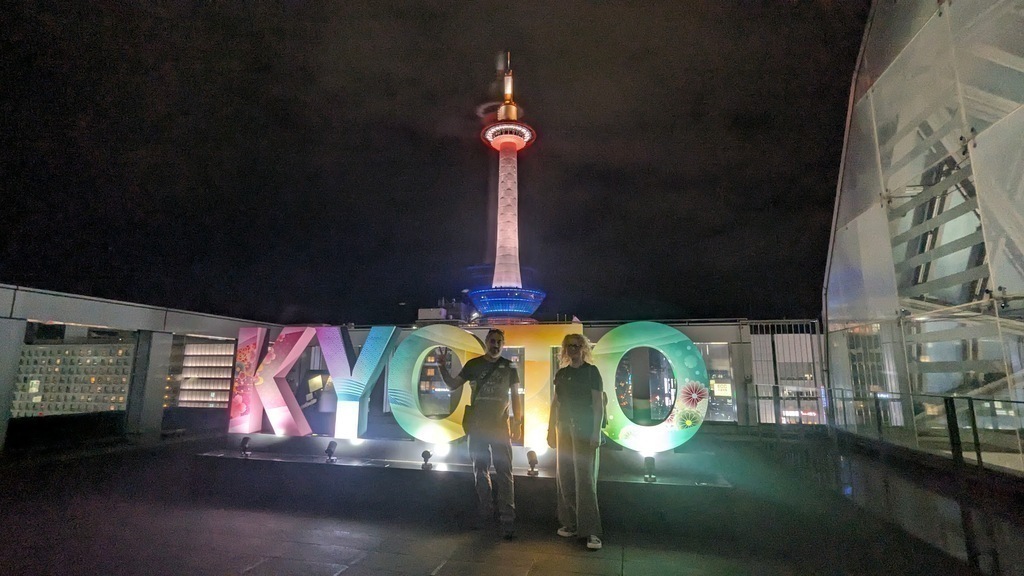
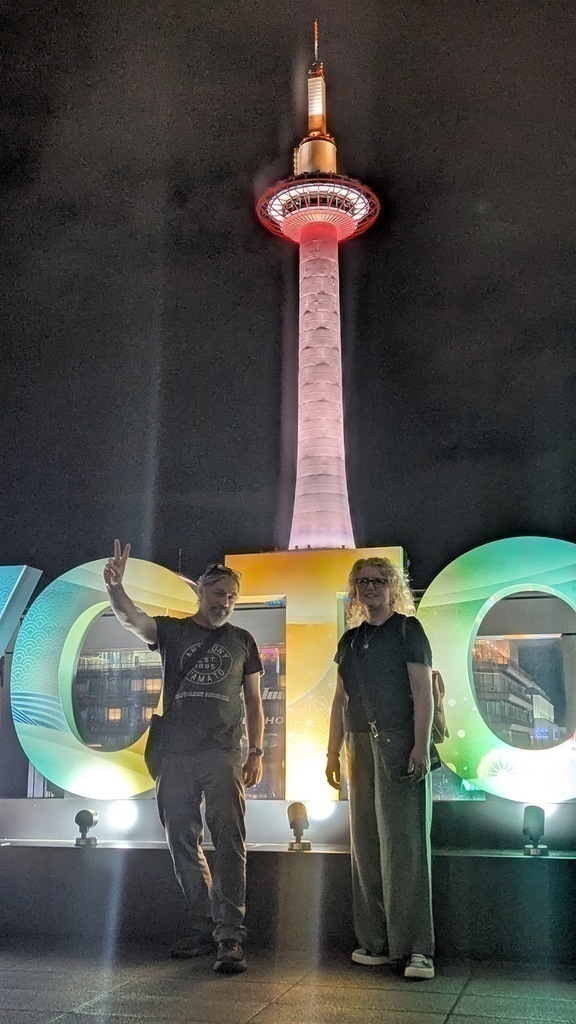
Day 7: Wednesday 20th May
Nara Day Trip
📍 Nara
Off to Nara
Nara is nestled in the Kansai region of Japan between Kyoto and Osaka, and is known for its serene parks, monumental temples, but probably most of all for its free-roaming deer that are happy to bow to visitors particularly if there are biscuits involved. This was a definite trip highlight, that both of us were looking forward to.
We got up pretty early and caught the train from the stop that was less than a minute walk from our hotel. There was one change that we needed to negotiate at Takeda station, but the platform staff were super helpful and made sure we got onto the right train.
Admittedly, both of us were feeling the wear of our jet-lag and relentless touring. So when we pulled into Nara station, both of us treated a sit-down breakfast with some priority. Nara station is picturesque, and it is fairly easy to find your way from the station towards the park and all of the temples. Just outside the station, there are shopping malls with loads of cafes and eateries.
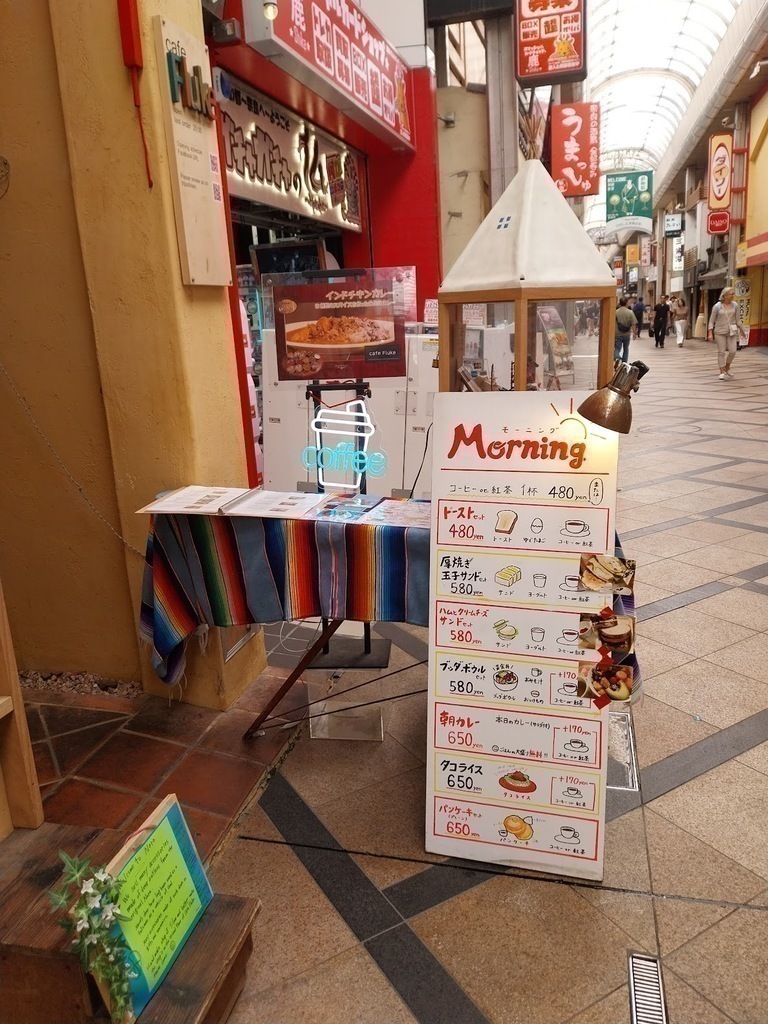
We dipped down a small side-alley shopping mall and found a place, called 'Cafe Fluke', that was advertising breakfast. We went in and found a table. I ordered an omelette toasted sandwich, which arrived with yoghurt, half a banana, and a cup of black coffee. Up until this point, our experience with omelettes in Japan was that they were actually sugary sweet, which can be a little disconcerting. This omelette was a bit more on the savoury side, which was very much appreciated. Maria had a latte and maple syrup & cream pancakes. 😋 Our bill came to little over £6 for the two of us. The UK is expensive when it comes to food and drink.
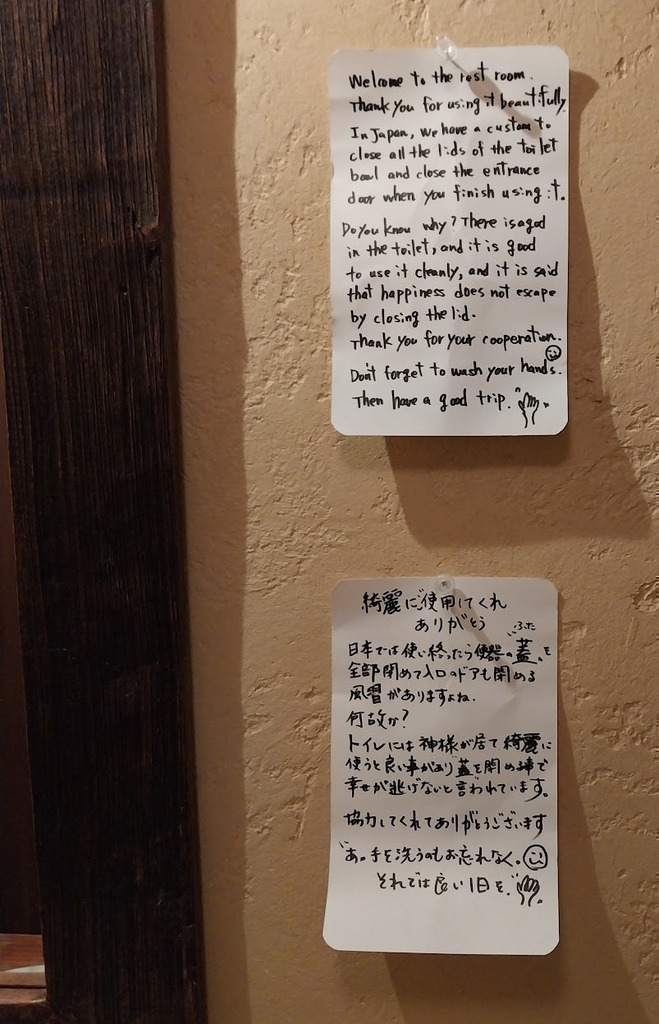
Maria went to the toilet and took a picture of this sign. A lot of this stuff is geared at tourists who just don't quite grasp the culture. Japanese people are fastidiously clean and tidy, and they expect visitors to be the same. We loved the gentle nudge towards happiness.
Nara Park - The Deer!
Nara park, itself, is enormous and includes reasonably busy roads, shops, museums, temples, shrines, the botanical gardens, and so on. We quickly had to park our slightly English conception of a park and scale up. It was hard to know where the park started and the city ended. Not least because the deer appear really early into the walk and many seem to have worked out that the closer they get to the station, the more likely they are going to encounter tourists buying bags of biscuits to feed them.
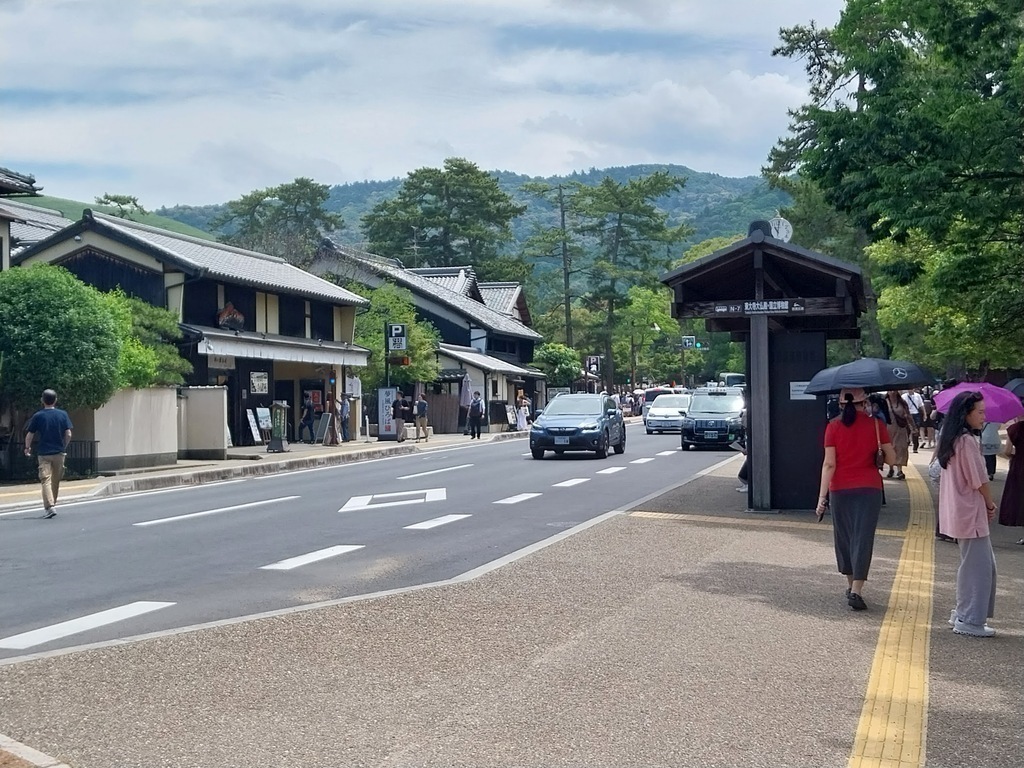
Nara Park is famous for its deer, and they are everywhere. Hundreds of semi-wild deer just wandering around, bowing for crackers, photobombing tourists. They also get pretty pushy if they know that someone is carrying biscuits. Also, they will just nibble on anything you have, including clothes and bags and things. They really are a bit like goats.
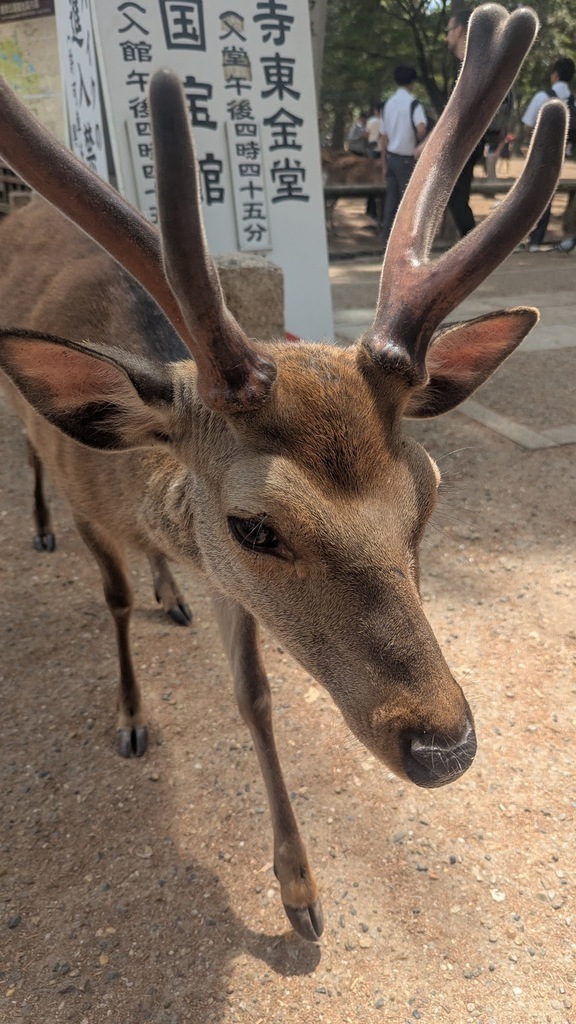
Walking further into the park, we passed the Nara National Museum. The deer were getting a bit more placid, probably these guys were already well fed or on a different shift. The deer all enjoy a good scratch and are tame enough that you can pet nearly any of them that you encounter. They are quite greasy (particularly around antlers) and your hands get dirty fast. Wet wipes were useful.
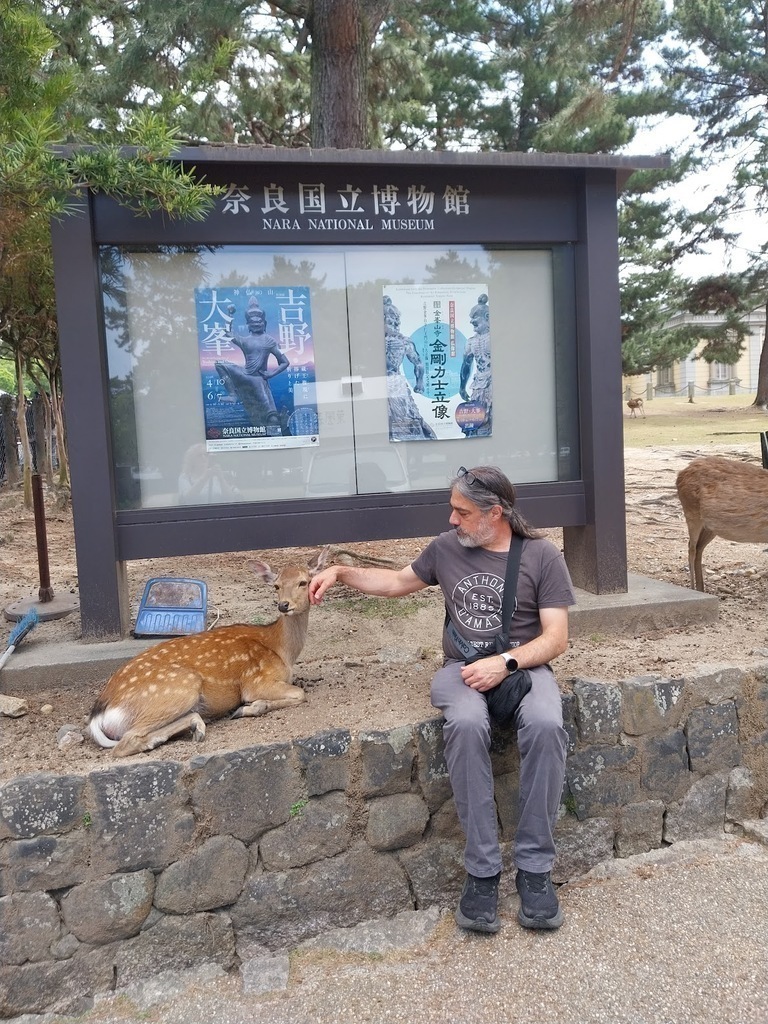
We have so many deer pics, that I am just not going to add them all here, but more to come as we visit different sites and deer make sure that they are part of the action.
As we followed the large crowds that were all moving towards the famous Todai-ji temple, we started to feel a bit overwhelmed. It was hot, and there were so many people. So we stepped out of the main thoroughfare and found a little shaded place to sit in the park. It was suddenly peaceful again.
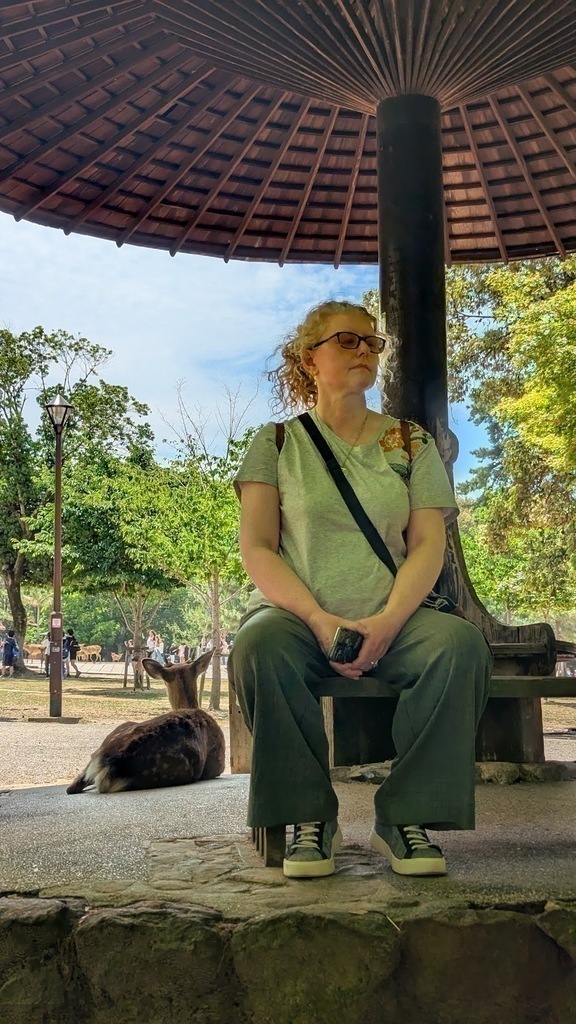
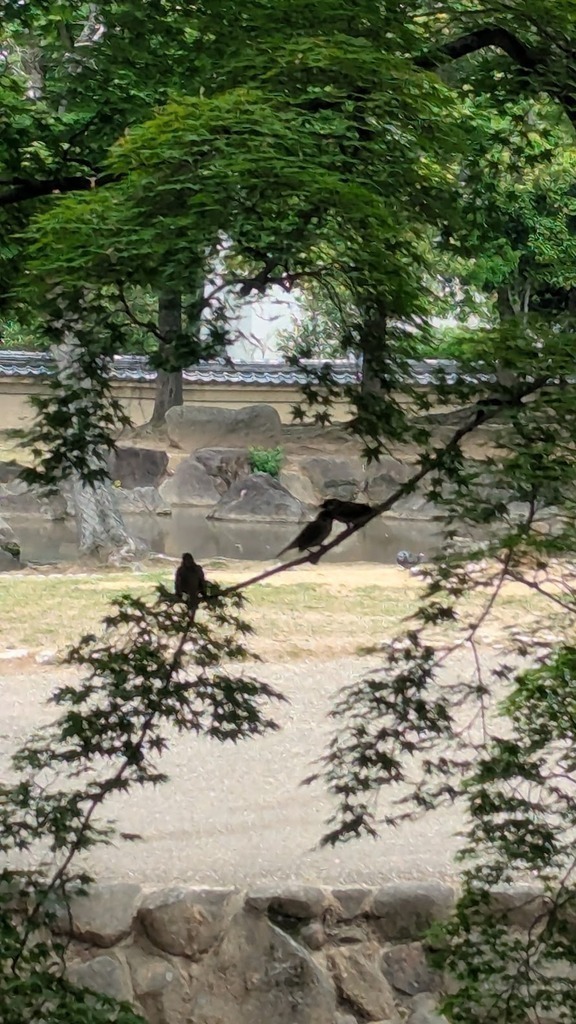
We watched some birds flitting about in the acer trees. The acers really are lovely across Japan and they appear everywhere. We love how the leaves play with the light and create little stars. I bet they look amazing during the autumn! Of course, I tried to fit in another selfie with an obliging deer.
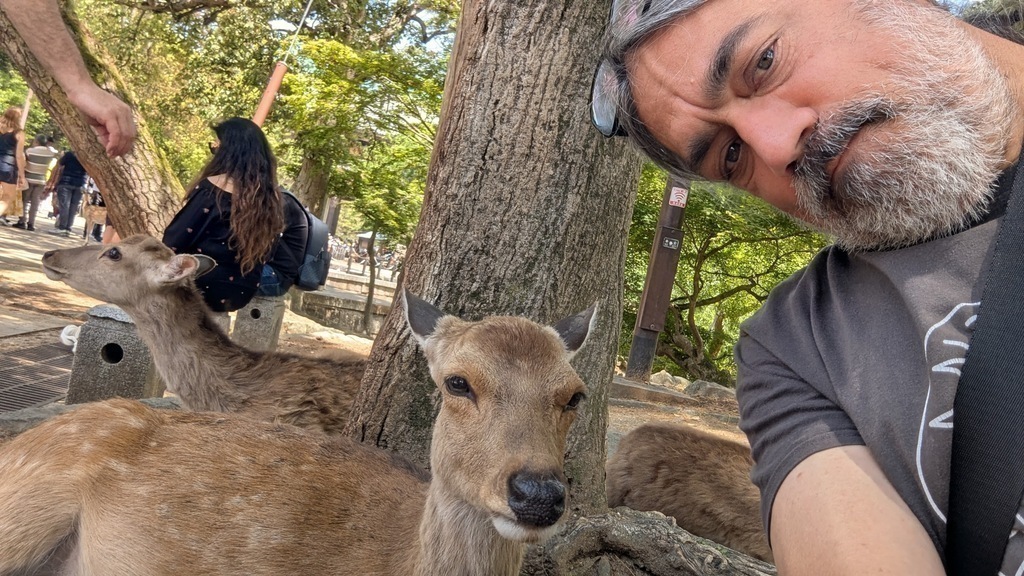
Todai-ji Gate
The first big feature of the day was Todai-ji Temple and the Great Buddha Hall. But a fair while before you get to that, you come to the first gate to the temple. It is truly enormous and our pictures don't do it justice.
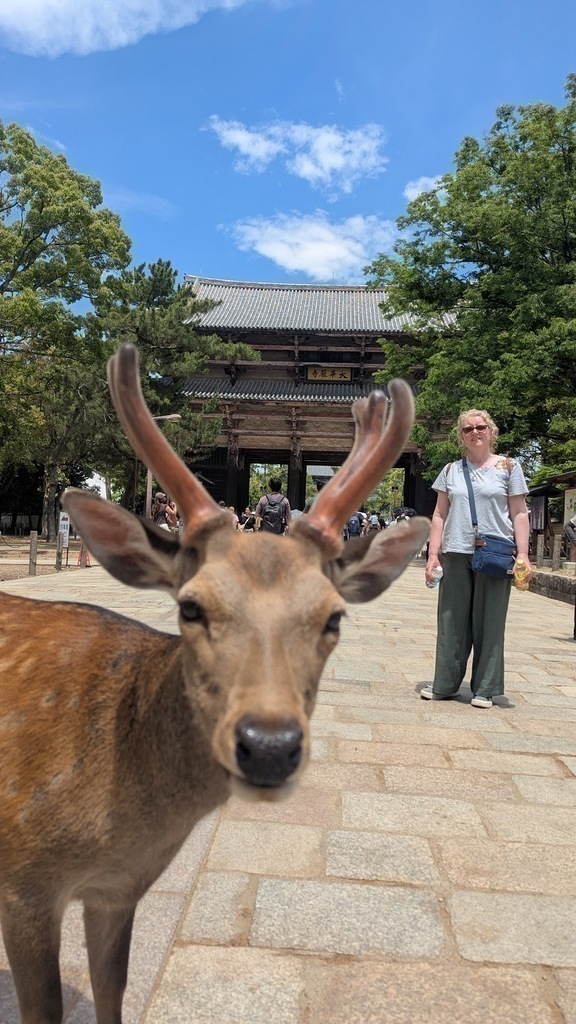
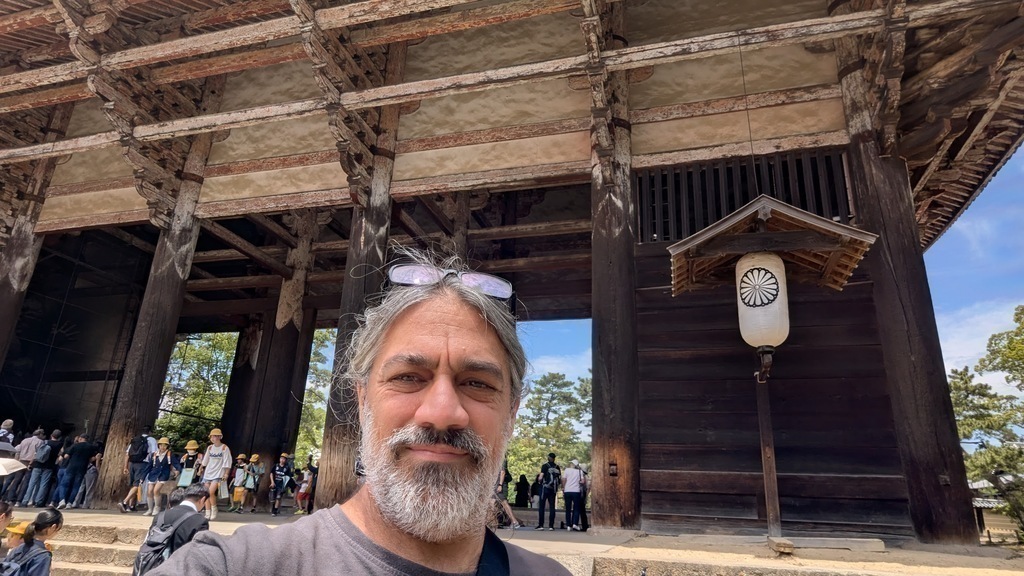
While we were standing there taking pictures, two different schoolgroups passed on either side of Maria, who filmed the flow of kids, because their uniforms make them really stand out. I looked across and for a brief period she was in a sea of young, uniformed children. This video helps to put the gate into more perspective.
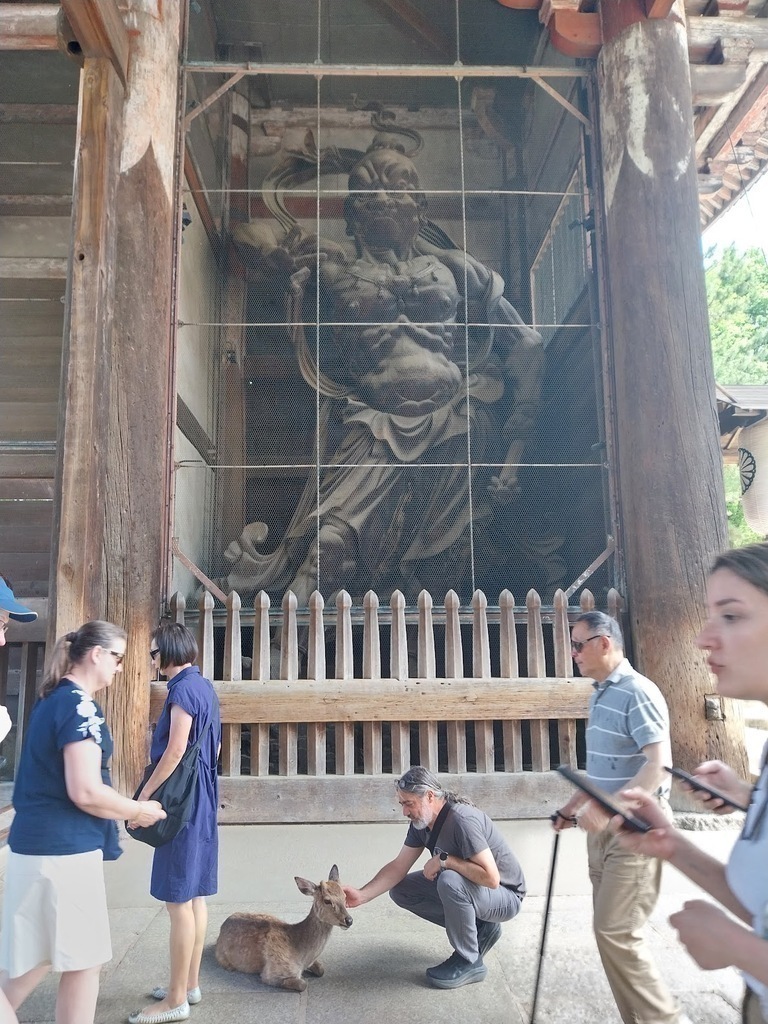
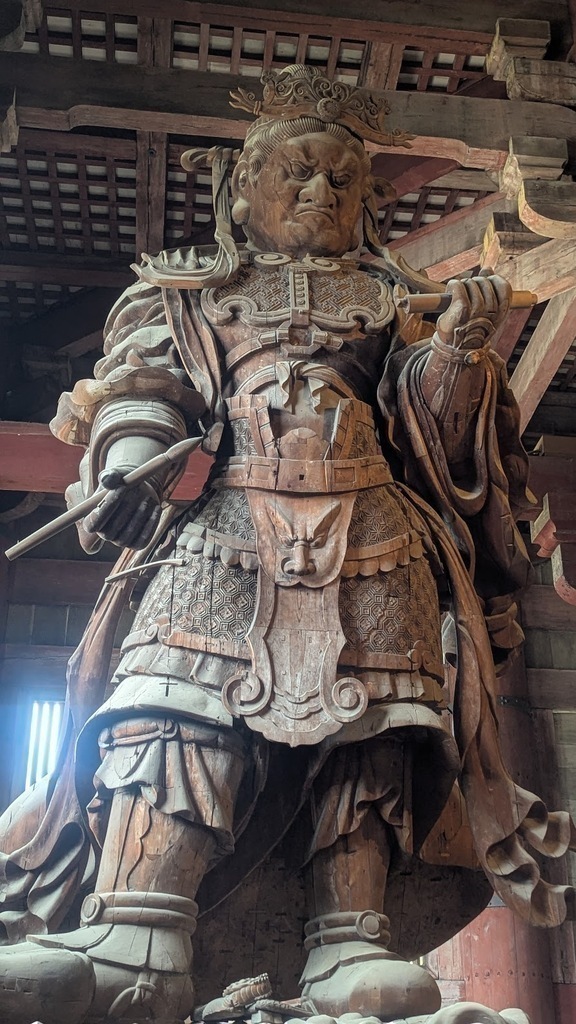
As with a lot of these temple gates, guardians usually appear inside the gates. These are the Niō (or Kongō Rikishi) and ward off evil and protect the gates from threats. Agyō on the right, utters the sound "Ah" which represents birth and the beginning of things, while Ungyō on the left utters the sound "Un" which represents death and the end of all things. These themes seem to appear across religions.
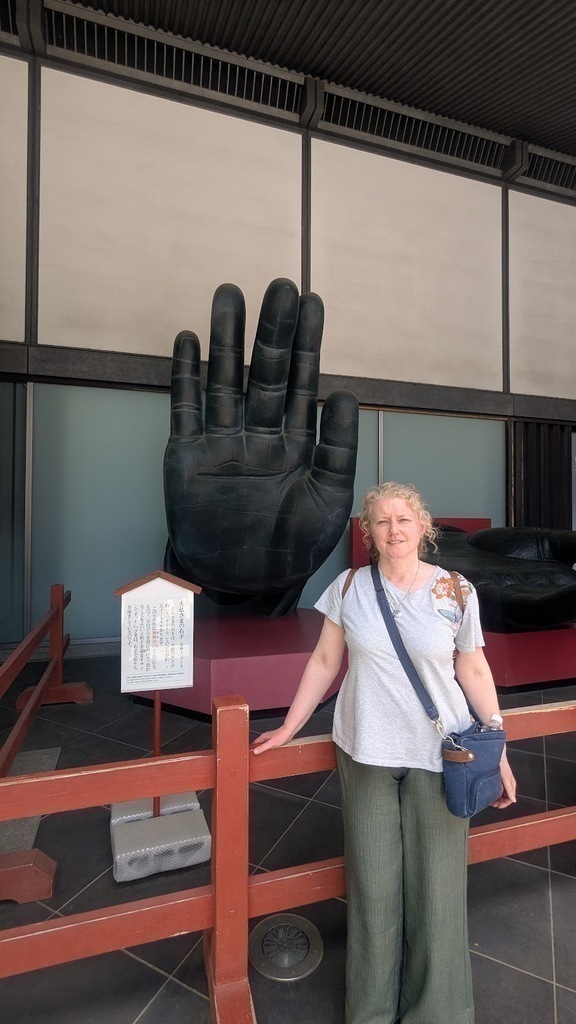
Just through the gate, there is an information centre and other facilities. There is also a display with a replica of the Great Buddha's hand. This is pretty big and starts to give you an idea of the scale of the Great Buddha within the Great Buddha Hall inside the temple. Of course, this was another opportunity for a picture.
Todai-Ji Temple and the Great Buddha Hall
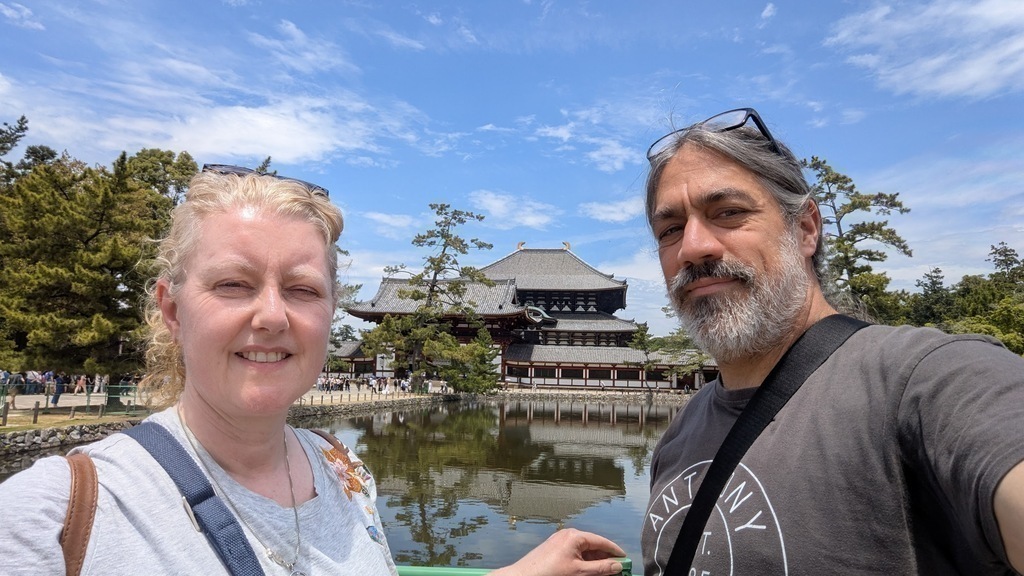
Todai-ji Temple is definitely one of Nara's big drawcards. Not only is the temple fantastically picturesque, beautifully reflected in a mirror pool out front, but it also hosts the Daibatsu (the Great Buddha), the largest bronze Buddha statue in Japan.
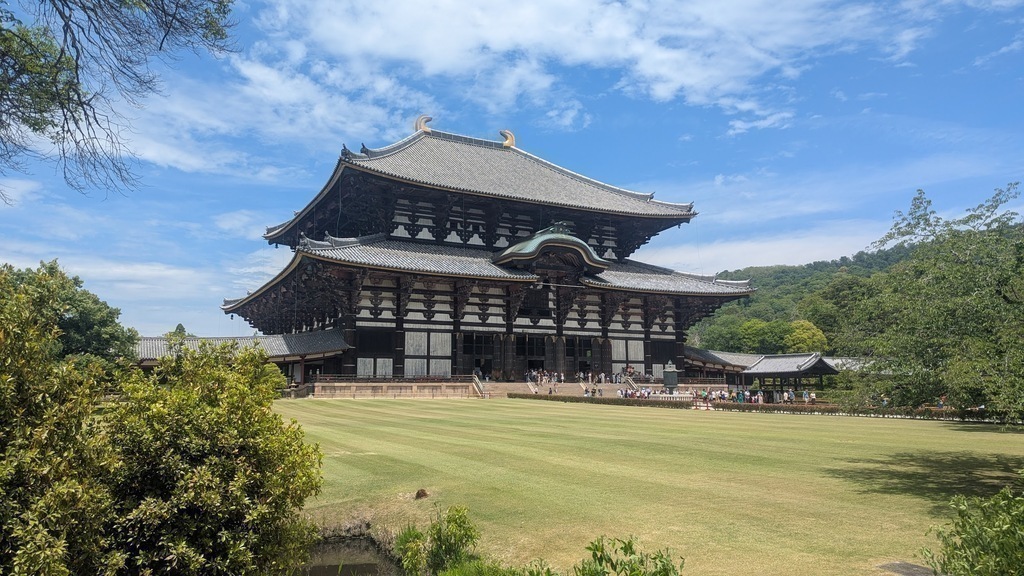
You pay an entrance fee to go into the temple to visit the Great Buddha Hall, which is set in a beautiful garden. The path proceeds up a large stairway to the entrance of the hall, where a massive ceremonial incense bowl stands burning hundreds of incense sticks.
After all the lead up to the hall, you are immediately greeted by the Daibatsu as you enter the hall. It is immense. Around 15 metres tall and seated in front of you, weighing in at around 500 tons. The statue was created in the 13th century and it truly is spectacular to stand in front of.
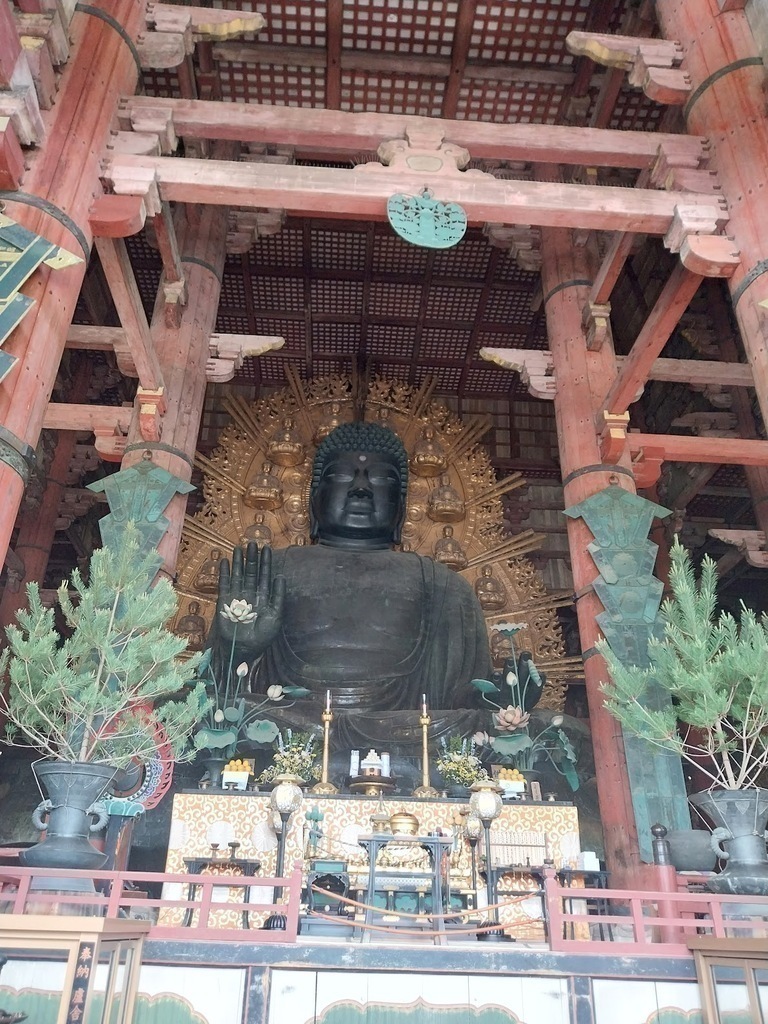
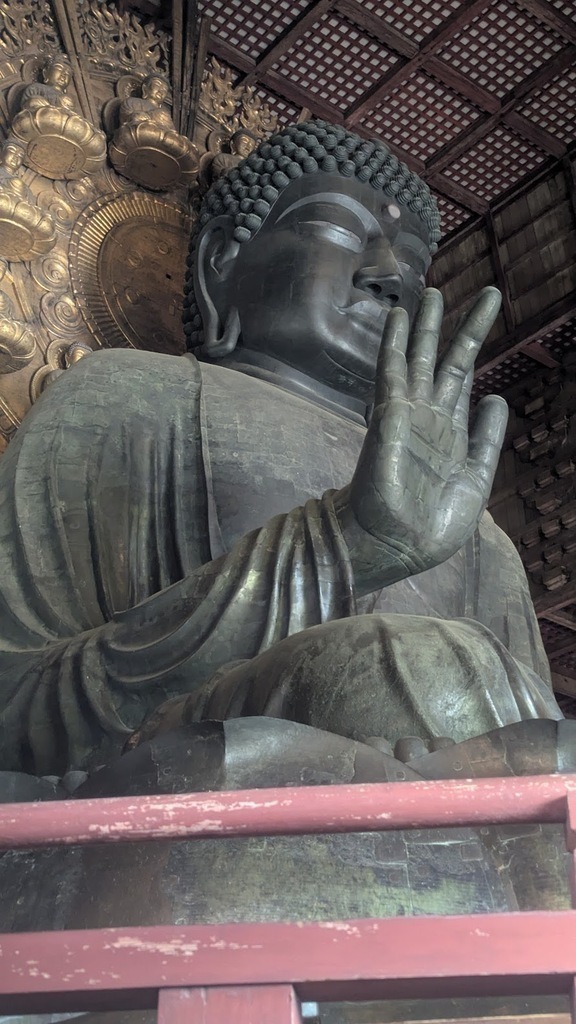
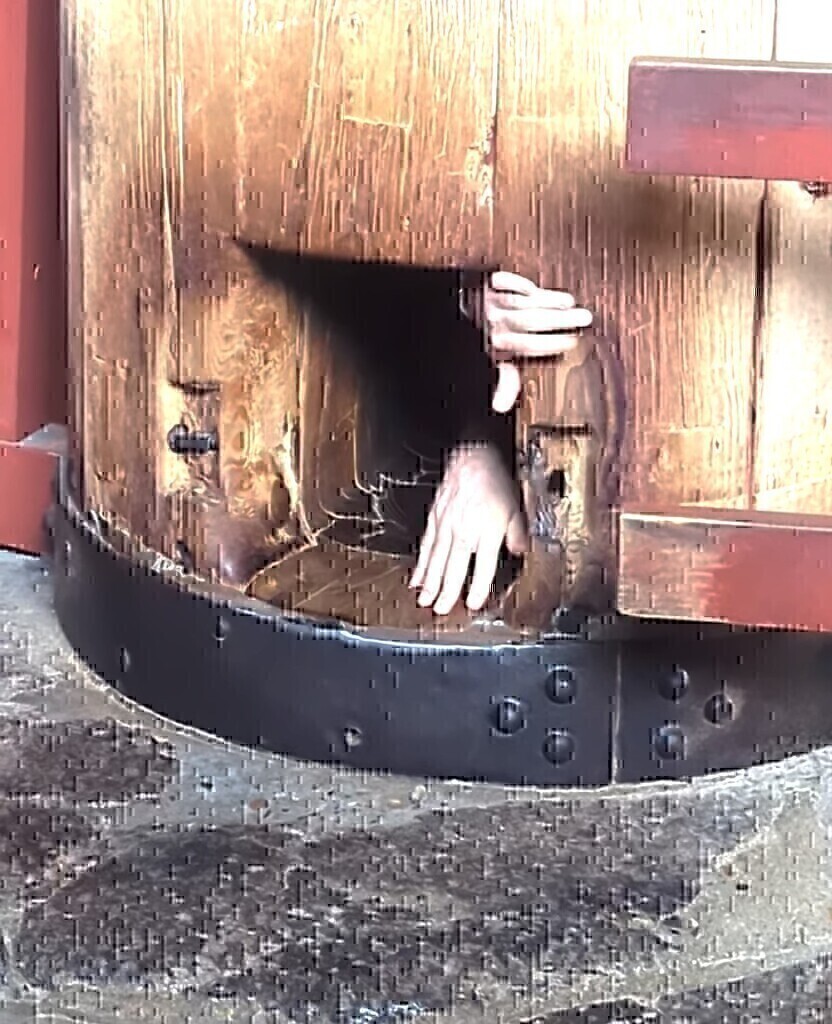
Check out those nostrils... on one side of the Great Buddha Hall, one of the wooden columns has a hole carved into it, purportedly the size of one of the nostrils. It is said that if you can crawl through the hole, you have crawled through the nostril of the buddha and are blessed with good fortune. We watched several people achieve it, and some fail to fit through. I gave it a try and panicked halfway through because I tried to breathe in and couldn't. Probably it is really because I am too fat. Fail! Not sharing the video of that embarrassment 😂. The buddha makes us humble.
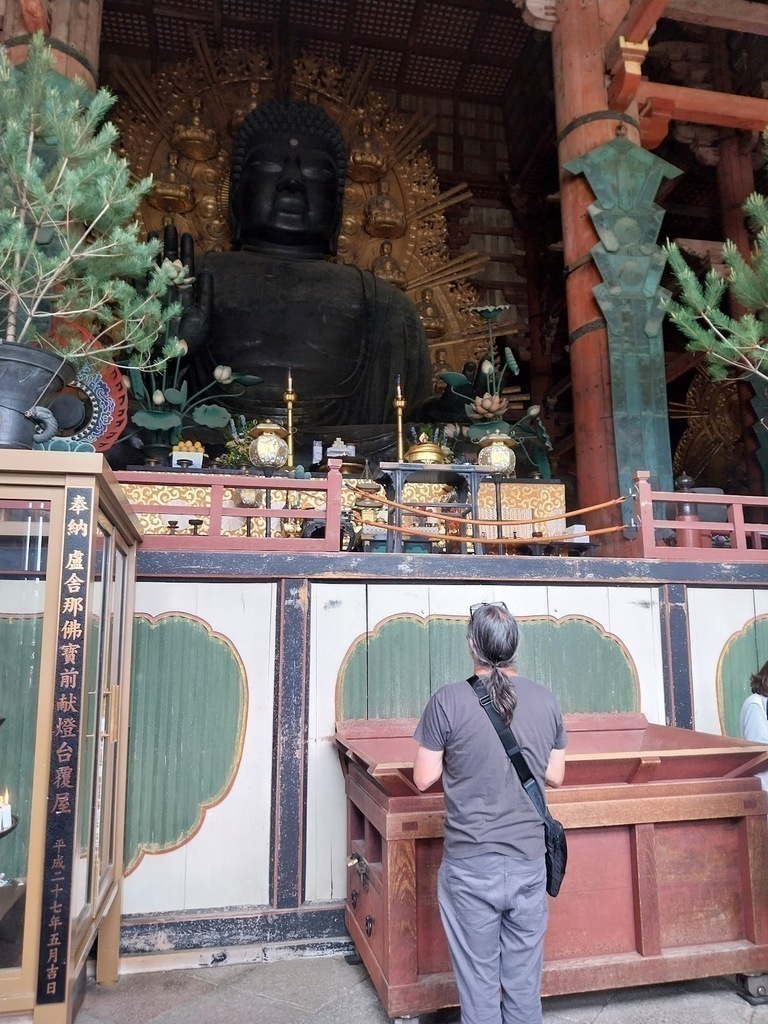
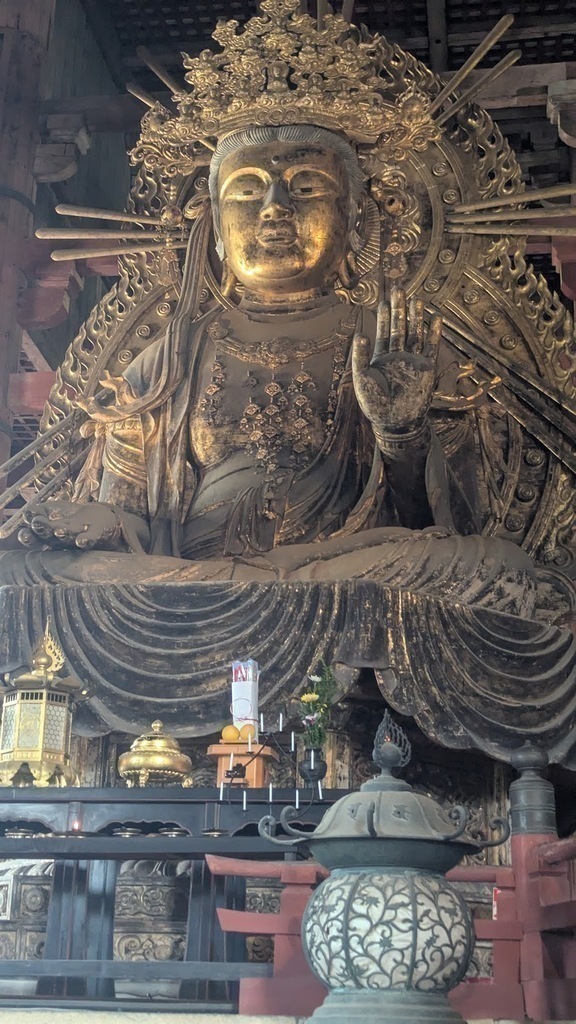
The Daibatsu isn't the only thing in the hall. A smaller brass/wooden buddha sits alongside the Great Buddha. This statue is coated with gold leaf and glows with a golden light that contrasts against the heavy green-black bronze of the big buddha that it is companion to. There was a votive candle stand, where you could make a donation and light a candle for a prayer - similar to the Catholic tradition - so Maria lit a candle here and made her own prayer to the Buddha.
Around the corner are other guardian statues and a replica of the temple and other stands with information. Notably, there was a stand where you could pledge a roof tile and make a donation to pay for it. I think you had your name inscribed on the tile if you did this. I didn't hang around to find out the cost, but I expect that it was way more than we could afford!
Okay, so I mentioned the nostril thing... I am not going to share the video, but here is a picture to give you an idea of the hole. Yep, those are my hands reaching through. It definitely looks easier from this perspective. That hole is actually really small, I promise...
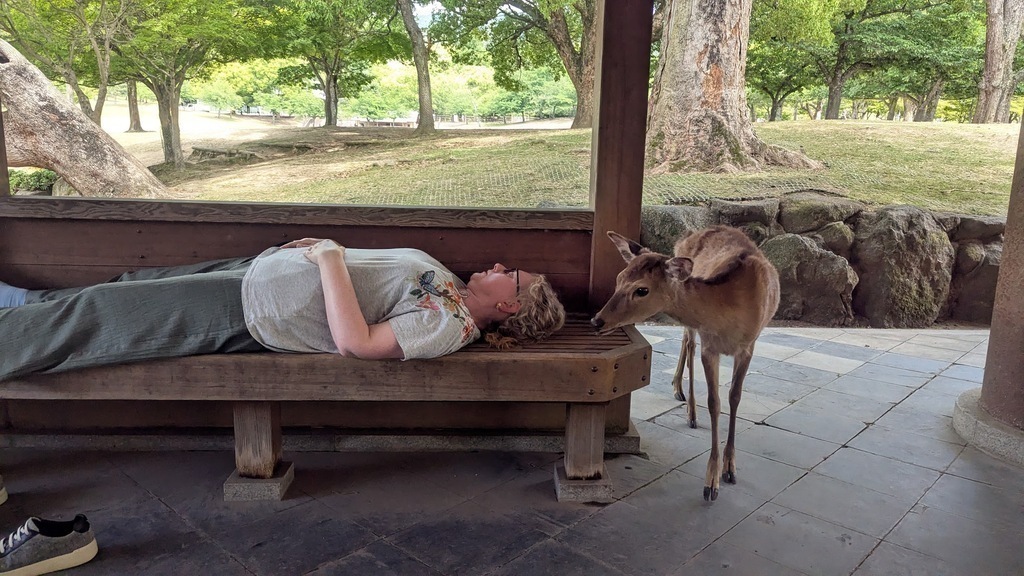
After all that spiritual excitement, both of us felt pretty zoned out and it was about midday. The sun was blazing down and after coming out of the cool, dark temple, we definitely needed a short break from the bustling crowds. So we found a little covered pavilion with benches to rest. Maria had a nap, and of course, the deer came over to investigate.
Manyo Botanical Gardens
After a rest, we headed for the Manyo Botanical Gardens within Nara Park. I am a keen gardener and we are well aware of the deep tradition surrounding Japanese gardens. They definitely seemed worth exploring. We were also delighted that they had a cafe attached, so we grabbed an iced-coffee each and an ice-cream. Maria went with matcha flavour, which seems to be a bit of a flavour that gets assigned to lots of stuff in Japan. I was less inclined towards matcha and went with traditional strawberry, which was delicious.
At the entrance, we paid for our tickets but we were informed that the Wisteria bloom was over by a week. Oh my, we have looked at online pictures and we walked through the wisteria garden and I can only say that the disappointment at discovering that we missed it by a week is big. It looks like an amazing display and the scent must have been incredible. It is hard to describe the endless archways that stretch along paths and streams, all covered with wisteria.
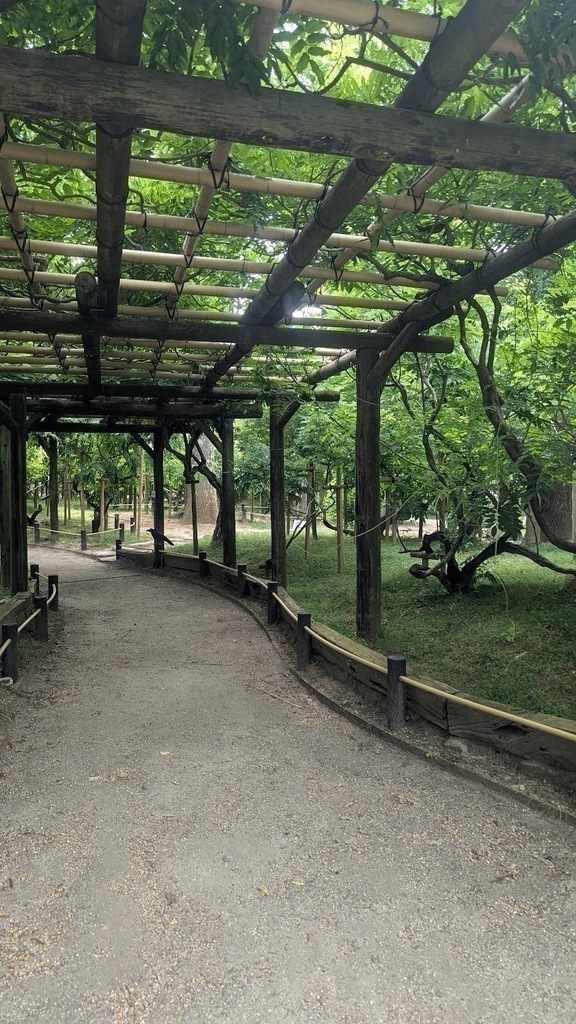
Aside from the disappointment at missing the wisteria bloom, there was some added disappointment in that there had been a bit of a heat wave and everything - streams included - was very dry. This meant that a lot of plants were struggling or weren't in bloom. However, the gardens were still super impressive and really beautiful.
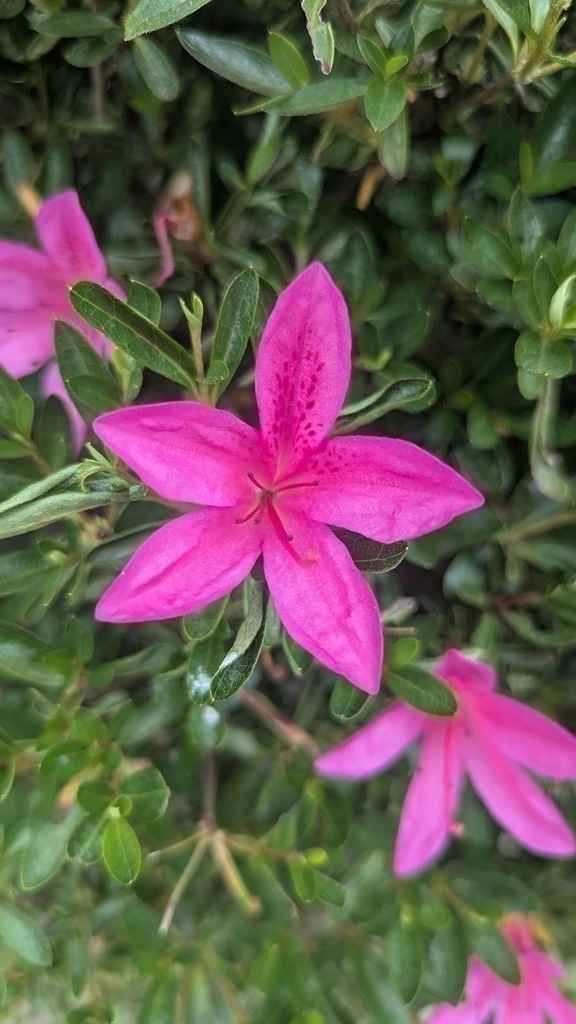
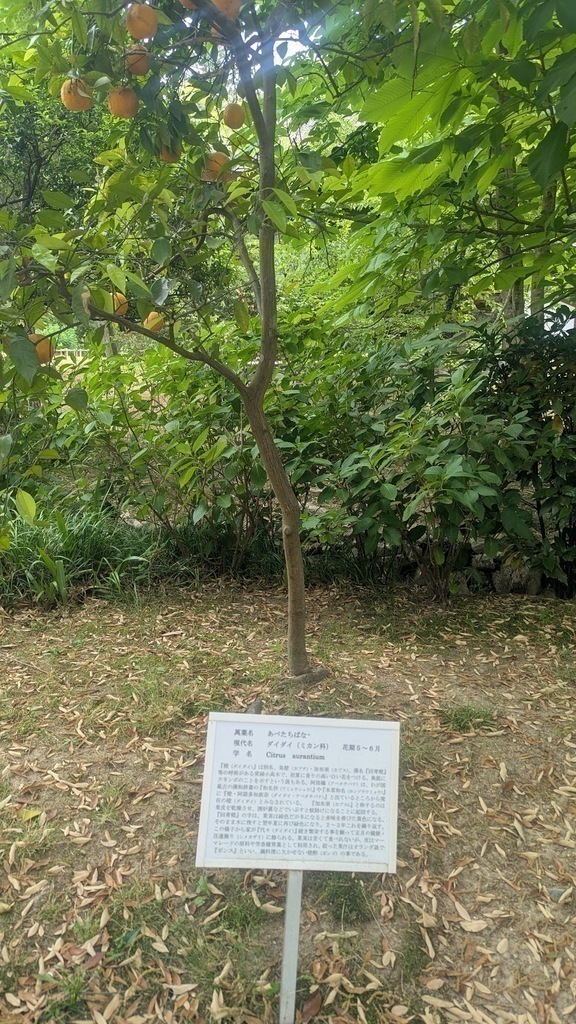
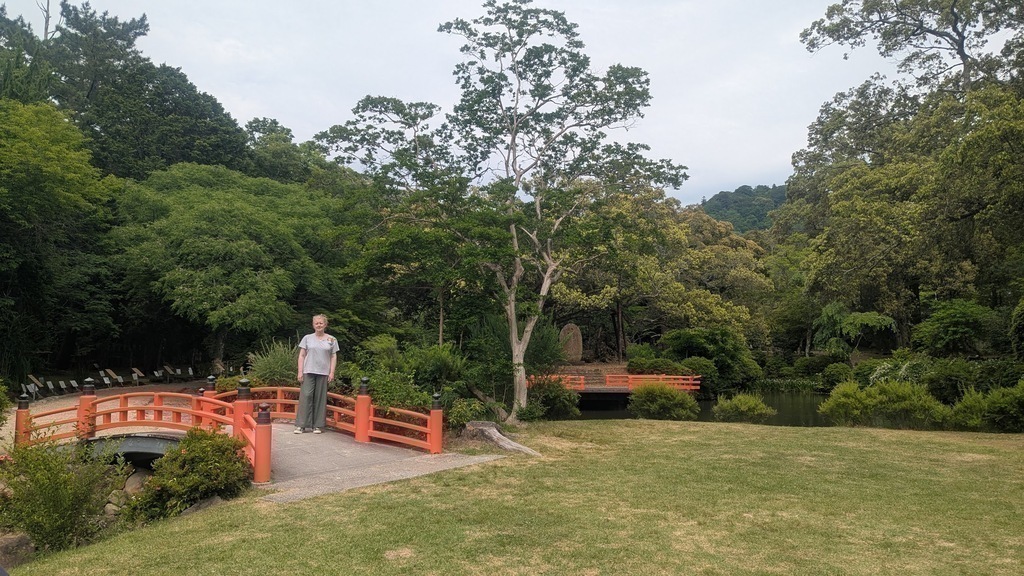
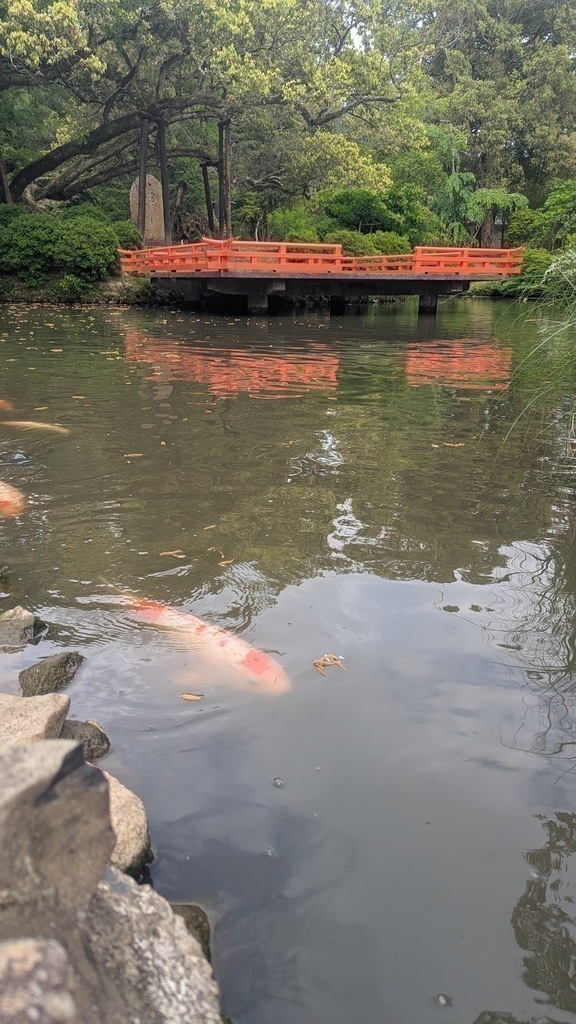
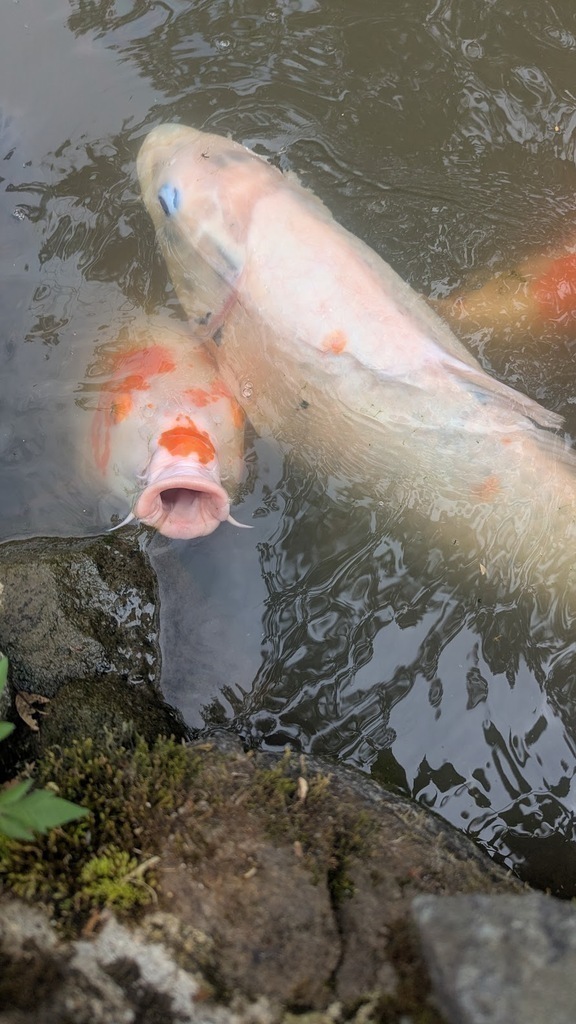
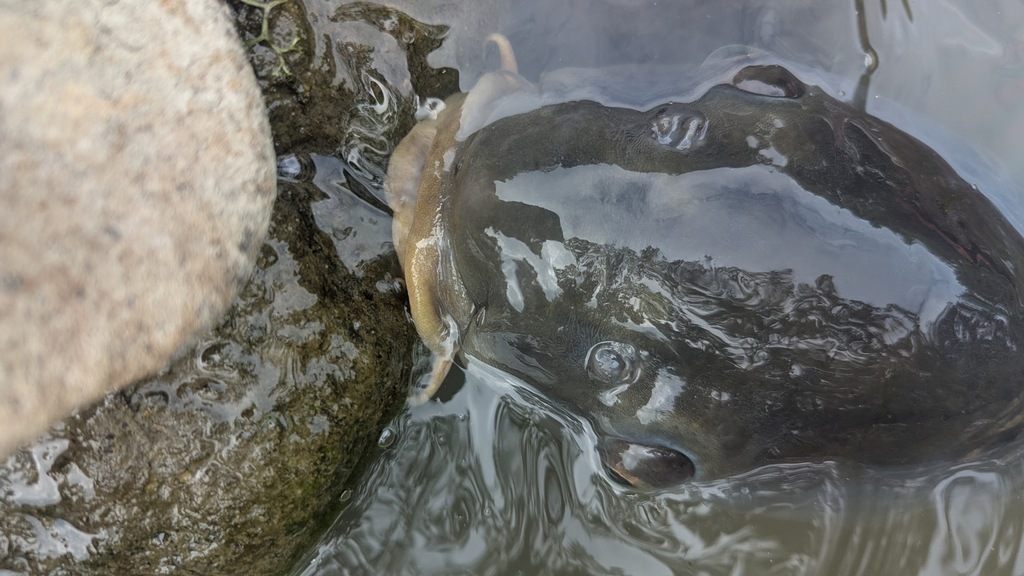

The hungry carp reminded me of the fish in the Boy and The Heron by Hiyao Miyazaki and Studio Ghibli.
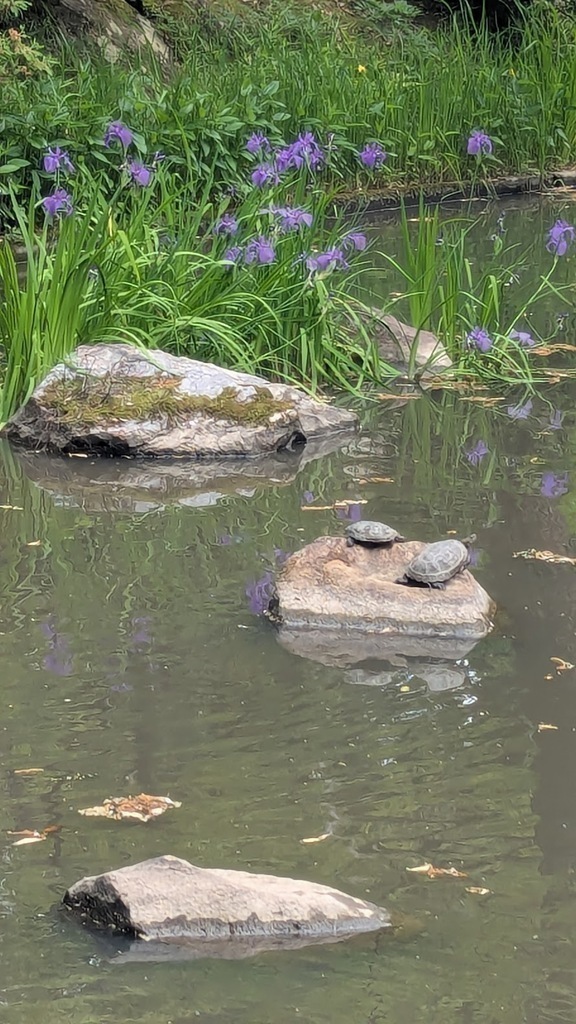
Around the corner, we were happy to see some sunbathing terrapins and to discover that the irises along the banks of the pond were all mostly in flower.
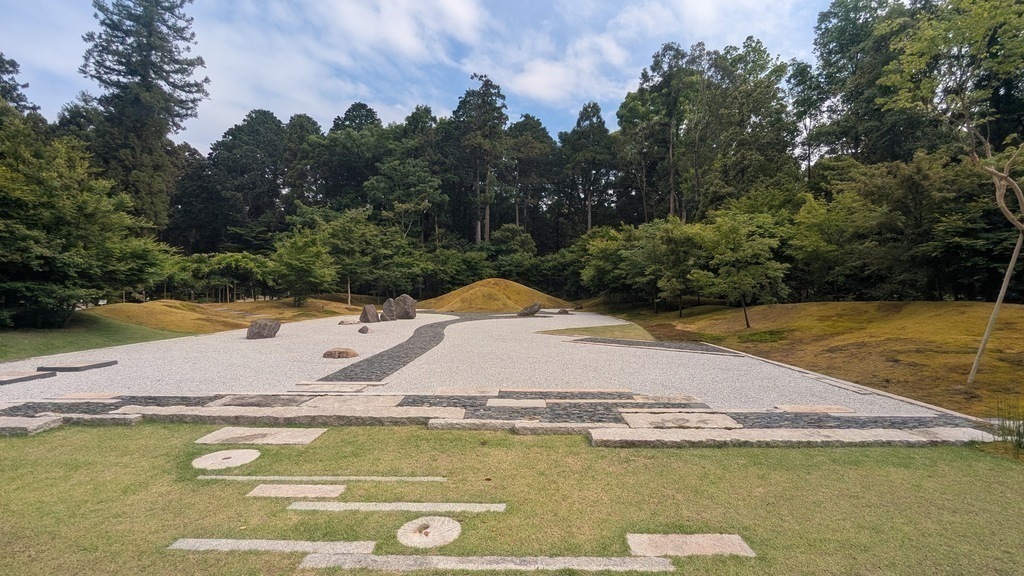
The gardens also feature this highly curated Japanese style raked garden with moss mounds.
Kasuga Taisha Shrine
A short walk from the gardens leads up a path lined with stone lanterns, many with prayers stuck to them. Of course, the deer are prevalent along this walk and have taken to posing between lanterns in the hope of a reward. People seem to stop and take photos, and usually reward the deer. We left behind a disgruntled deer, but we got its picture!
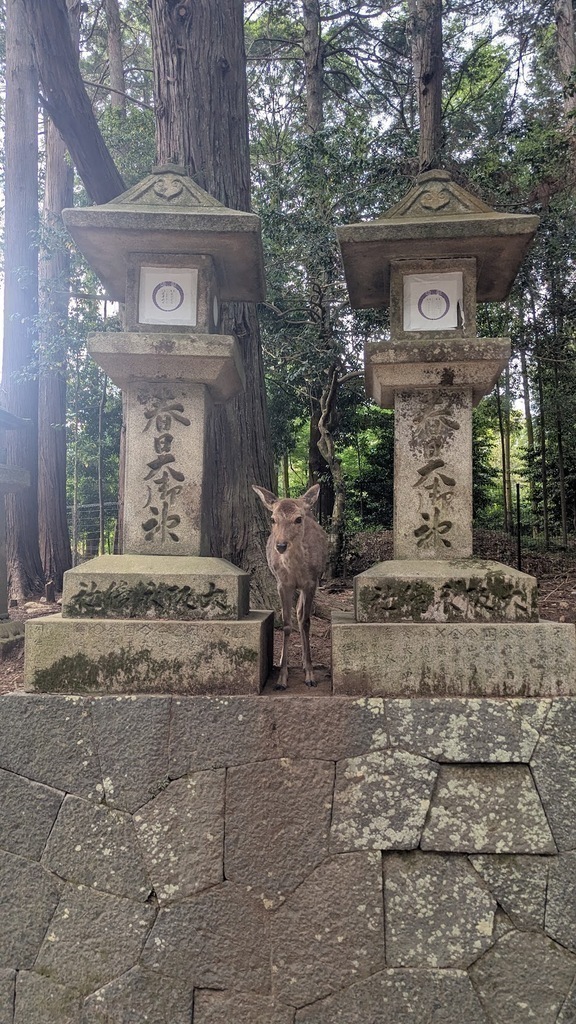
The path leads up the way to the Kasuga Taisha Shrine, built in 768 by the imperial Fujiwara clan, that dominated the imperial court all the way up until the Meiji Restoration in 1868. The tori gate at the shrine is considered the oldest in the Shinto tradition and influenced the design of all subsequent tori gates in Japan. Legend has it that the shrine was established when the kami of thunder and swords, Takemikazuchi, rode on the back of a white deer to the shrine's location to protect Nara.
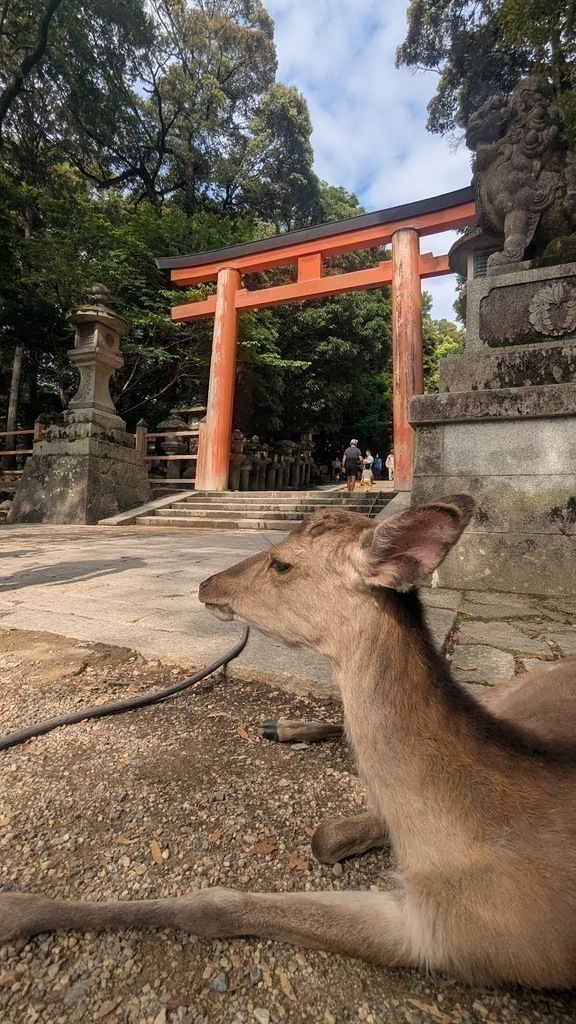
This shrine was definitely a cut above most of the Shinto shrines we had seen so far. It hosts 5 kami or deities, and the expansiveness of the shrine grounds and the lavishness of the decor and trappings definitely make you feel that something important happens here. As with all Shinto shrines, there is a lot of use of red and black, and lots of columns.
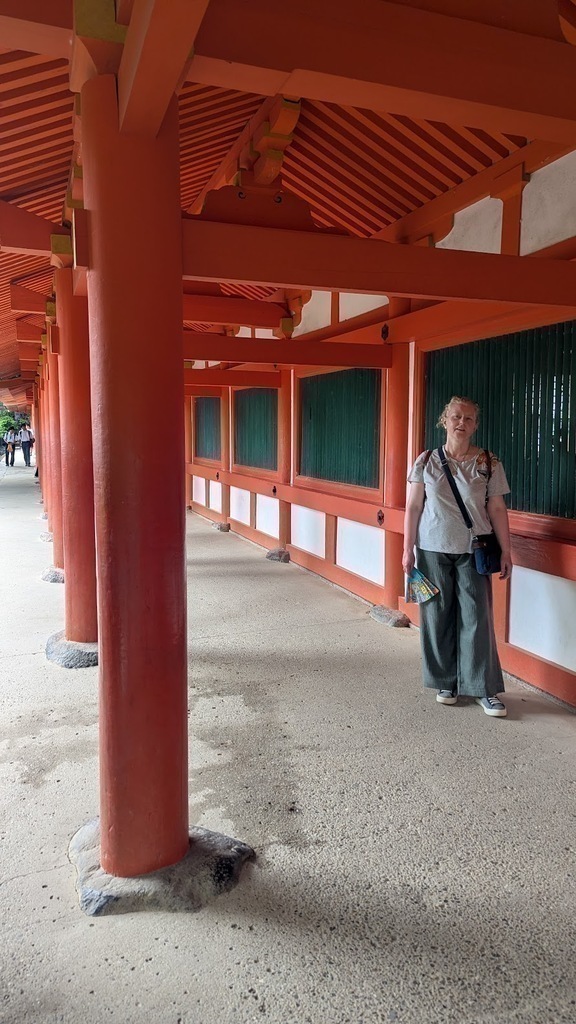
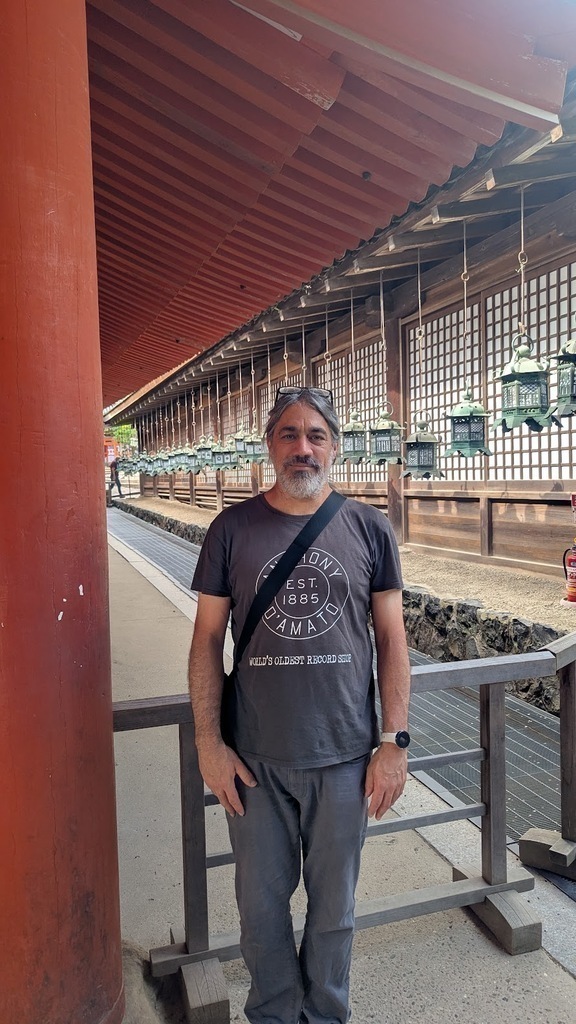
And then there are the lanterns. There are said to be over 1,000 lanterns here, and during festivals at night, they are lit up for processions.
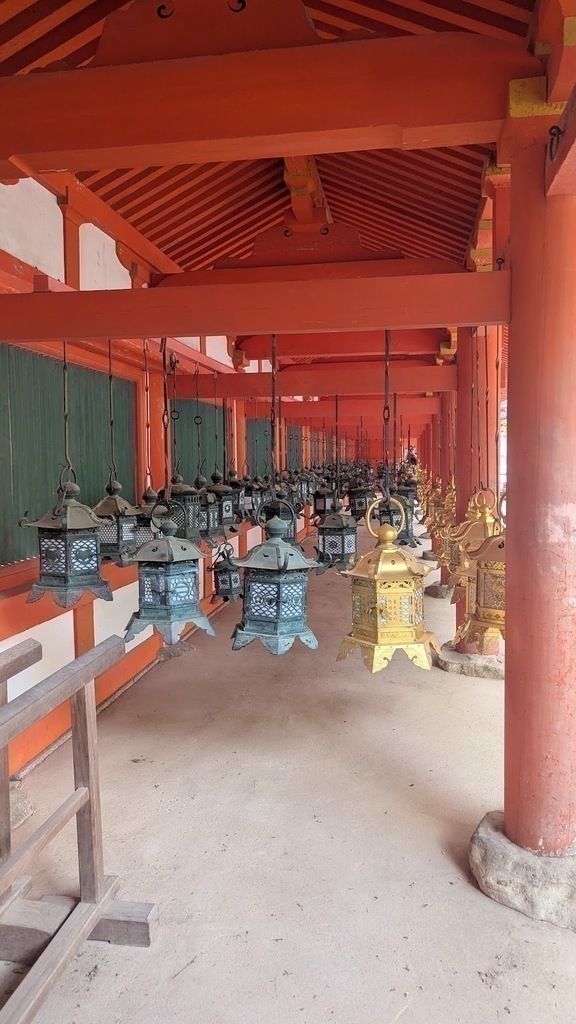
We walked down one of the processionary routes and it went on through the red columns and lanterns for a long time.
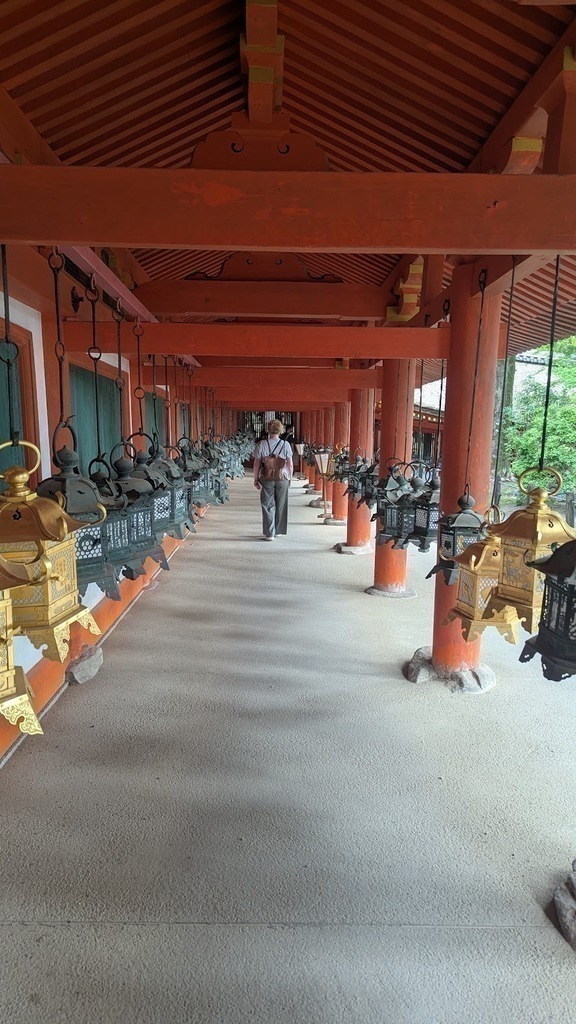
There was a darkened space for us to walk through to experience what the lanterns look like when they are lit at night.
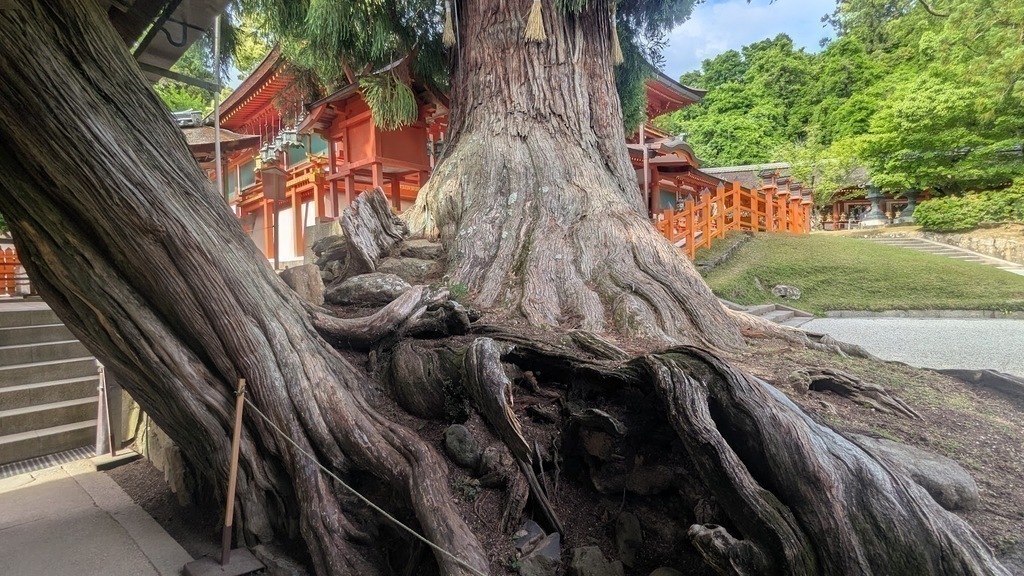
In the grounds, there is an ancient 1000 year old cedar tree. Out of the roots and leaning in the opposite direction, a Chinese juniper tree has grown and the roof of one of the shrines accommodates the tree, allowing it to pass through.
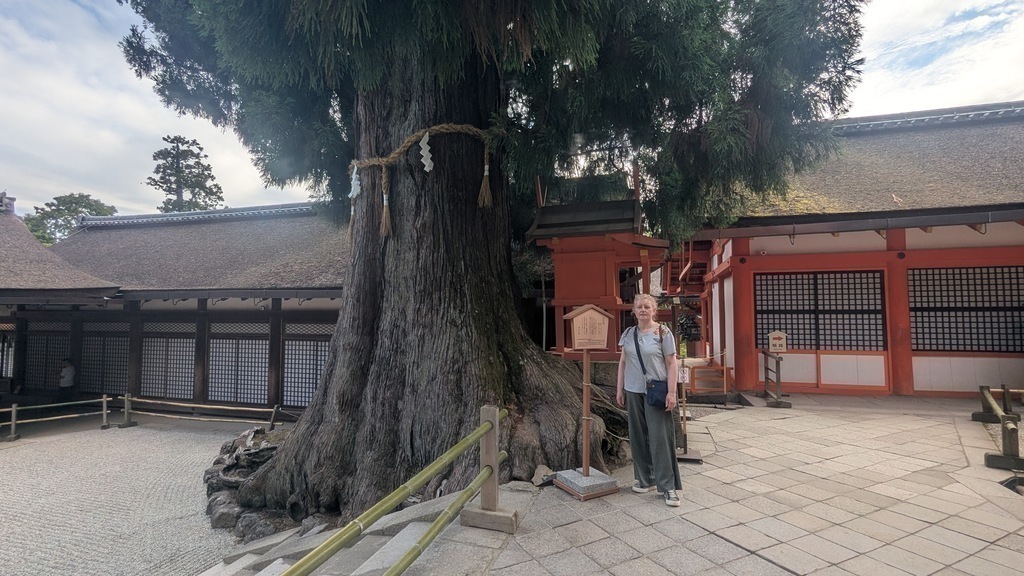
The sign in front of the tree reads:
Honsha-ōsugi (Cryptomeria japonica)
Height 23.0m
Circumference 7.94m
This Japanese cedar is estimated to be over 1000 years old and it is depicted in a picture scroll "The Gongen-kenki of Kasuga-Taisha" (1309)
A tree expand from root of Japanese cedar to west side through the roof of Neoraiden is Chinese juniper.
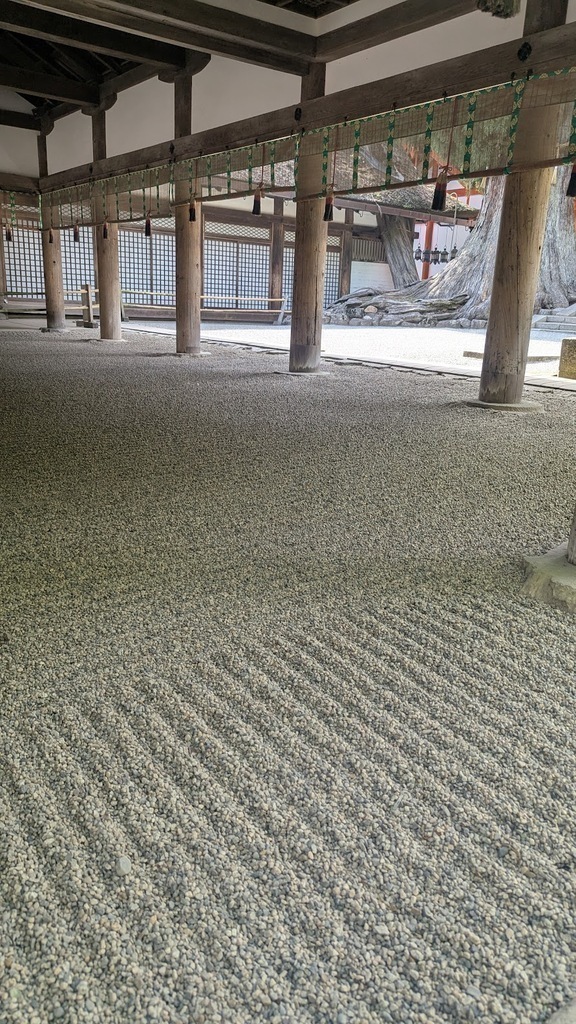
Finally, leaving the shrine, we took in the beautifully raked gravel.
Minor Disaster & Return
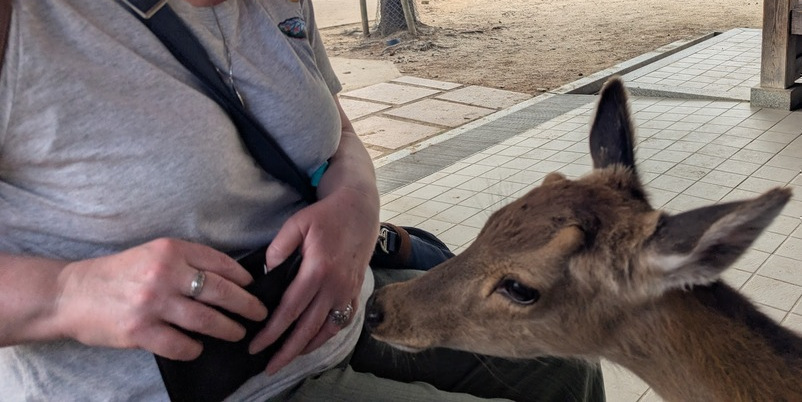
I lost my Suica card. Sudden panic and a lot of emptying of pockets and rummaging through bags. The deer started harassing us and trying to get involved in the action. Eventually we resigned ourselves to the fact that the card was gone and we would need to chat to people at the station to see if we could get it reinstated. After all we had taken the time to register the cards to ourselves. Not the end of the world, but annoying when you're trying to navigate trains.
So we get to the station and try to explain our dilemma and are redirected to various people, none of whom are really able to help. Eventually they direct us to buy a ticket back to Kyoto and suggest that we need to go to a major station to handle this request. So we buy a ticket and head back.
We stopped off at the hotel and got freshened up. If we were heading into Kyoto Station, we might as well eat at the station. I had looked up a vegan ramen spot that looked promising. So we set out to Kyoto Station and started going from person to person in the station trying to find out how to reinstate the missing Suica card. No luck. One station master suggested we approach the police to report the missing Suica. We felt this was overkill. At most, there was probably £5 on the card. We decided to cut our losses. We went to buy another card, but Suica isn't really available in Kyoto. So we discussed with another station attendant who spoke into his phone to get translations. I could buy an Icoca card instead... it's really the same thing, just a different company. With great humour he translated his admonition: And don't lose your card again!
Google maps had us missioning all over the station trying to find the vegan restaurant on the 14th floor, which we eventually discovered was in a different part of the building accessible through a glass tunnel that hovered over the station. Ah that brilliant architecture. Of course, the vegan ramen place was absolutely packed and there was a queue outside. We were notified that they weren't accepting any more bookings. Right opposite was a standard meat-friendly ramen place that had worked out that it just needed to add a 'Vegan options' sign outside to attract clientele like us. So we ate at Ramen Iroha, which provided a perfectly reasonable vegetarian friendly ramen in broth. Most needed at this point!
On the way back out of the station, we saw this cool view of the Kyoto tower in the station. We got another couple moving through the station to snap these pics for us.