Day 12: Monday 25th May
Hakone Loop & Return to Tokyo
📍 Hakone & Tokyo
Morning at the Ryokan
We woke up super early, partly because the light comes into the room really early, but also because we knew that breakfast was scheduled for 07h30 and they needed half an hour to prepare. I decided to head up to the onsen again to wake up properly and have another soak. After all, that's why we were here. It was good to sit in the outdoor space and take in the early morning sun, the cooler morning air and to feel the warm water soaking into the muscles.
On return to the room, things were already getting started and the futons were rolled up and the table was being laid. We didn't quite realise that breakfast was going to be a continuation of the kaiseki experience from the previous night. Multiple dishes were laid out and I think both of us were in shock just looking at the spread.
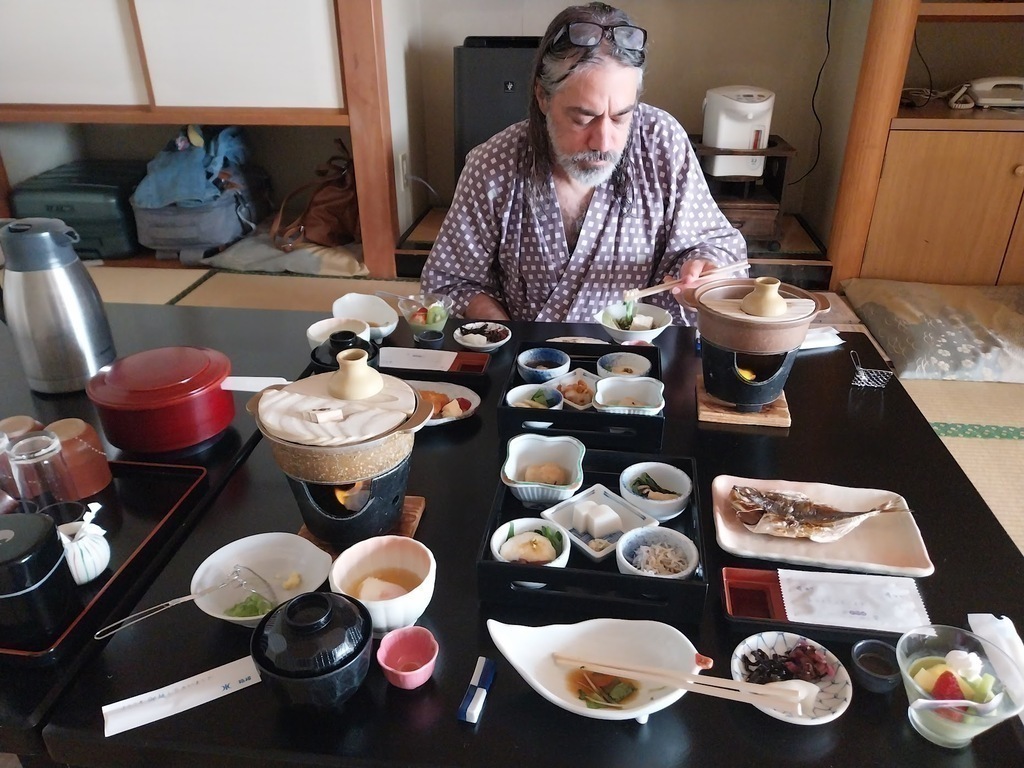
Well, maybe it was just me in shock. Maria was pleased at what was shaping up to be an O'Connell style holiday.
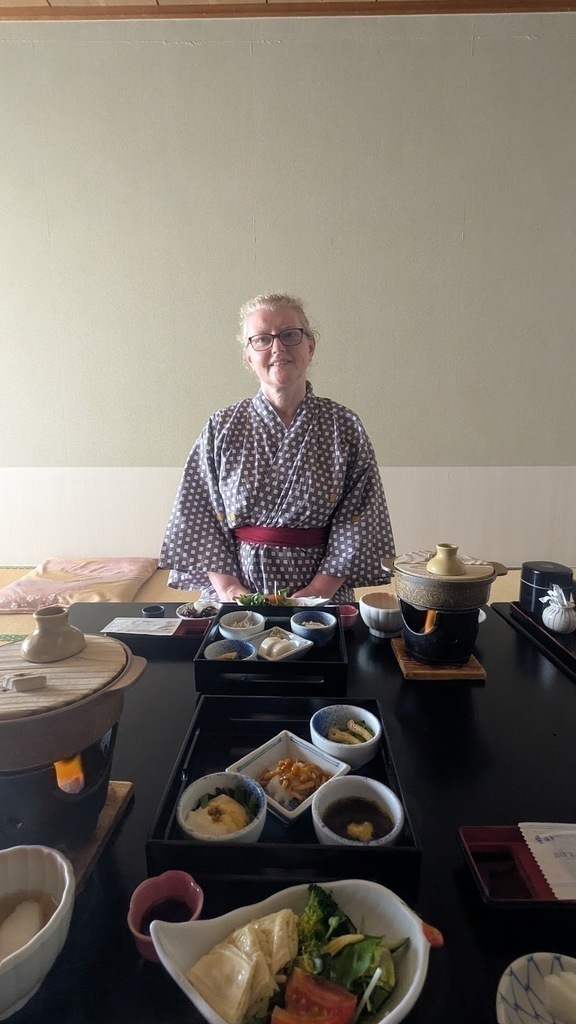
Of course we have more food pics, but today is a big day for pictures, so we will spare you those...
We checked out of the ryokan at 09h00. Breakfast took a while, and I snuck in one last onsen session and then we changed back into our regular clothes and headed out into Hakone to begin the famous Hakone Loop. There were some lockers at the station, so we popped our bags into one of those and went to the ticket office to grab the Hakone Free Pass, a 2-day ticket that allows you to use all transport in the loop as much as you want.
The Famous Hakone Loop
The Hakone Loop is a scenic circuit through the Fuji-Hakone-Izu National Park, that you traverse using five different forms of transport, including a switchback train, a cable car (funicular), a ropeway (what English people call a cable car - just to confuse you all), a pirate cruise ship, and a bus. We chose to do that in reverse order on several recommendations because it helps to avoid the busy time at some of the more scenic points of interest.
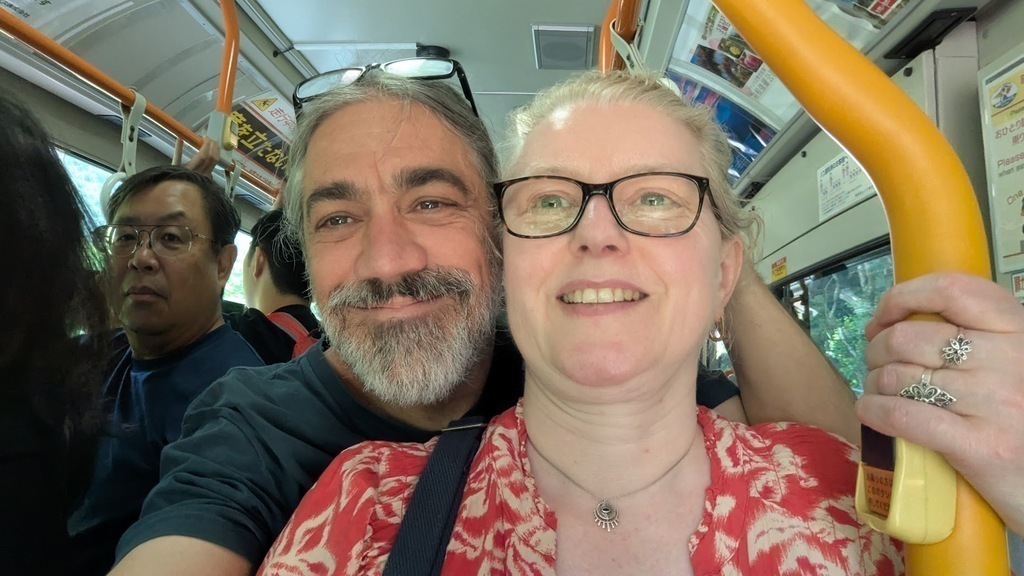
We started on the bus, which was pretty packed. We were standing up near the front and squished in with quite a few people, but the journey wasn't more than about 35 minutes up over a winding pass. For a brief moment we glimpsed Mt Fuji. By the time I had taken my camera out, the mountain was behind cloud. I wasn't too disappointed, I managed to snap a happy bus selfie instead.
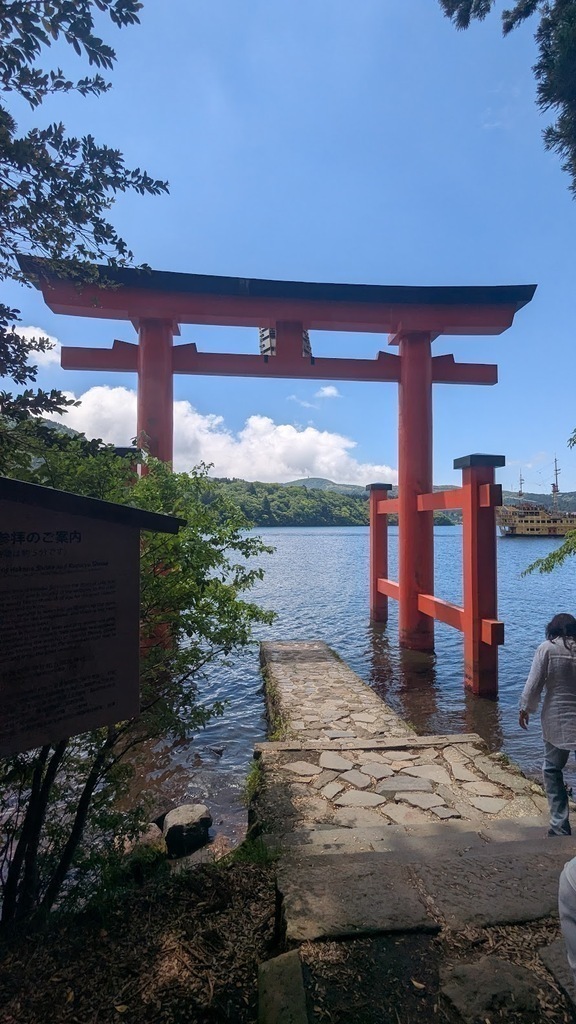
We arrived at a stop near the floating shrine and hopped out with several other tourists. Folks didn't seem to know exactly which way to go, but there was a path along the shoreline and it seemed fairly obvious, so we followed it. We crossed a cute little bridge painted with what I am now going to call Shinto-red paint. Not more than a hundred metres down the path, we noticed the gathering cluster that had formed to get pictures in front of the floating shrine, so called because the tori gate is actually in the water, so appears to be floating. This is definitely one of those iconic pictures in Japan - probably the shrine should be renamed to the Instagram Shrine. The queues were already long and we weren't going to hang around for half an hour just to get a picture that pretended nobody was there. So we did our pics with the crowds all in the frame.
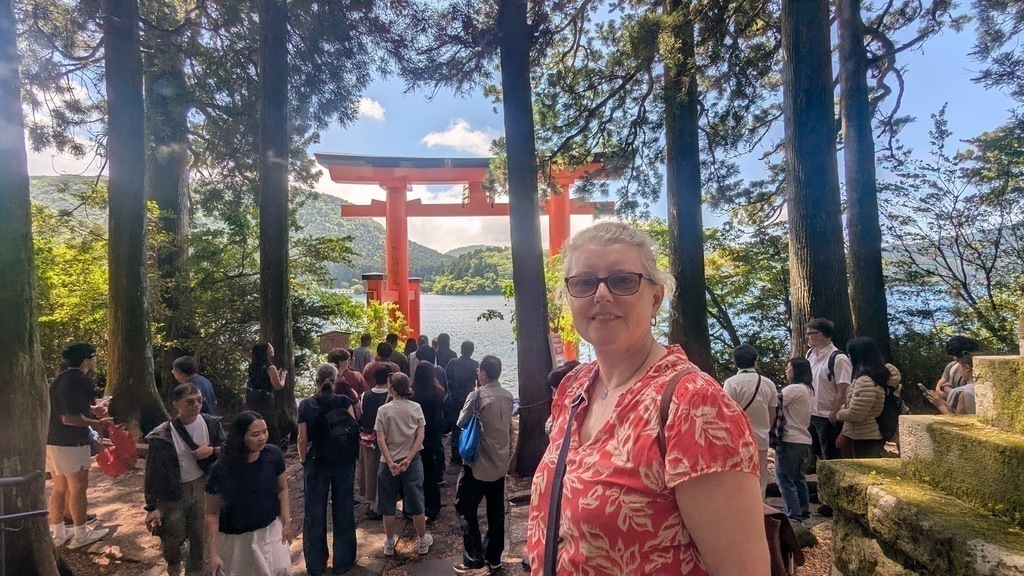
I took this picture so that you could see the floating shrine and the reason for the queues. There was a small gap just before the next lucky winner was about to walk into frame to add their photo to the huge collection of photos of people in front of this tori gate.
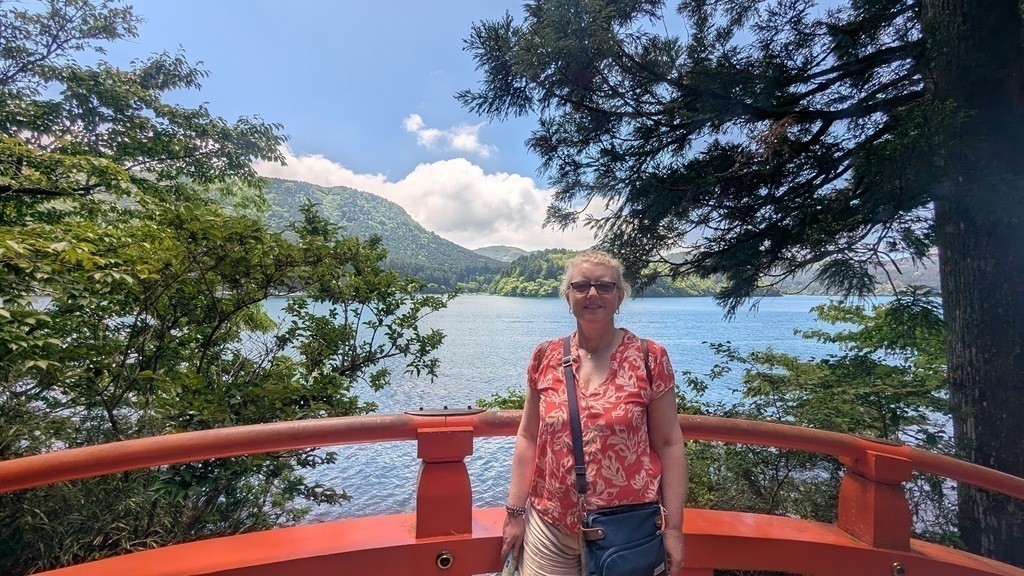
On the way back to the bay where the 'pirate ship' would ferry us across Lake Ashi, we crossed that Shinto-red little bridge again, and I took this picture of Maria, which is just as lovely as the tori gate!
As we walked towards the dock where we would board the boat, we heard this amazing guitar music playing across the promenade. We saw a Japanese man sitting on a chair with his guitar on a raised step. I asked Maria if she had any change, and the best we could find was a ¥500 coin, but his playing definitely warranted a couple of quid. We walked over and dropped the coin into his can. I asked if we could film, and he nodded and chatted away for a bit incomprehensibly. We waited for the song to start and were surprised by this chicanery! 😂
The man deserves the coinage just for the performance. We had a good laugh. Clearly he had a speaker playing a recording hidden somewhere.
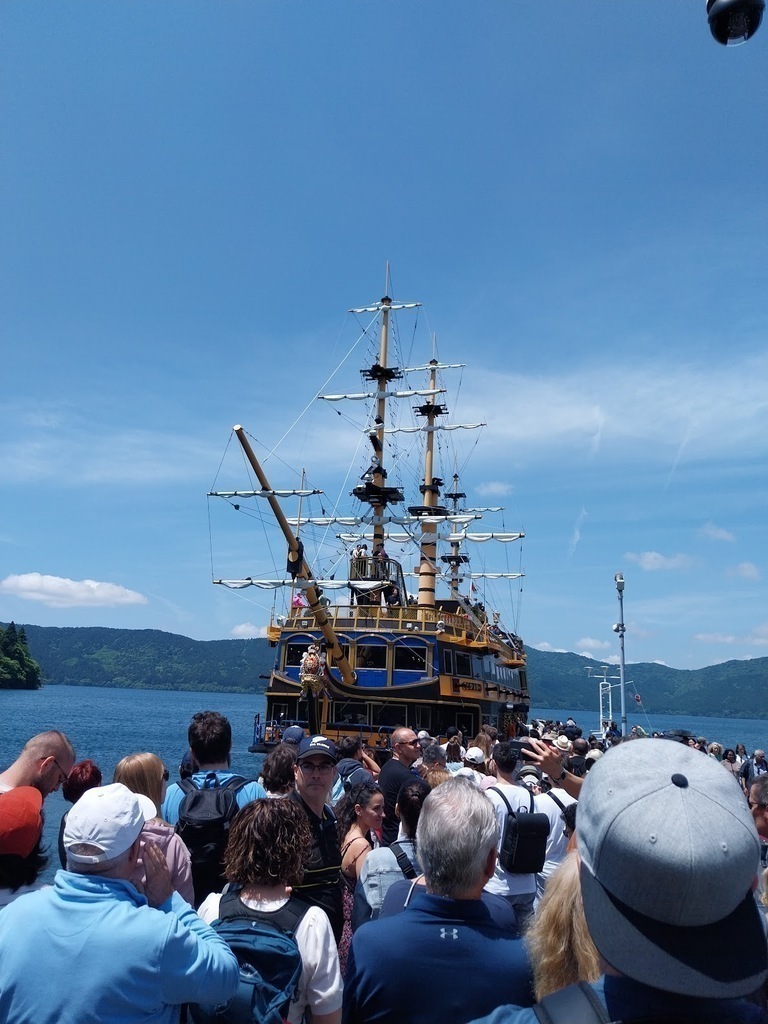
We queued to board the boat for quite a while, waiting for it to dock and for passengers coming the other way to disembark. We were a little worried that we might need to wait for another boat, but we made it through onto the little pier jutting out into the lake and joined the crowd waiting to board. They do actually call these pirate ships, and they are overly ornate and rather ridiculous, but they make a good ferry across the lake and are super entertaining.
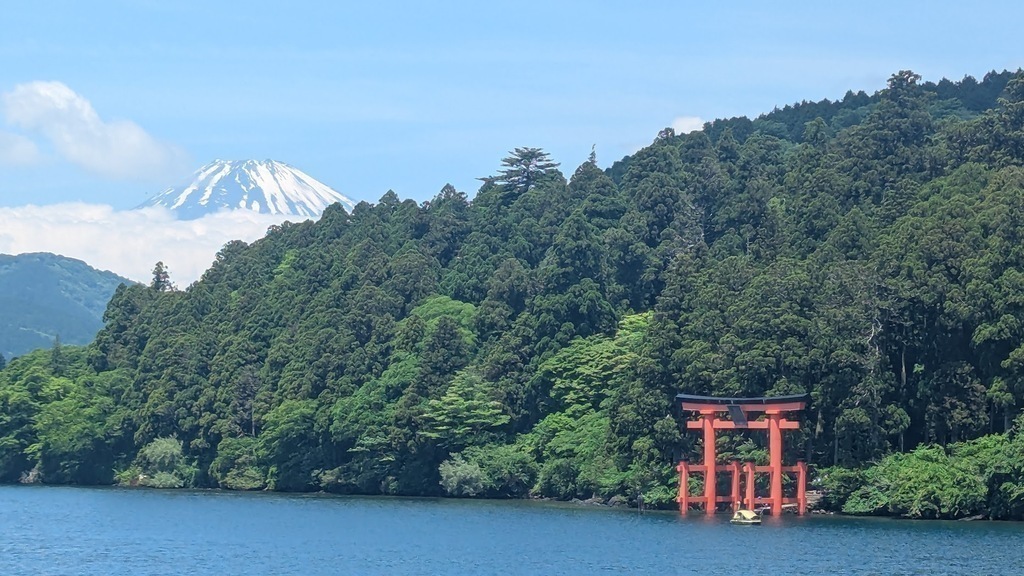
From onboard the pirate ship, we got a fantastic view of the floating shrine. As we set out into the lake, we could see a few pedalo paddleboats that people had hired to get out onto the water. When we had met up with our friends Simon and Louise, in Osaka, they mentioned hiring a pedalo to get a better view and to get an iconic snap of Mt Fuji from the lake. Well, we got a wonderful pic of Mt Fuji, the floating shrine, and a pedalo in front of the shrine. That would be some feckers like Simon and Louise, spoiling a perfect picture. 😂
The lake crossing took about 20 minutes to half-an-hour. We passed another 'pirate ship' that gave me the opportunity to snap a pic so that you can imagine what we looked like crossing the lake in the other direction.
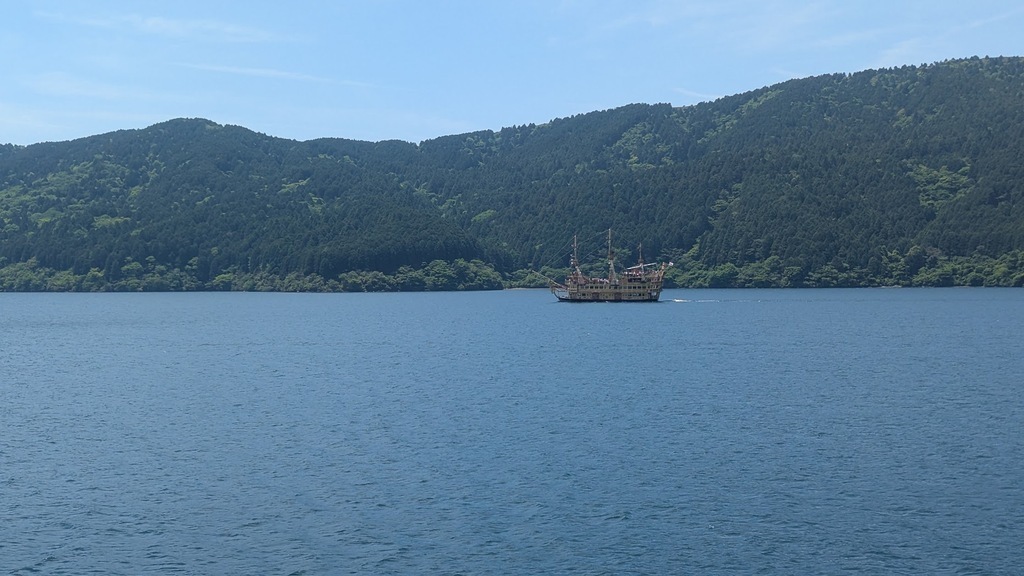
The scenery as we motored through the water was beautiful. Looking at the heavily wooded mountainous landscape reminded me of what this looked like flying into Japan and it really is stunning. We noticed that South Korea was similarly forested with loads of mountains like this, so these places are definitely worth a visit if this is your thing. We just enjoyed watching the land unfurl as we moved through the water, revealing more woodlands and mountains.
As we reached the shore, we shuffled our way to the door on the ship so that we were ahead of a lot of the other passengers. When we exited the ship, everything was neatly signposted to direct us to the ropeway, and getting ahead of the rest of the passengers counted in our favour, as we were able to board the ropeway carriage immediately.
The ropeway ride was a trip. It passed over loads of woodland with some wonderful views of the lake. We passed over lots of acers and some giant magnolia trees with flowers the size of saucers.
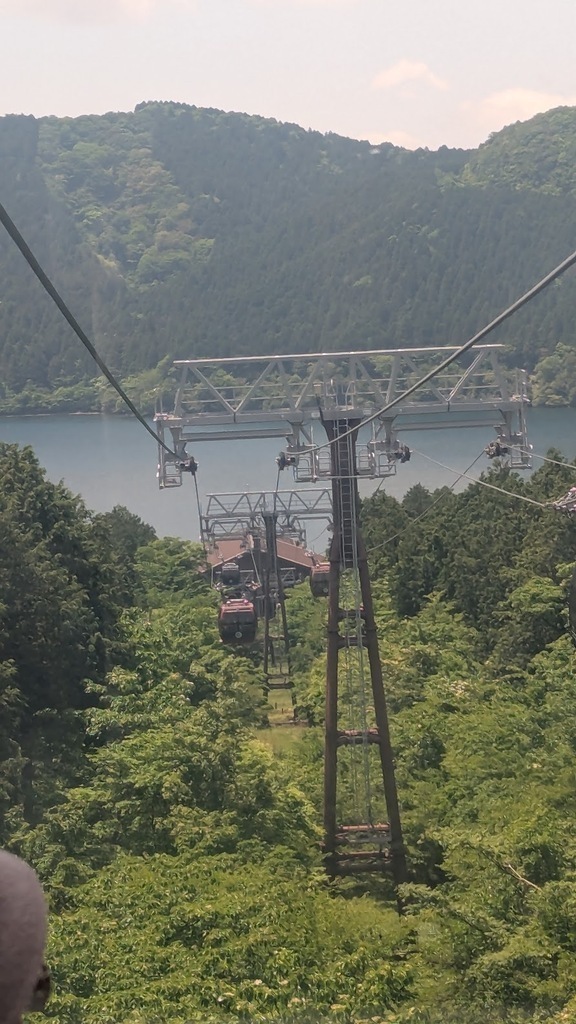
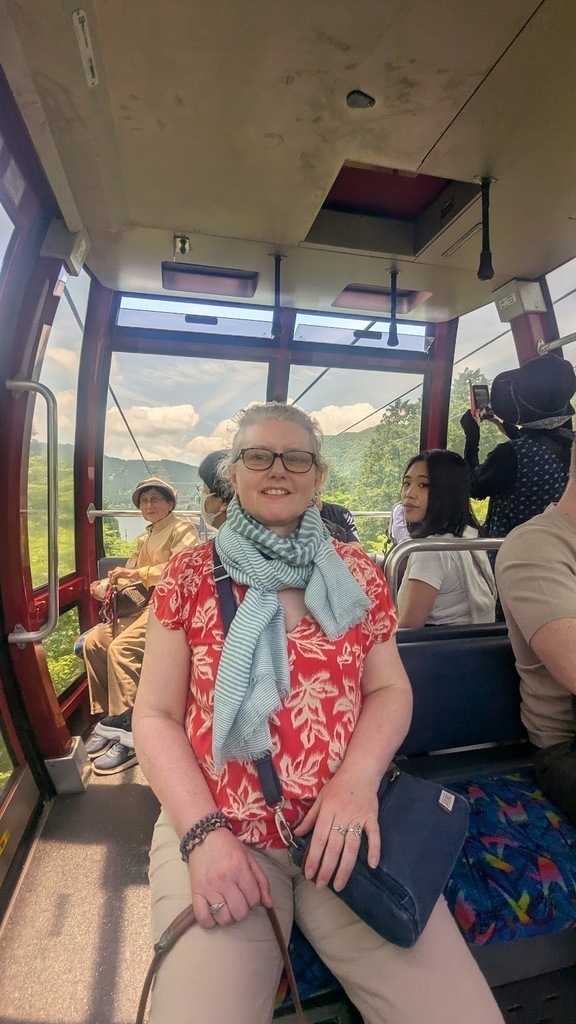
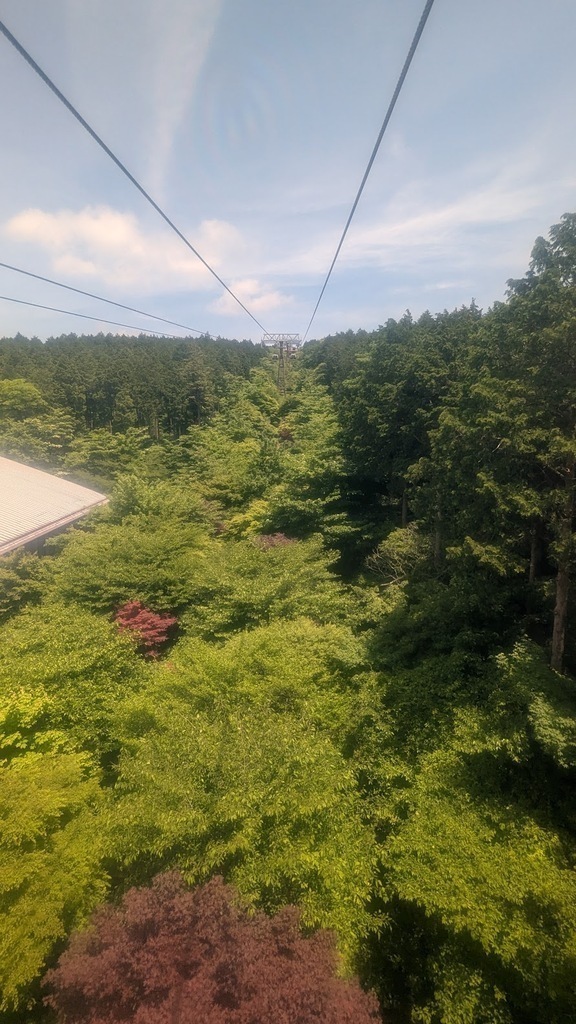
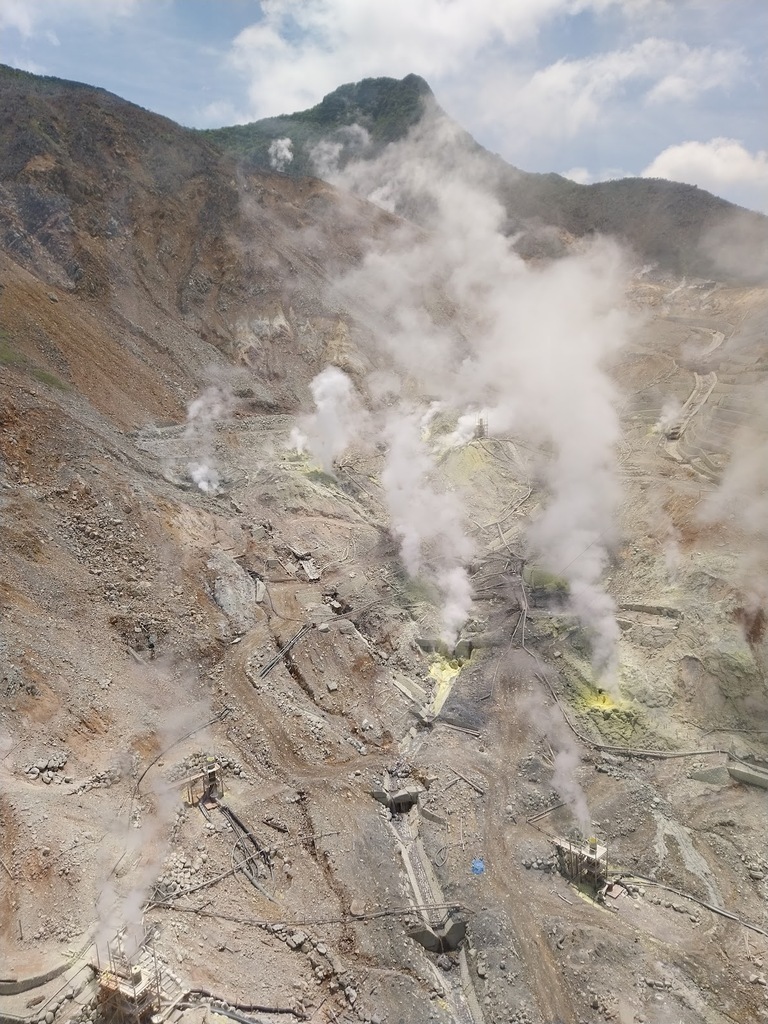
As you near the top of the mountain you notice more dead trees and plumes of smoke and gasses rising into the air. This is an active volcano called Owakudani and it is mined for sulphur. Also they cook eggs in the sulphurous gasses, rendering the famous Hakone Black Egg, which you can buy at the shop at the top if you're willing to wait in the lengthy queues. I worry more about being trapped in a ropeway carriage with people that have eaten eggs cooked in sulphur!
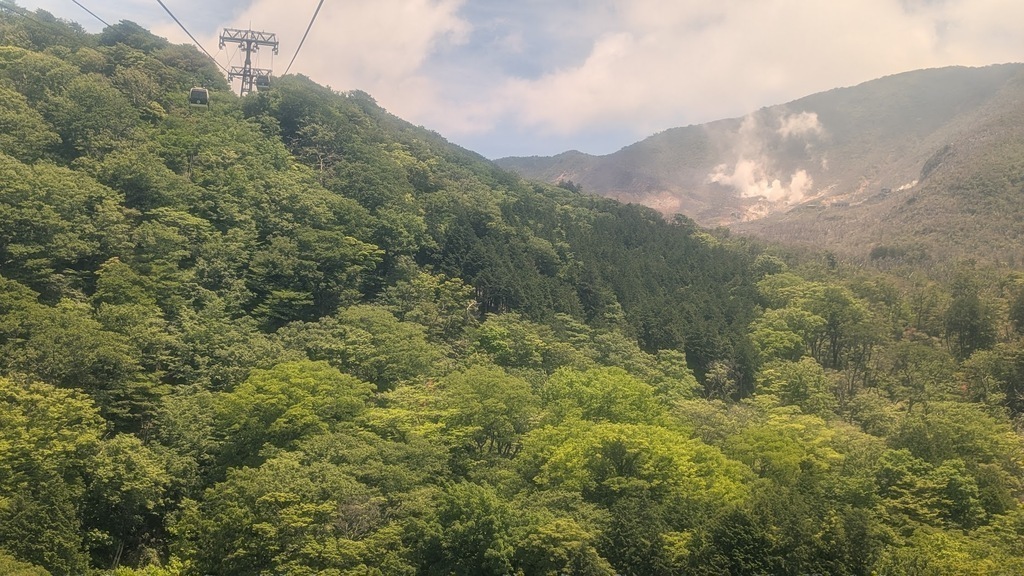
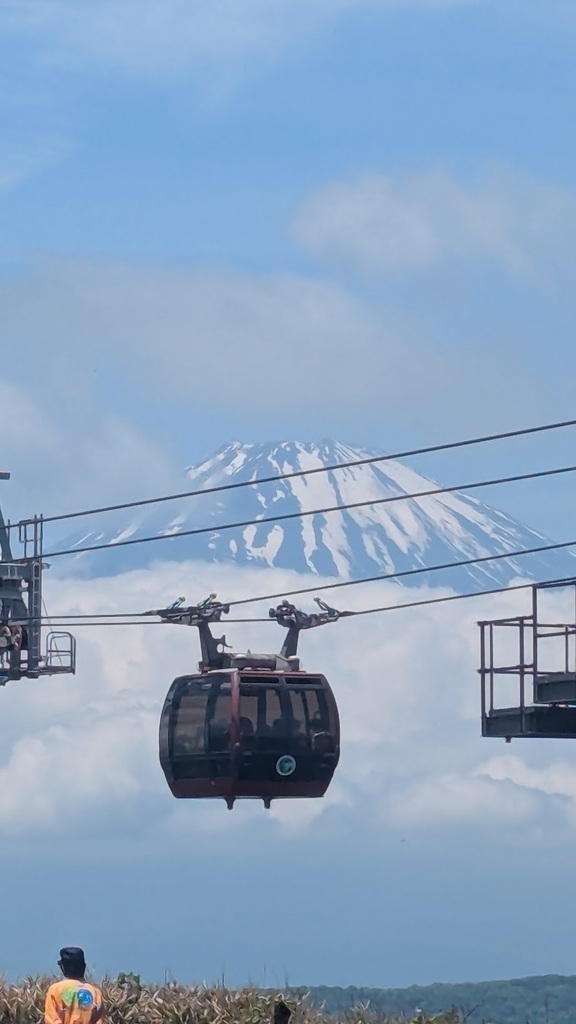
While we were riding up we noticed that Fujisan was visible on the other side of the ropeway carriage. So you have the volcano on one side and Fuji on the other. I took this pic after we had exited the ropeway, and am sharing this because it looks better than some of the pics I took from the ropeway, and captures the experience a bit better.
At the top are the obligatory gift shops and tourist centre. There are various viewing points, and you can look down to the sulphur mines where sulphur is collected, and also those precious black eggs. It must suck to have to work down there.
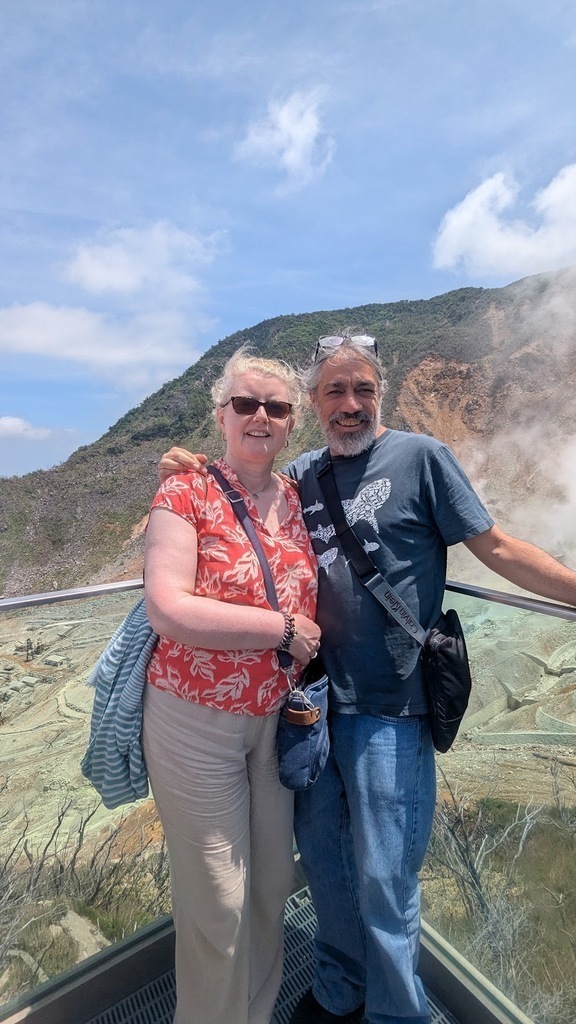
And here we are at a viewpoint. Now, I am just going to kind of sing it: Volcano man! Volcanic protector man....
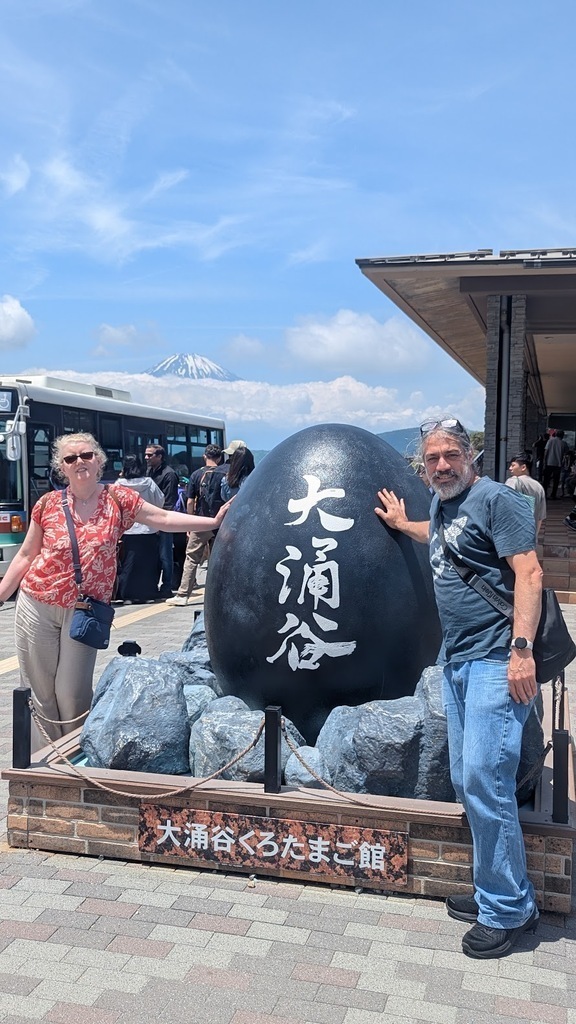
A black egg statue is provided with the epic Mt Fuji in the background as the perfect opportunity for a photo shoot, ruined by the car park and bus stop in the background. Of course, a bus pulled in just as someone took our picture.
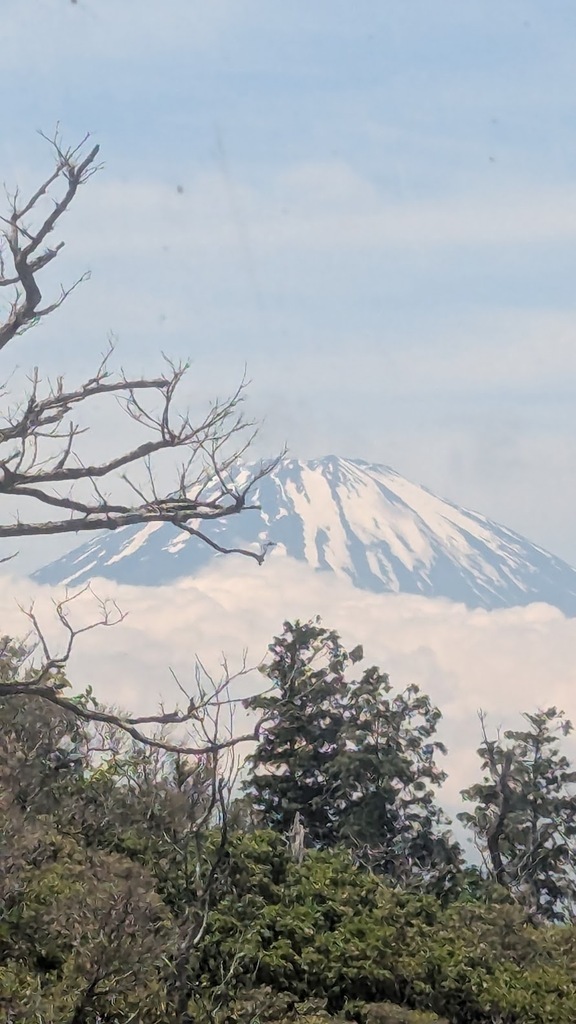
We caught the ropeway down the other side of the mountain, and the ropeway goes right over the volcanic vents, which is fun. You also get some amazing views of Mt Fuji, so I snapped this last one, that I am quite happy with.
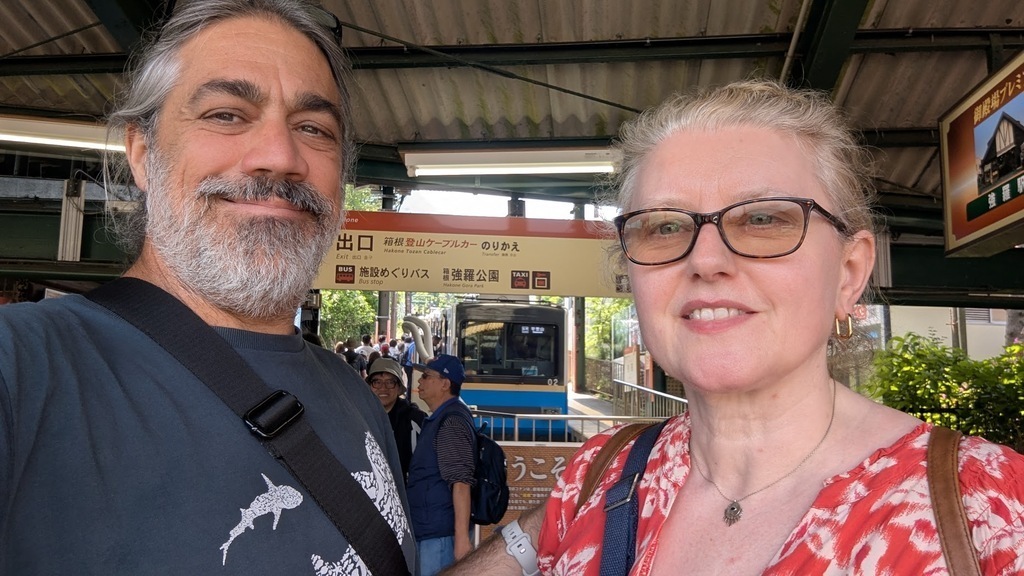
At the bottom of the ropeway, there is a pretty quick sign-posted change to the station to get the cable-car (a funicular) to take you further down the mountainside. We had a short wait at the station, but it wasn't busy and all the changes of transport is part of the fun.
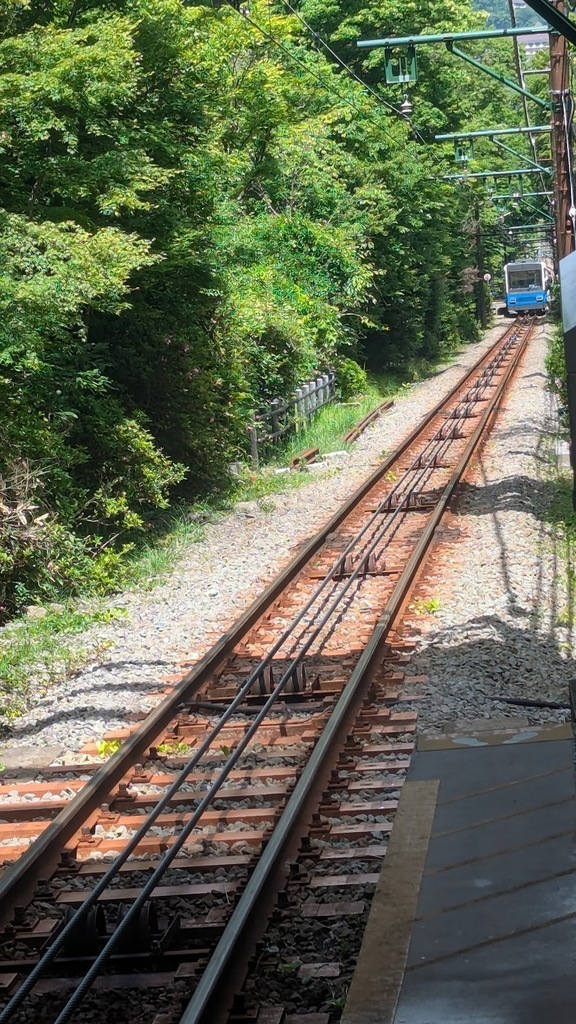
The funicular journey isn't particularly long, but you stop at various points on the way down. Some people, with a bit more time, like to hike through the Gora national park, which looks pretty as you journey down the mountain. The stops allow people to get on and off where they like.
At the bottom of the mountain, you get off the funicular and you walk through a gate into the old-fashioned rail station, where you get to catch the switchback rail. This is cool because it is Japan's oldest mountain train and it takes about 40 minutes to zig-zag down the mountain. It is a switchback train because at each point where it does a zig-zag, it switches track and changes direction of travel.
Apparently the train gets amazing June/July scenery because all the hydrangeas are in bloom, and in autumn, the colours of all the trees make it a spectacular ride. For us, we got the lush green of the late spring, and just enjoyed watching the forests pass us by.
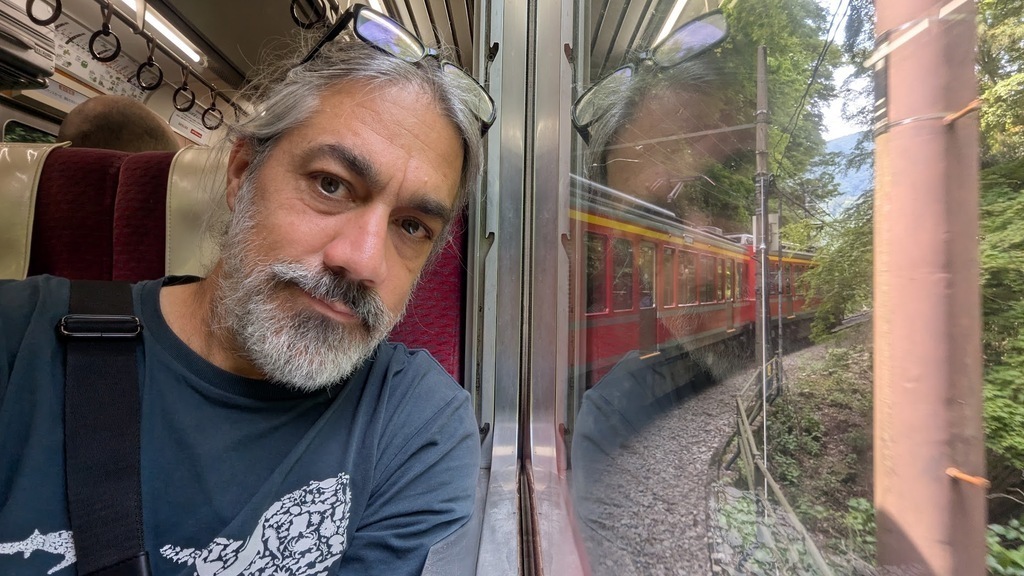
At last we were back in Hakone, and we had completed the loop.
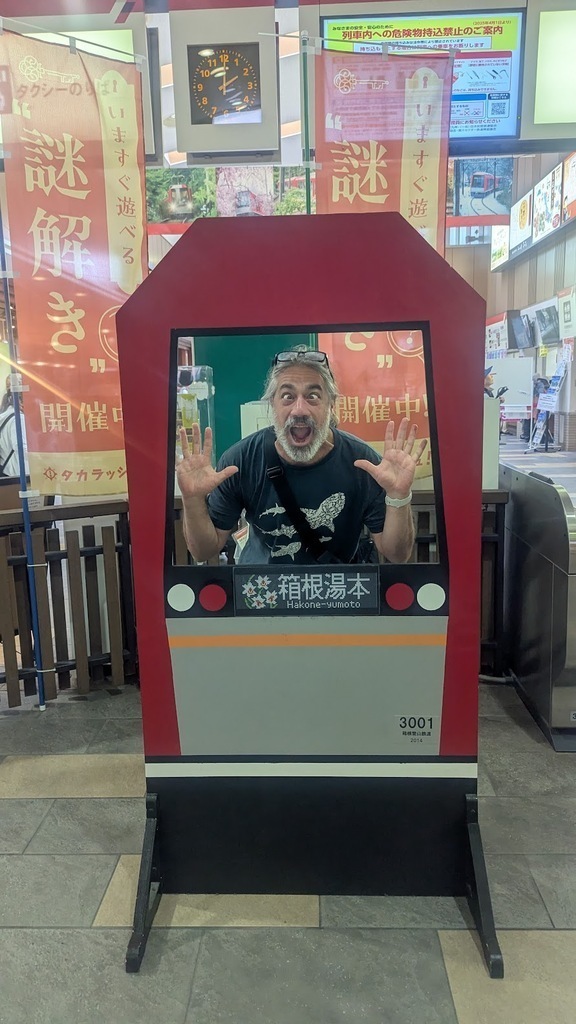
We also have masses of photos from this leg of our adventure, and really it is hard to document and share everything. If you're ever in Japan and passing through Hakone, we recommend taking a day out to do this. Start early to avoid crowds. It is really easy once you have your Free Pass card, and it is a great way to get in a bunch of pretty amazing scenery in a relaxed and easy way. The whole loop took us just about 4 hours, which seems a fair amount of time if you're not hanging around places for too long. If you really want to soak up the experience and do some walking, give yourself a full day.
Hakone Shopping and Riverside Stroll
While we were on the switchback train, we booked our Shinkansen journey from Odawara station to Tokyo for 16h15, and we had already checked the train times for trains from Hakone to Odawara, so we had some time to kill. We decided to take a stroll around the Hakone shops. We found another bee shop selling ice-cream with honey. They also sold a sweet potato and red-bean paste dumpling, called Manju. We decided to try both. The dumpling was scorching hot, but tasted pretty good. Maria discovered that it tasted even better if you put it into your ice-cream tub and had it with the last of your ice-cream, which also helped to cool it down. It was a weird thing to eat as a sweet, but surprisingly tasty and healthy, of course.
The shops sold a variety of handmade goods, mostly geared towards tourists, but less tacky than you might imagine, with many of the shops selling craft goods and gift-packaged food items.
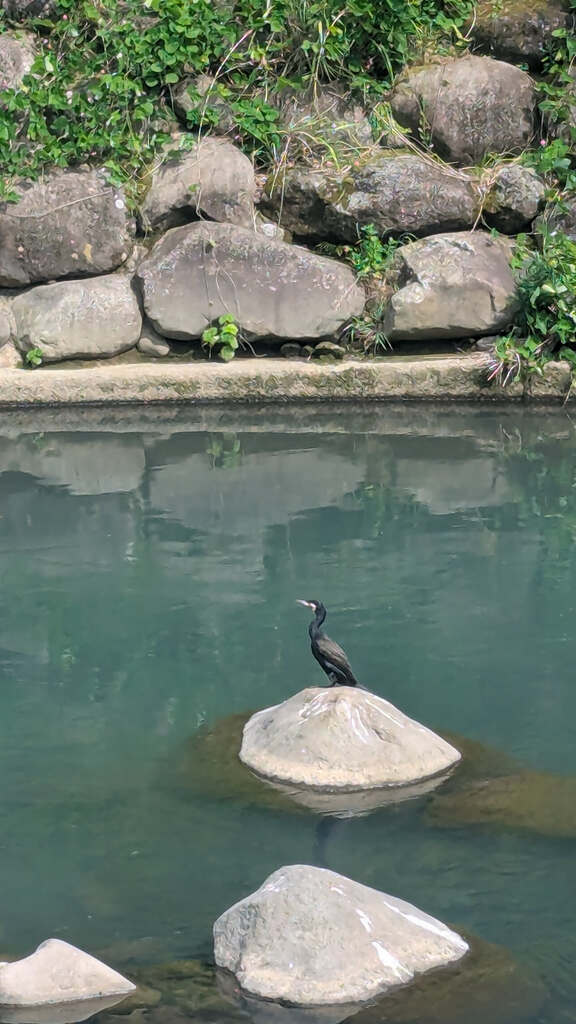
After checking out the shops, we took a stroll along the riverside. We saw a cormorant sunning itself on a rock in the river. The water really is that strange blue colour.
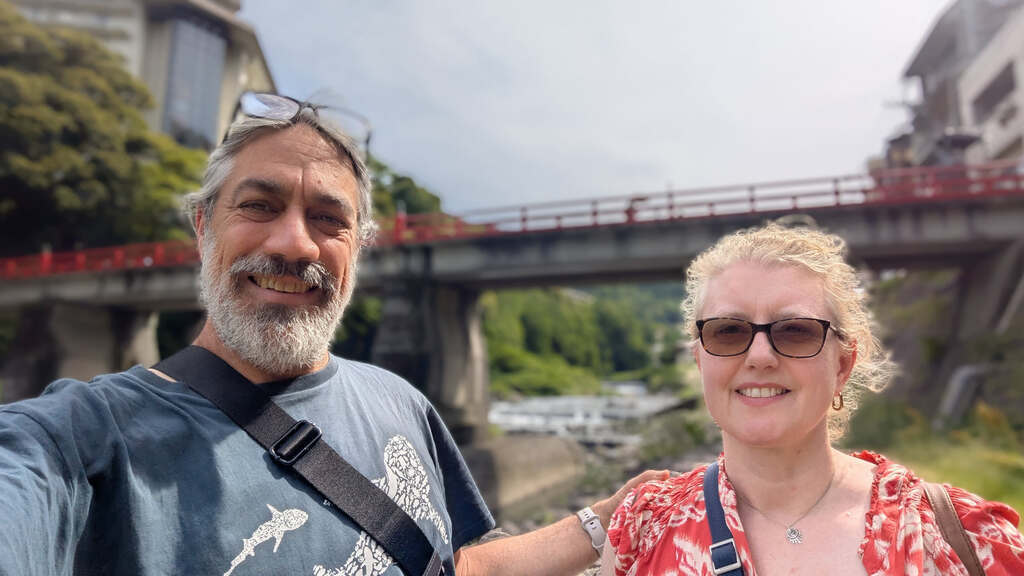
The bridge over the river in Hakone, has a Shinto-red railing that makes it pretty to look at from a distance. It is a small detail on what is really a pretty average road bridge, but it makes a difference and improves the entire aesthetic. These small details are the things that stick with you about Japan. Simon said to me that one of the things that he noticed was that wherever there were building works, there was equipment measuring noise-levels and displaying the number of decibels publicly so that you knew how much of a nuisance the building works were. Also, just the sheer tidiness and cleanliness about how the Japanese work. It is interesting to reflect on what sticks with you.
The picture here shows Maria with the bridge, the river and its weirs, and the building on the right, just under the bridge was our hotel.
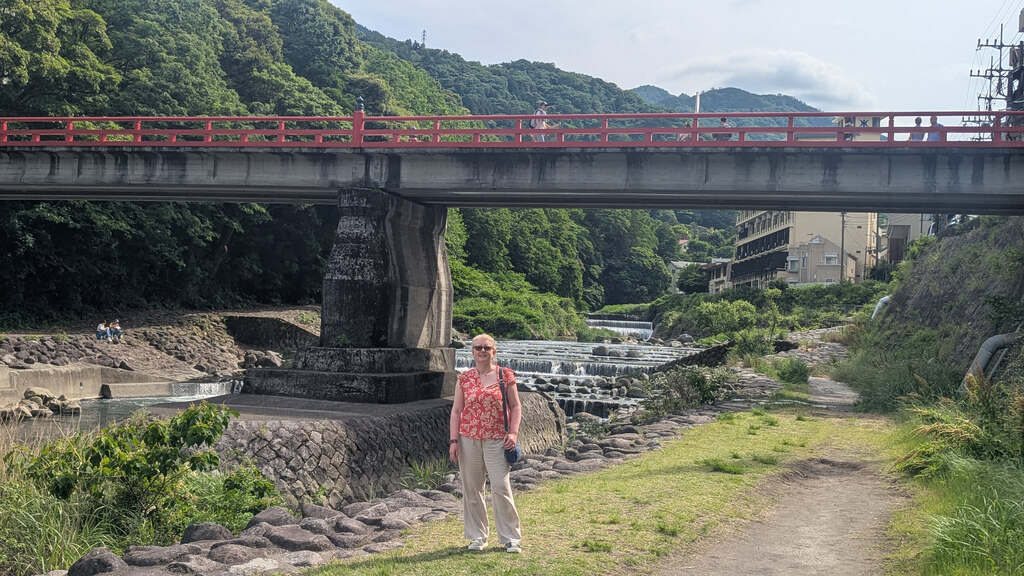
Both of us were feeling happy, but also a little sad that we were coming to the end of our journey. We were tired and kind of looking forward to getting home, but also sad to be leaving Japan. We felt like this was the last peaceful moment before we hit Tokyo again and then got in an early night before our flight the next morning.
Back to Tokyo
By now we were pros with our travel. We grabbed our bags from the locker in the train station and caught the train to Odawara. We had an iced coffee at Odawara Station while waiting for our connection on the Shinkansen. The journey to Tokyo went by quickly in about 30 minutes.
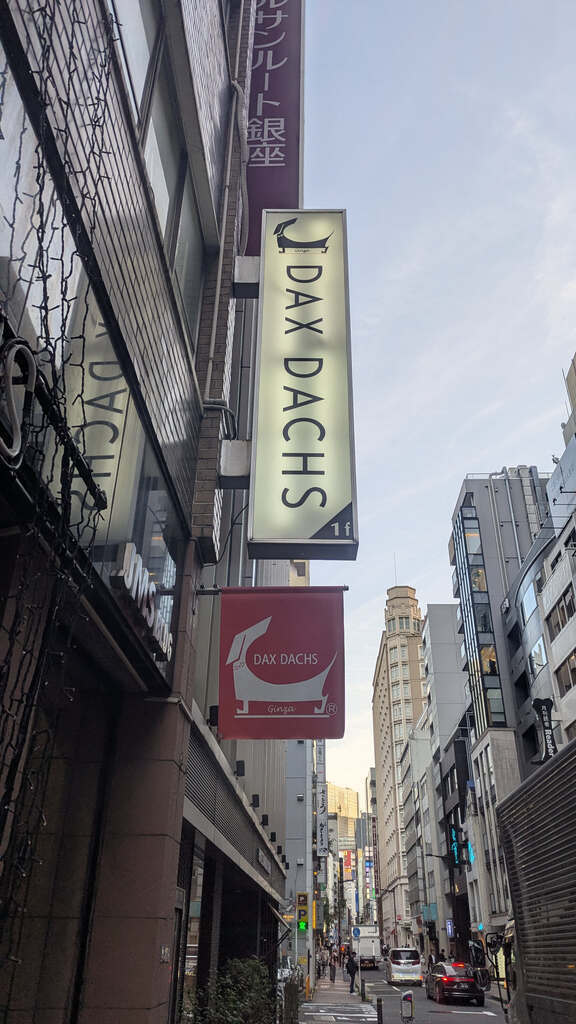
In Tokyo, we could pretty much walk from the station to our hotel, the Hotel Sunroute Ginza. I kind of regretted that we had chosen somewhere so central and a bit far from the airport. Maybe it would have been better to book closer to the airport so that the journey in the morning might be less stressful. That turned out not to be the case at all, and our choice was actually pretty perfect.
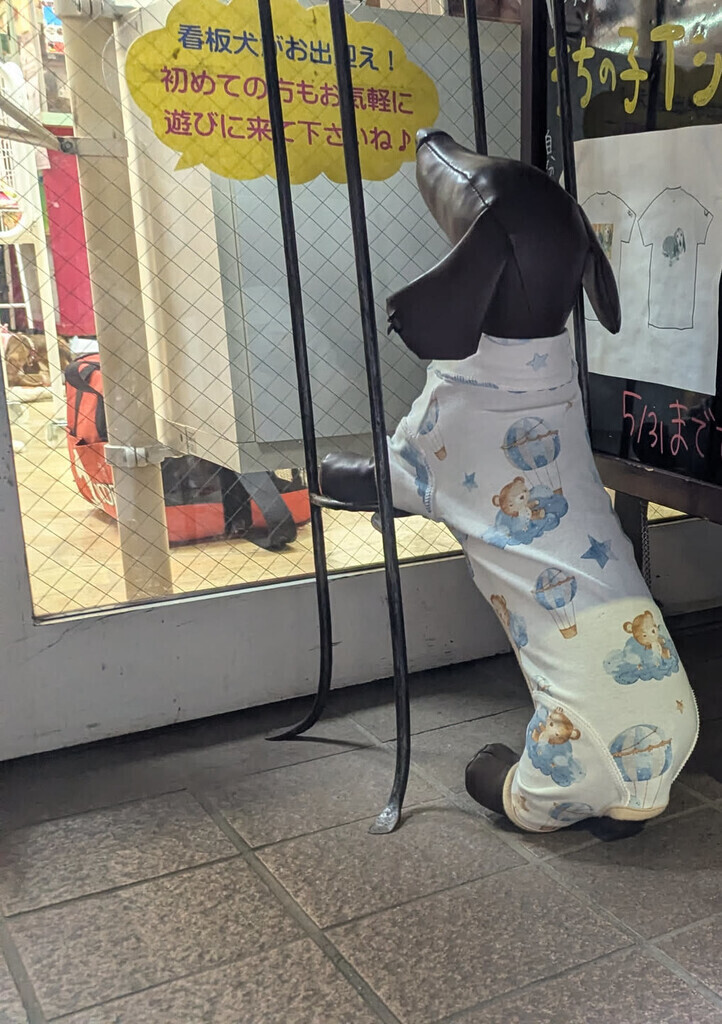
As we neared the hotel, there was a last sign that we were in the right place.
Final Evening
Japan is full-on. Even when we thought that we were done... there was a final bit of Tokyo night life to take in.
We obviously had to eat, so I picked a restaurant about 15 minutes walk away, that looked like it was pretty much a 'plant-based' cafe called Comida, still in the Ginza district. Ginza is one of the posher parts of Tokyo, but we were surprised that the pricing on our food was pretty reasonable. The restaurant was at the bottom of a massive building (all the buildings are massive) that looked a bit like a corporate office block or something. Maria had a soya-based 'chicken' tartare burger and fries with a matcha soda. I went for the spicy burger and fries with a beer. The food was tasty and somewhat different to all of the traditional food that we had been sampling. So it felt like we were getting back to some kind of normal.
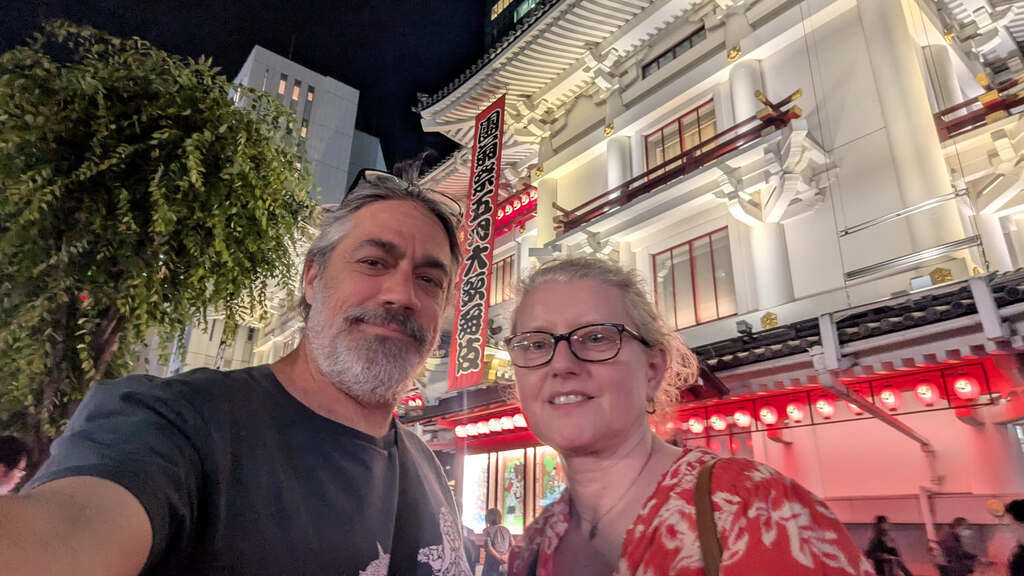
Heading back, we passed the national Kabuki Theatre. I guess Japan's equivalent to an Opera House. It was heaving with activity and people. We snapped a quick last selfie. This was the last picture of us on the ground in Japan.
We got back to the hotel, packed up a bit and got to bed. It would be an early check-out and mission to the airport the next morning.