Day 6: Tuesday 19th May
Kyoto - Arashiyama
📍 Kyoto
Bamboo Forest
We got up super early and caught an above-ground train service from Kyoto Station to Saga-Arashiyama Station. Naturally, we caught the school rush and the train was packed with young students, all in their uniforms, heading off to their various schools. Many of them had their textbooks out and were studying on the train, and some were writing out bits of homework, others circling answers in test books. This was all a remarkable feat because the train was so packed people were all standing and pressed up against each other. The kids seem to take their studies seriously here.
We got to Saga station and quite a few other tourists got off at the same time. There is a short 10 minute walk to the Arashiyama Bamboo Forest from the station. At this time, everything is fairly quiet, so people are generally pretty respectful and we really didn't need to know exactly where we were going. We just followed the quiet procession of people all heading for the forests. The quiet town road started up a hill and the first bamboo became visible near a cemetery. It pretty much looks much the same as it has for centuries. I wanted to come here, because I had a photo of this from my great-grandfather who visited in 1896.
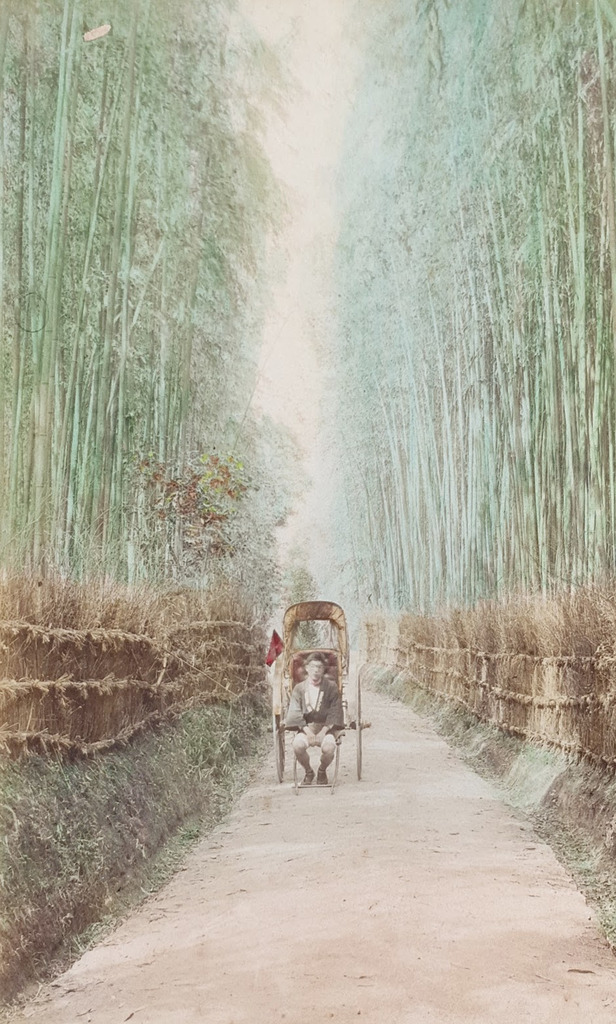
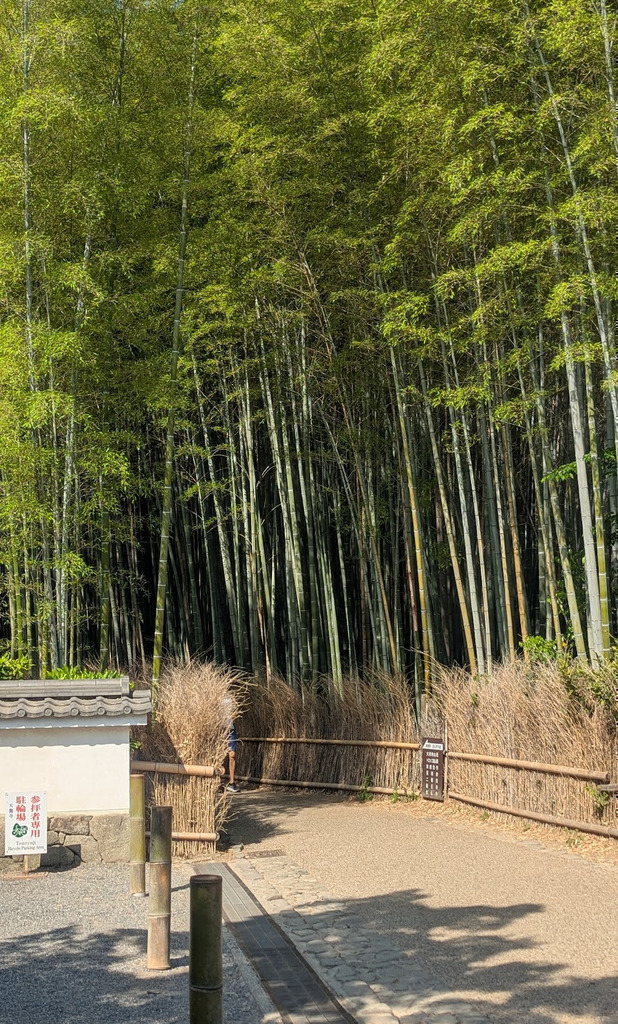
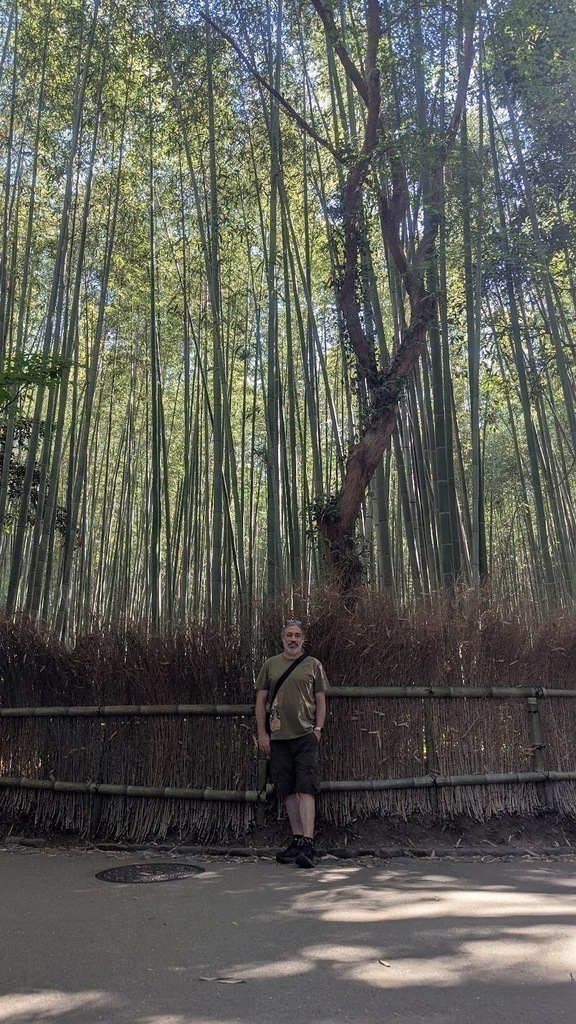
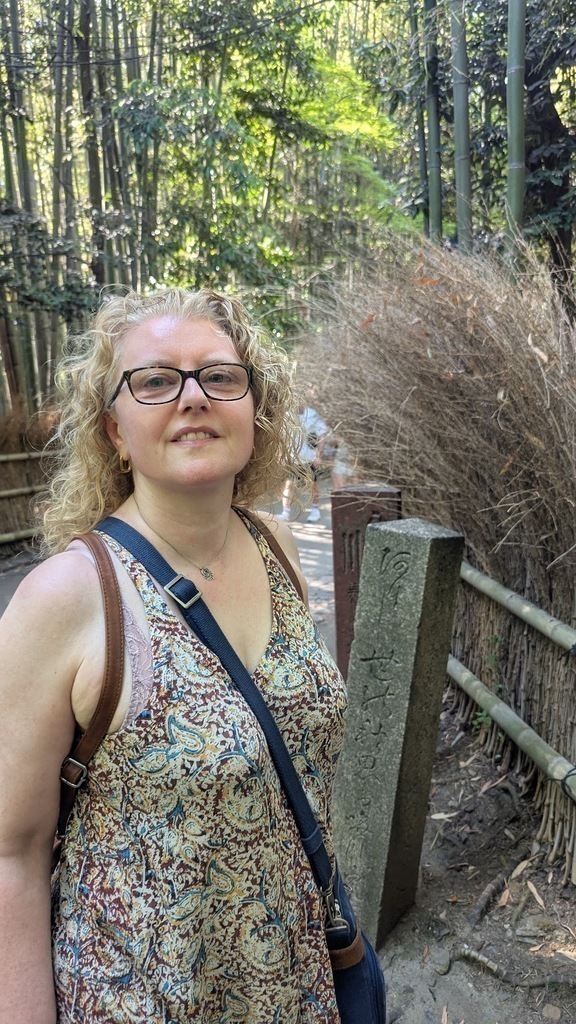
This is a really cool place to visit, but it gets busy with people. We had some lucky gaps for pics. Although morning time is really good, with the heat that we experienced later in the day, I reckon the bamboo might have provided some much needed afternoon respite with its cool shady spaces.
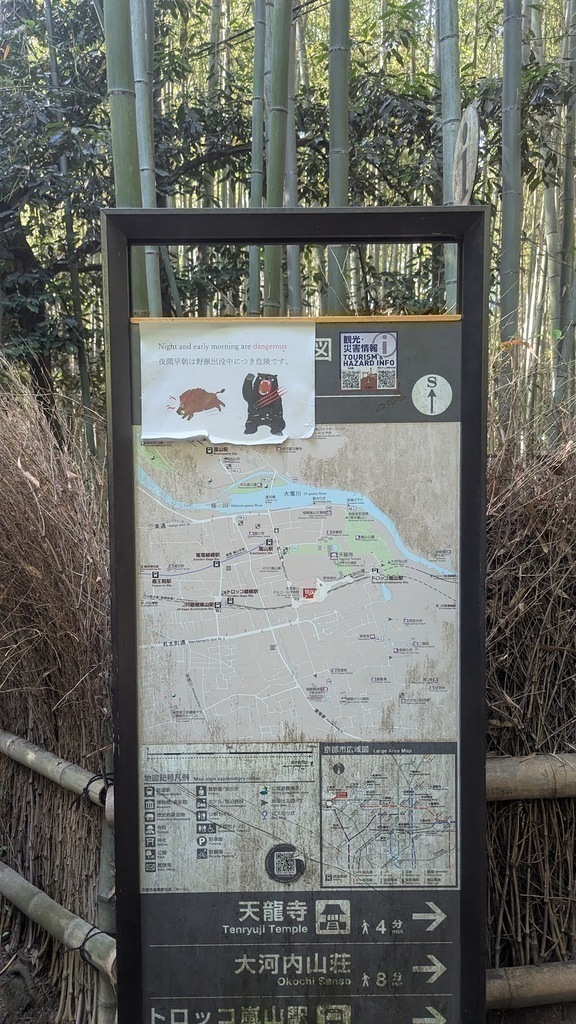
Tenryu-ji Temple
Tenryu-ji Temple was near the top of our list of highlights to see while in Kyoto, and probably Japan as a whole. This Buddhist temple is a UNESCO World Heritage site featuring some stunning temple gardens, access to some of the interior, and host to the Shigetsu Vegetarian Restaurant, a Michelin star restaurant run by the monastery and which we had prebooked some months before our visit.
This selection of photos is tiny in comparison to what we have. This really is a special place, and we can't recommend it highly enough. Despite the very large number of people who visit this space, it is easy to find peace and tranquility here.
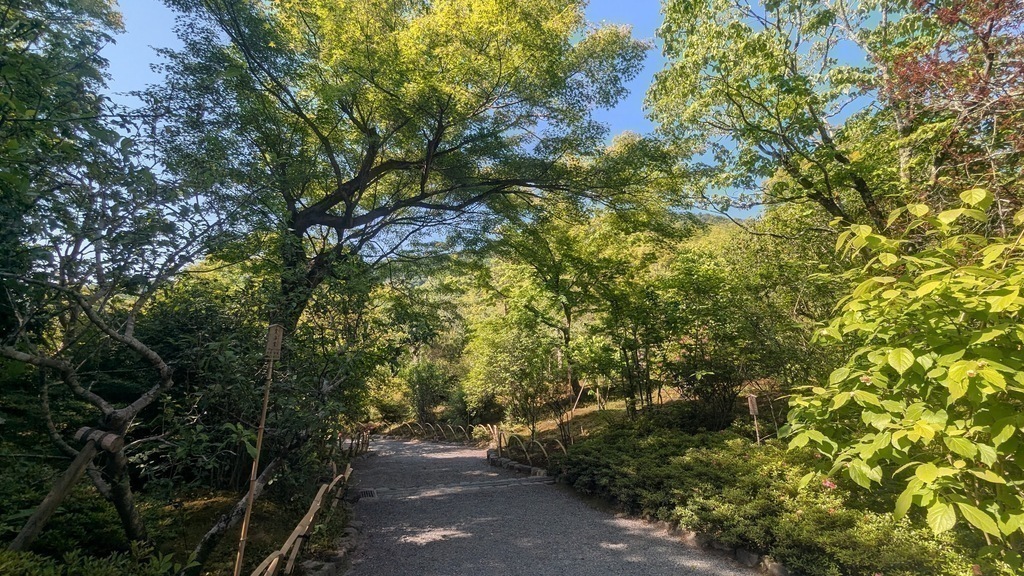
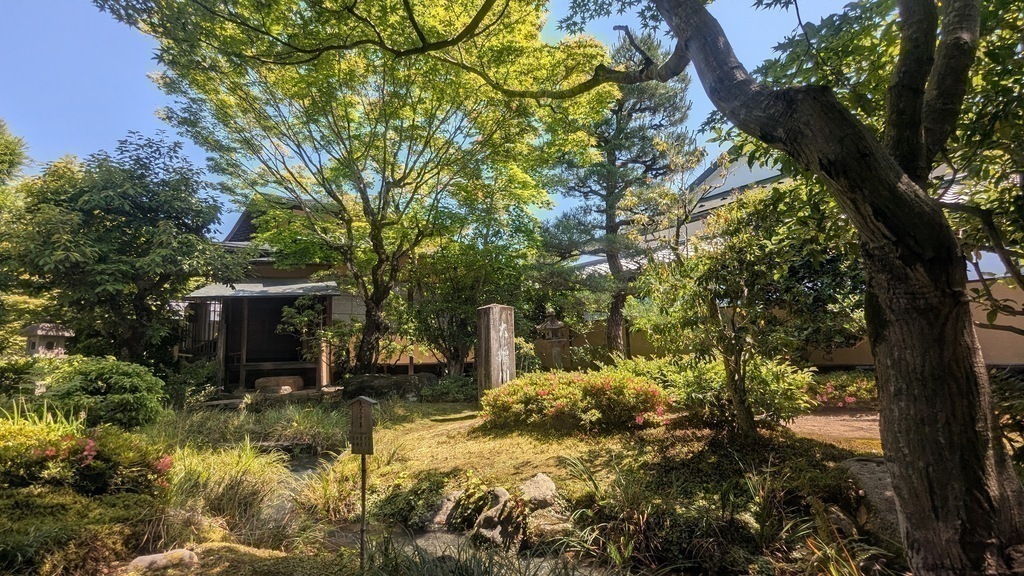
The gardens have many paths leading through trees, moss gardens, various blooms and even up a hill and along the edge of the bamboo forest. Loads of the plants are neatly sign-posted in hand-painted Japanese and English calligraphy on wooden posts.
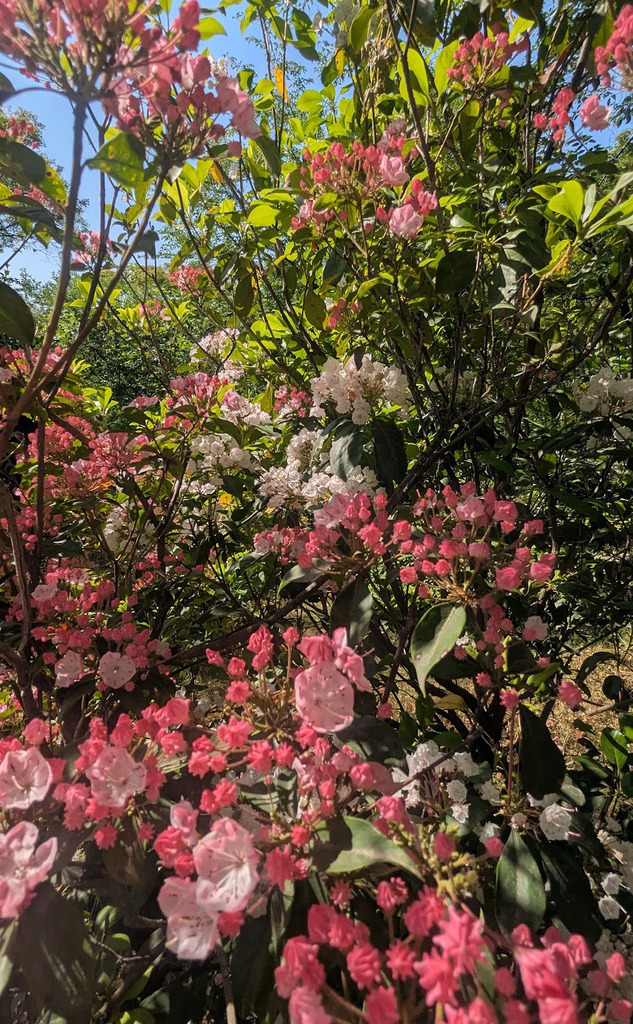
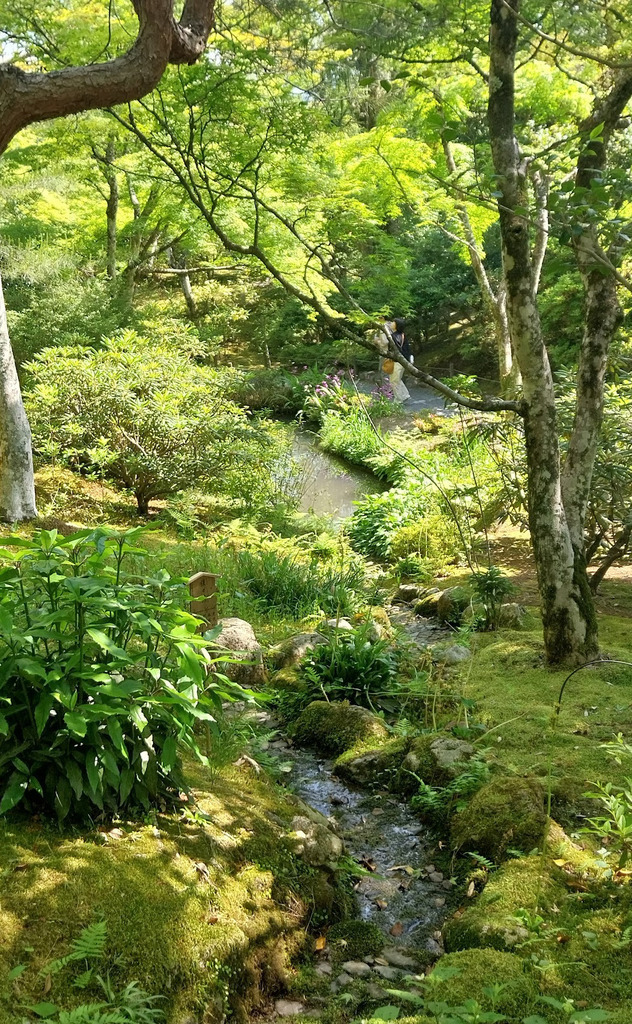
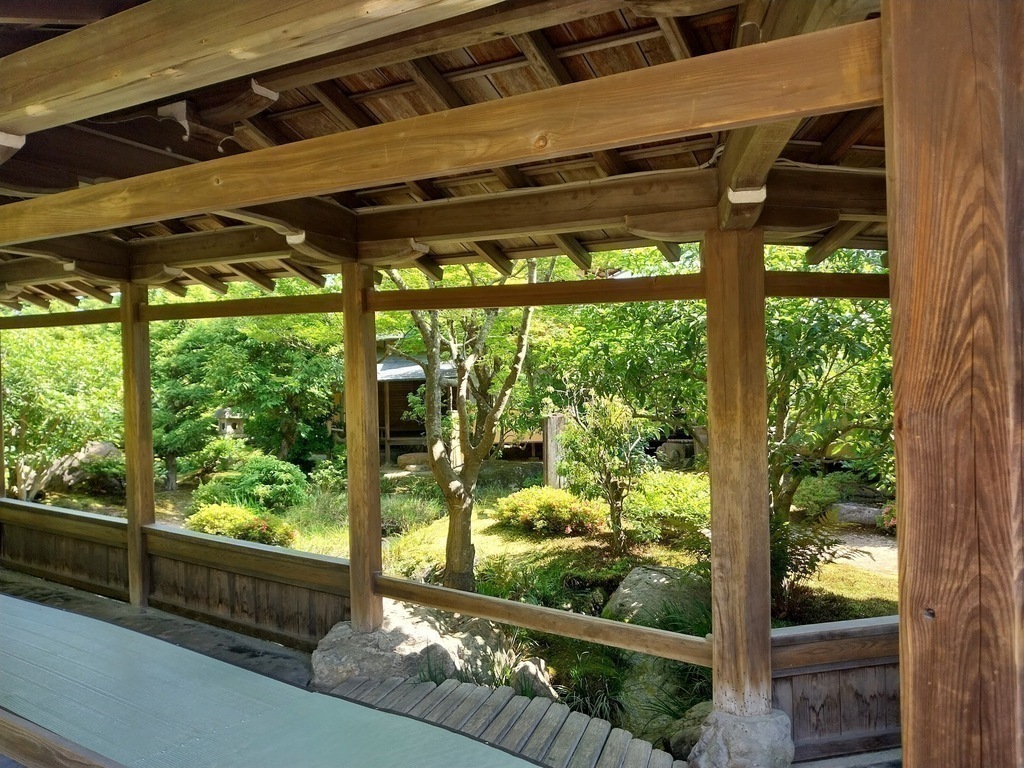
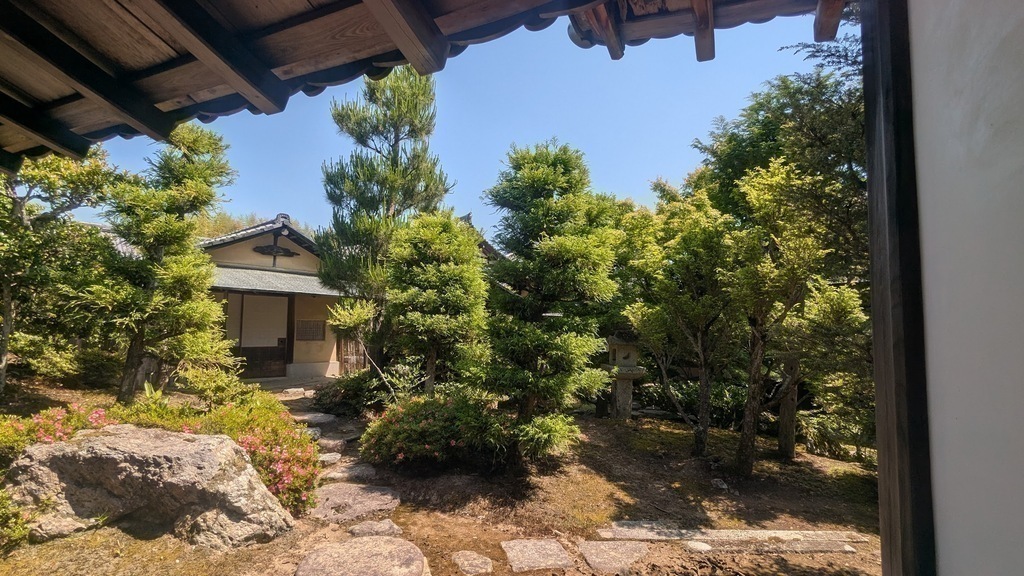
We saw this little garden through one of the paths that are part of the temple itself. We still had to get entrance to the temple when we took this picture, but in some ways it provides nicer perspective to actually see the path as well.
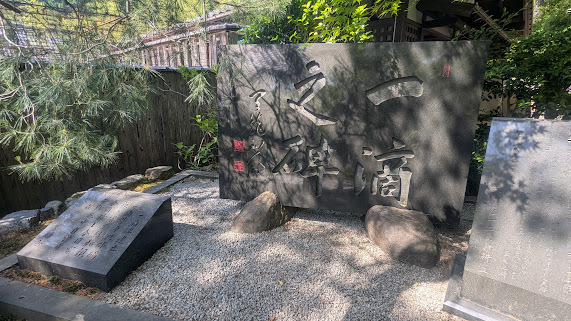
I thought this was interesting because Tenryu-ji has a significant Chinese relationship. Not only is the site of the temple based at the same location where the monk Gikū lived and taught Zen Buddhism for the first time in Japan in 836 CE, Tenryu-ji had a tributary relationship with the Chinese Ming Dynasty in the 1430s, which meant that the monks controlled a lot of Sino-Japanese trade all the way into the 19th century.
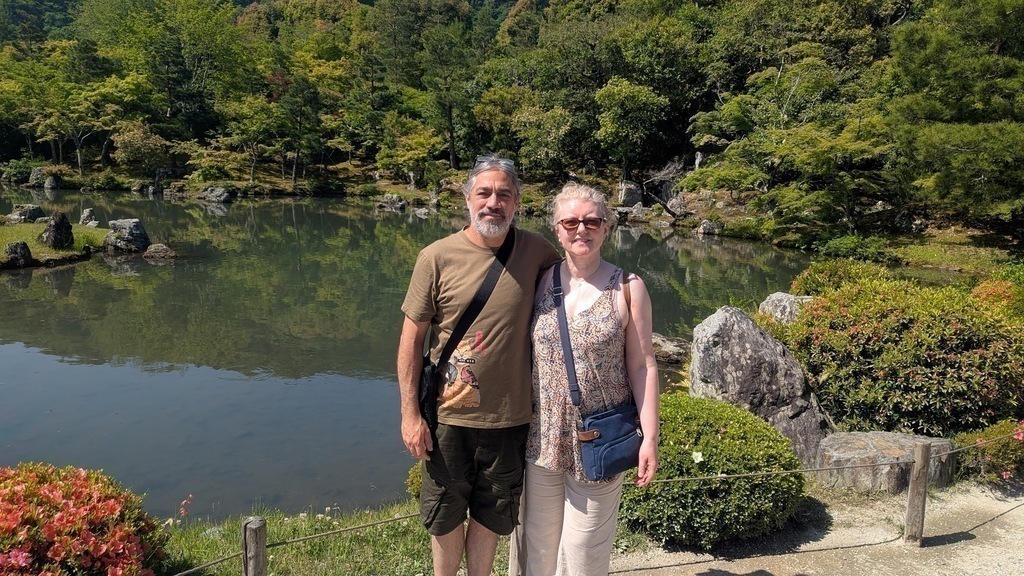
The lake at Tenryu-ji is the big eye-candy feature. We have seen pictures during every season and it always looks spectacular. We would love to see it for real during the autumn when all of the acer trees reveal their autumn colours, but I think we arrived at as wonderful a time, with the pink and red azaleas all fully in bloom and a bright sunny blue sky behind us.
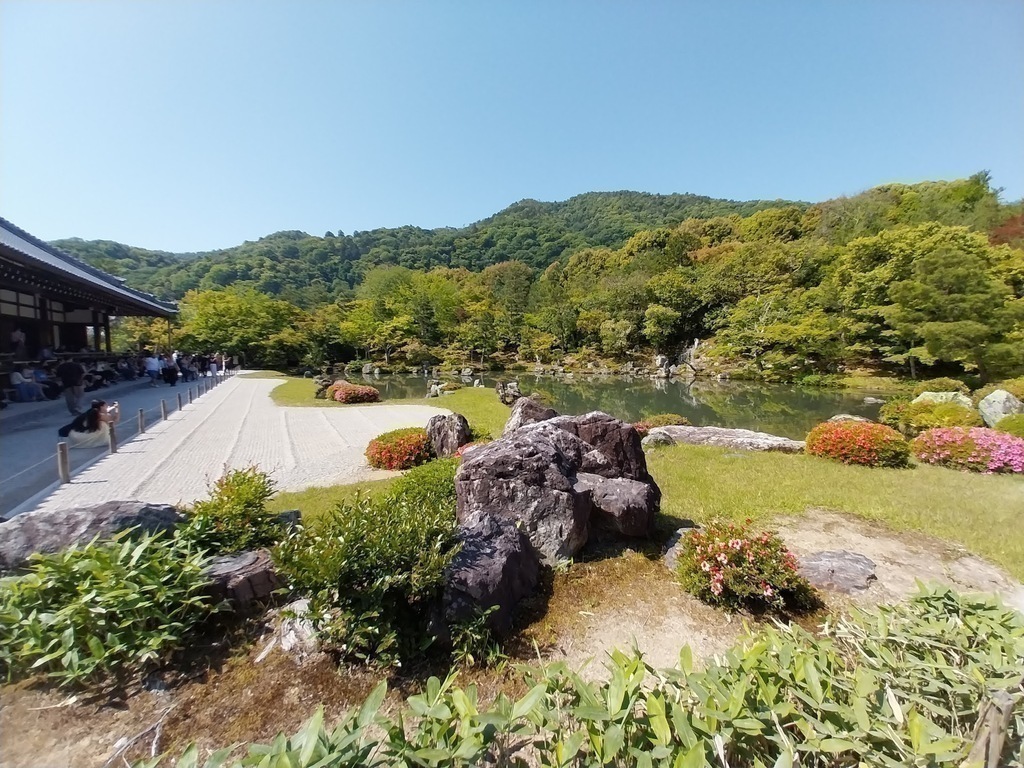
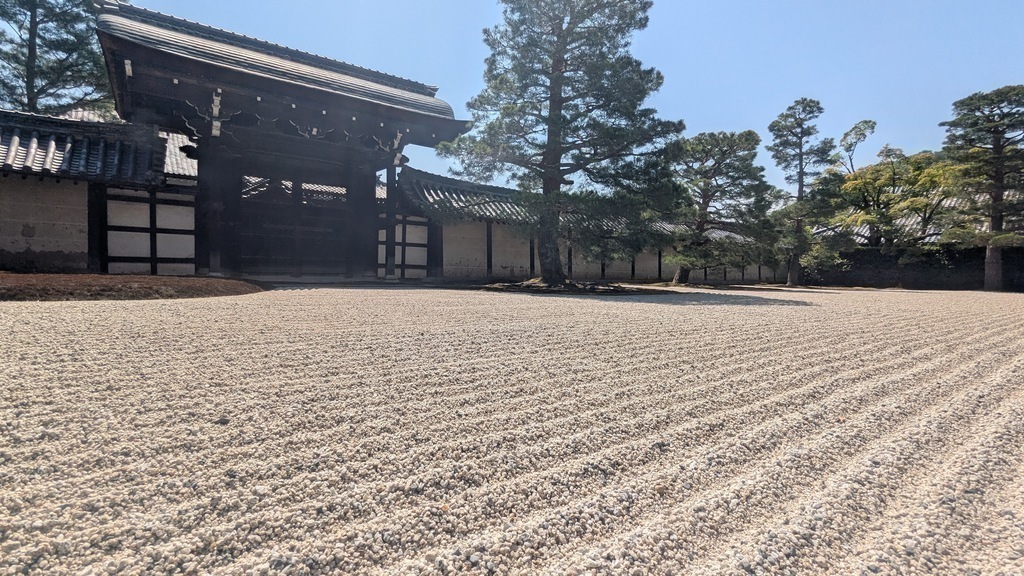
This lovely raked garden, typical of the Zen tradition, was right near the entrance to the temple. It works particularly well to catch the light and shade on a sunny day.
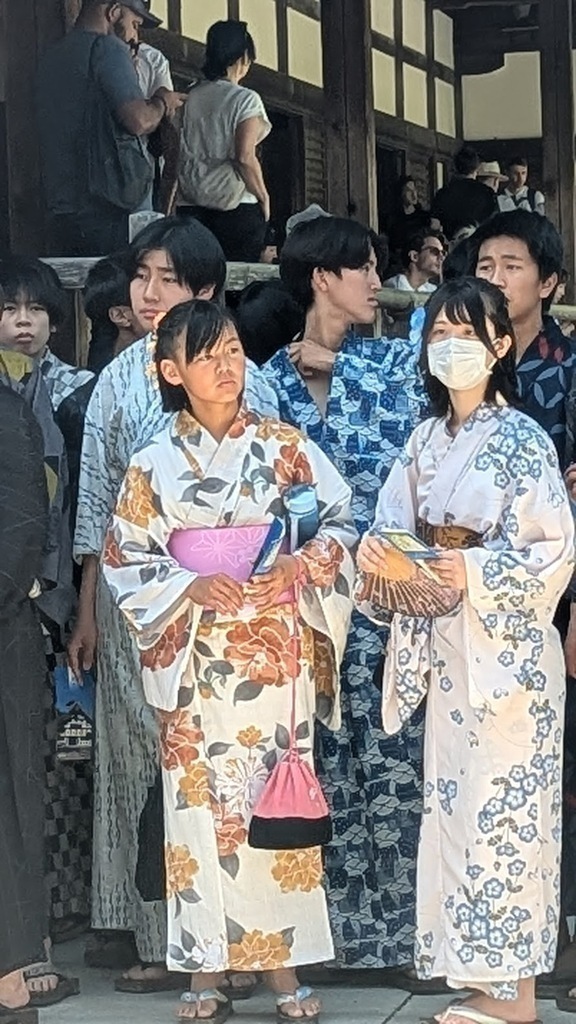
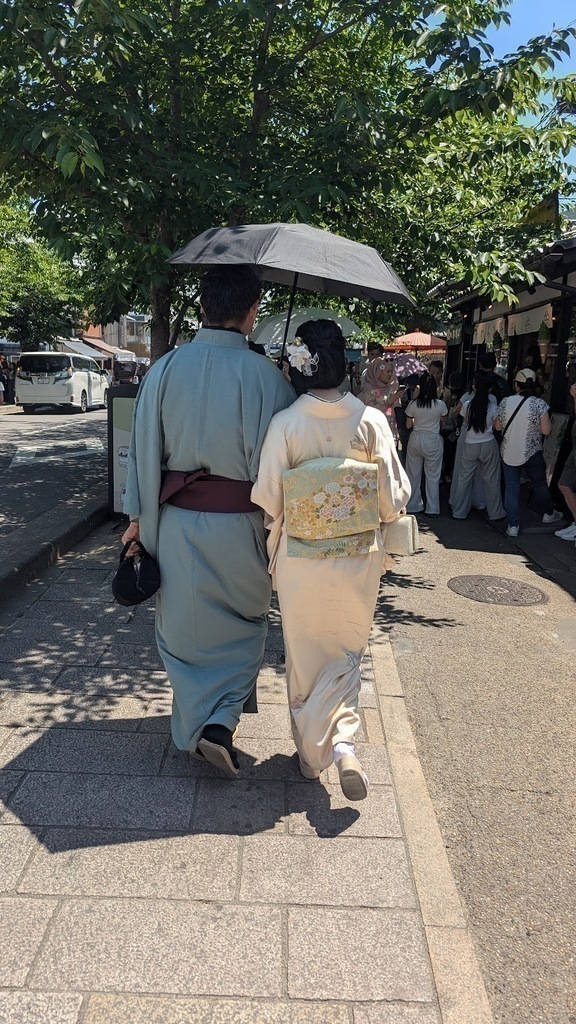
We were lucky to see a whole school of kids in traditional dress arrive. It was difficult to photograph surreptitiously without being terribly offensive, but the kimonos and yukata looked really good. There were loads of people in Kyoto dressed like this, but most were tourists who were co-opting the culture. While I sometimes feel conflicted at this weird kind of cosplay, I don't have a big issue with it. But there is something genuinely quite pleasing to see Japanese people continuing these traditions.
We entered the temple itself. You have to leave your shoes at the entrance and walk the entire space in your socks. It really feels good to do this. Most of the floors are either hard wood or tatami mats, which are a pleasure to walk on.
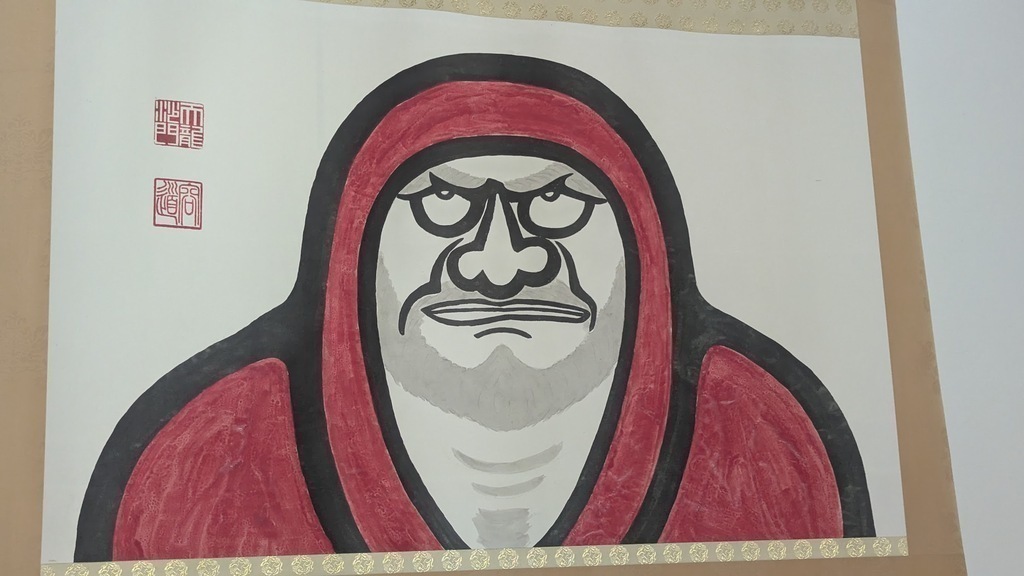
This artwork is featured around the temple and is a painting of Daruma, the founder of Zen Buddhism. I just call him "angry monk". I sat for a long time on the tatami mats staring at his face and listening to the constant bustle of people moving through the temple. I felt emotions rise and fall within me, as I became frustrated with all the people and the noise, and then became accepting of all the people that I am a part of. I felt a smile spread across my face as I looked at "angry monk" rolling his eyes to heaven. I felt an inner laughter and the rest of the day felt peaceful and I was at one with the world.
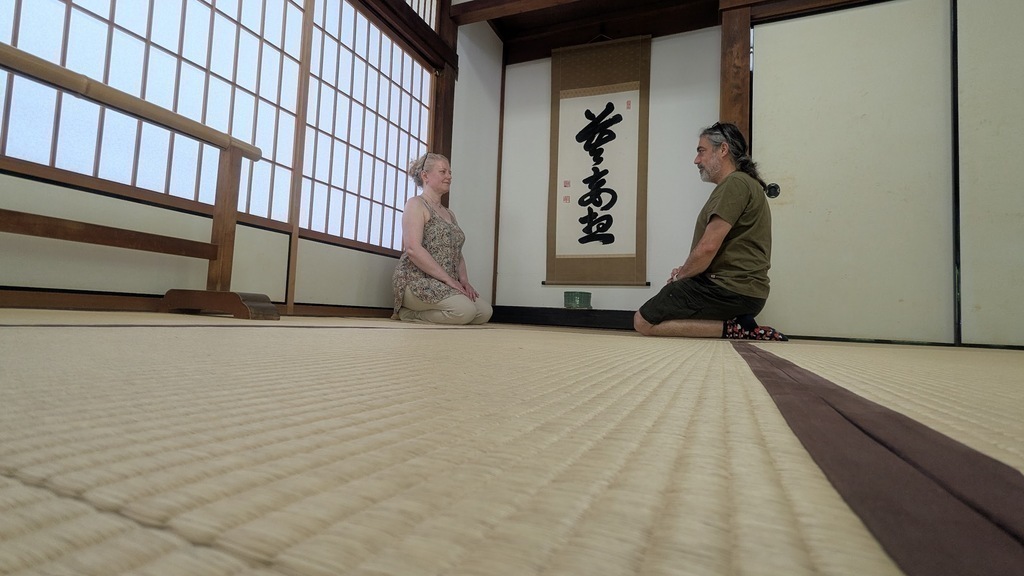
We had some time just sitting and chilling on the mats, so we got all artsy and posey.
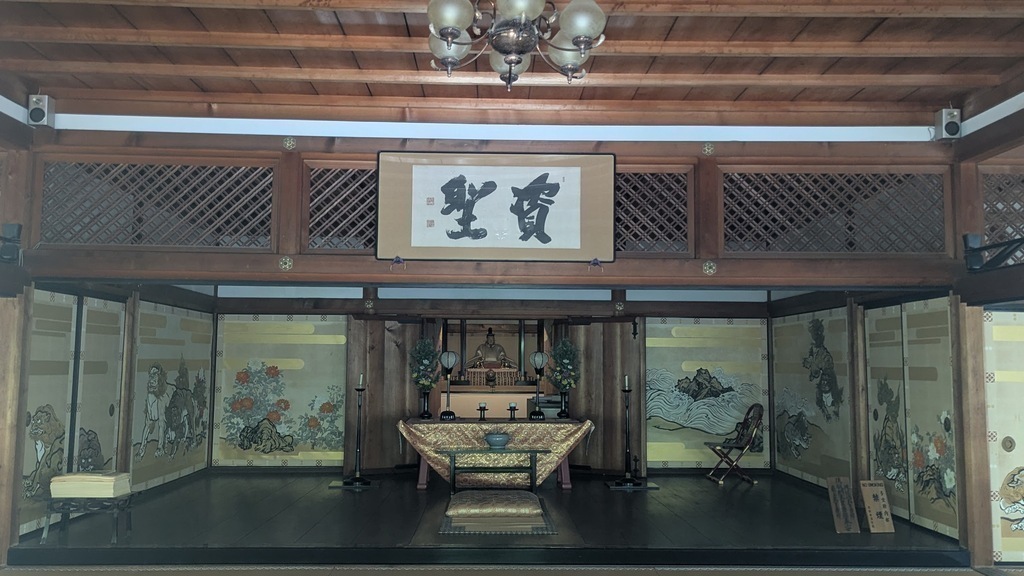
Deeper into the temple, we found the shrine and prayer room, which were majestic and felt like a sanctuary away from the bustling visitors.
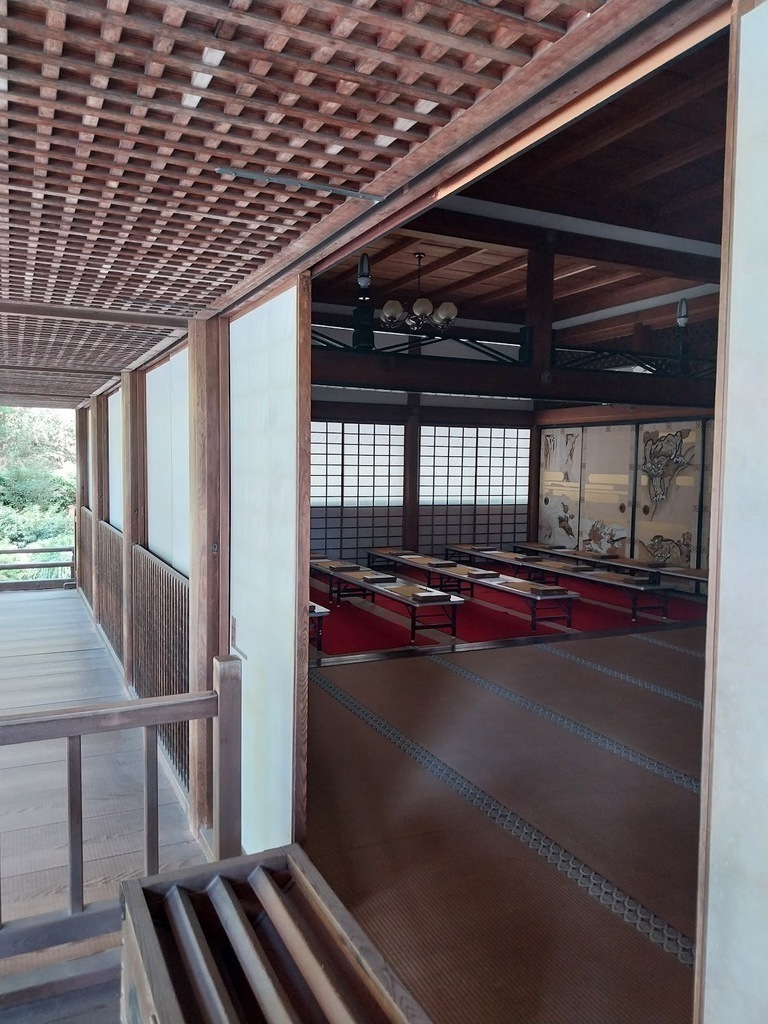
We really enjoyed all of the little walkways between buildings within the temple complex, and the little benches to rest and contemplate the world. Everywhere you looked there was something beautiful and calming to see.
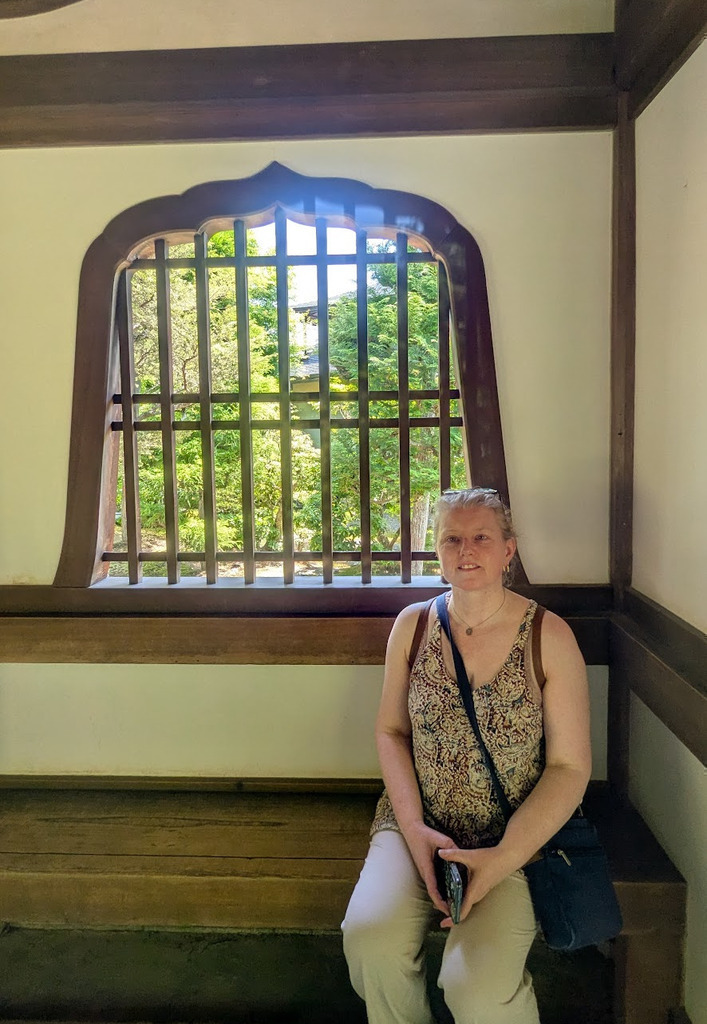
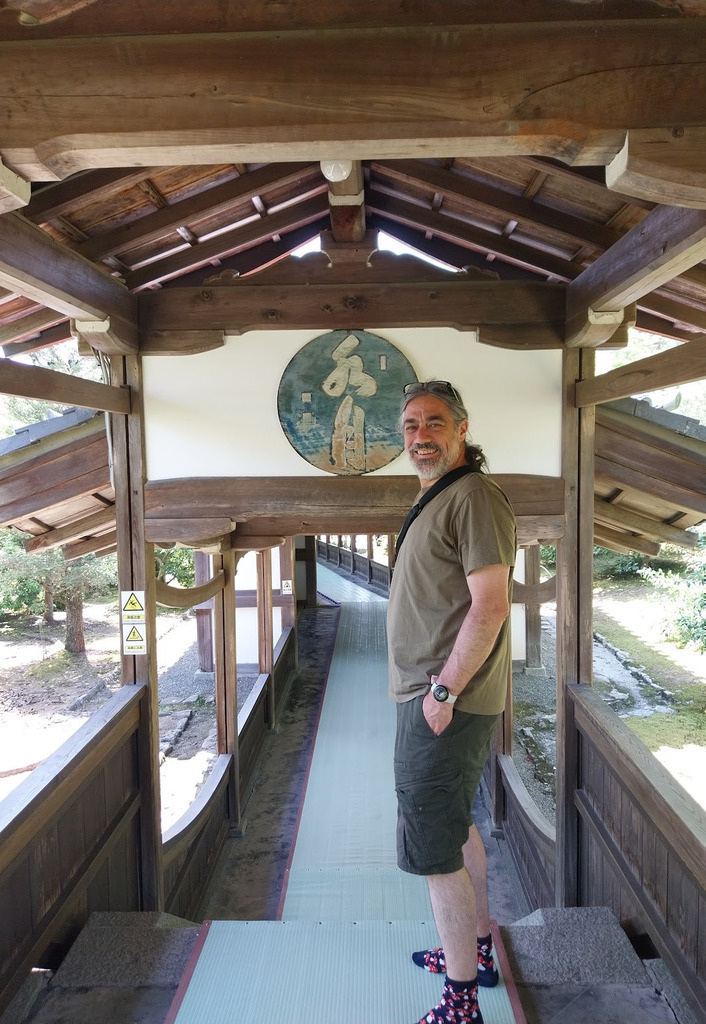
Shigetsu Vegetarian Restaurant
Our lunch was prebooked at Shigetsu and the only slot we could get was at 11h30, which seemed early when we booked it, but I think both of us were pretty hungry when the time came around, so we were really looking forward to the food. We weren't aware of the Michelin star status at the time we booked or arrived at the temple. But we knew there was a big meal ahead, because we had booked the Hana menu - which consisted of 13 courses.
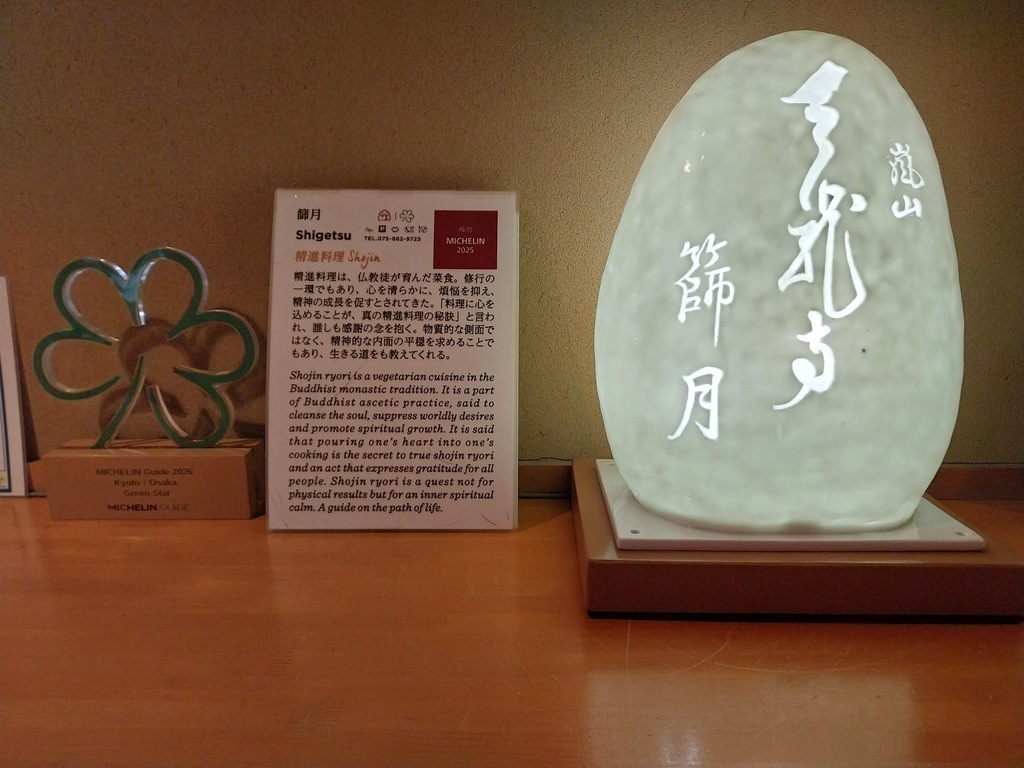
We arrived at the restaurant and entered the reception through two sliding doors and some hanging cloth. We took off our shoes and announced ourselves and waited to be led through to our dining area. There seem to be several dining rooms of different sizes.
When we arrived in our dining room, there were two monks eating, each paired with a guest (maybe family members?). Another couple was sitting on the far side of the room. In the room, there are two rows of low tables facing each other. The tables are small, one person places. Guests seat themselves on the floor, either kneeling or cross-legged.
While we were seated and having our green tea served from a shared pot, I looked across the room at one of the monks and we caught eye contact. I bowed and when I looked up he gave me the most beaming smile. I really felt kind of honoured to be in this space. Maria welled up and got teary and we felt really awkward about taking any pictures. Later in the meal, we noticed that a newly arrived guest took pictures of their food and one of the monks was browsing a mobile phone, while one of the monk's guests was actually on the phone chatting to someone. So by the time we felt okay to take photos of our meal, we were already a fair way into the many many courses of food that kept arriving.
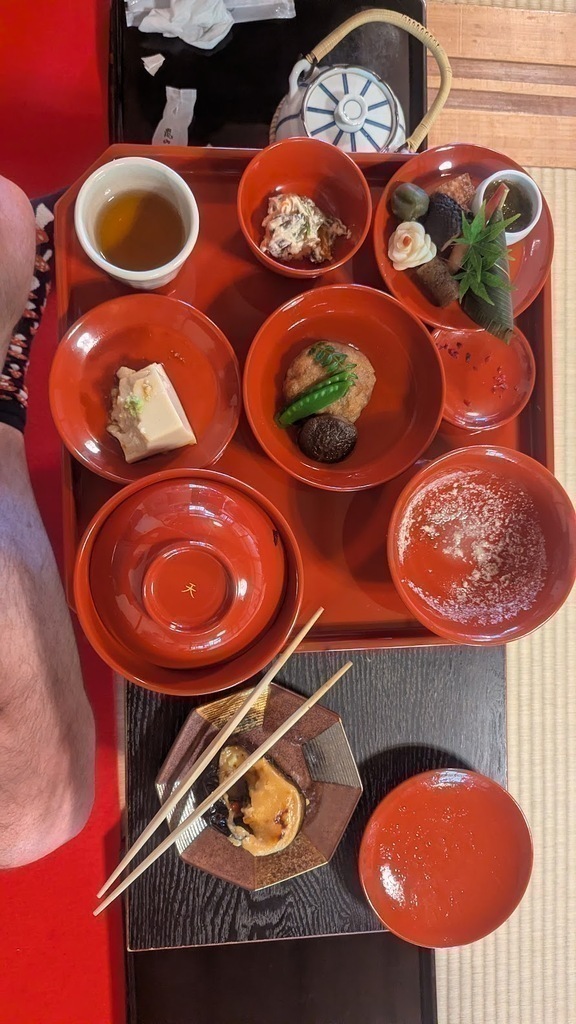
So a couple of things about Japanese vegetarian food. A lot of food that you might expect to be warm is fridge cold. You might get a broth with a lump of fu (wheat gluten) that is cold and is a lot more about texture than anything else. Also, there is definitely a fascination with slimy foods. That's not a criticism or anything, but it takes a little getting used to. Salt is used very sparingly and is often substituted with soy sauce, so flavours are subtle and often they use things like yuzu to give a citrus profile to a dish, or wasabi to add spice. I noticed that a lot more of the culinary effort seems to lie in the nose for flavour and that the mouth feels a lot more about experiencing texture. There were pickles, radishes, sesame tofu, a weird creamed vegetable dish, rice, miso soup, some other soup, an aubergine dish, karage, yuba (a tougher tofu skin thing), a sweet red bean paste, fruits... we just can't list it all because we had very little idea what we were eating half of the time.
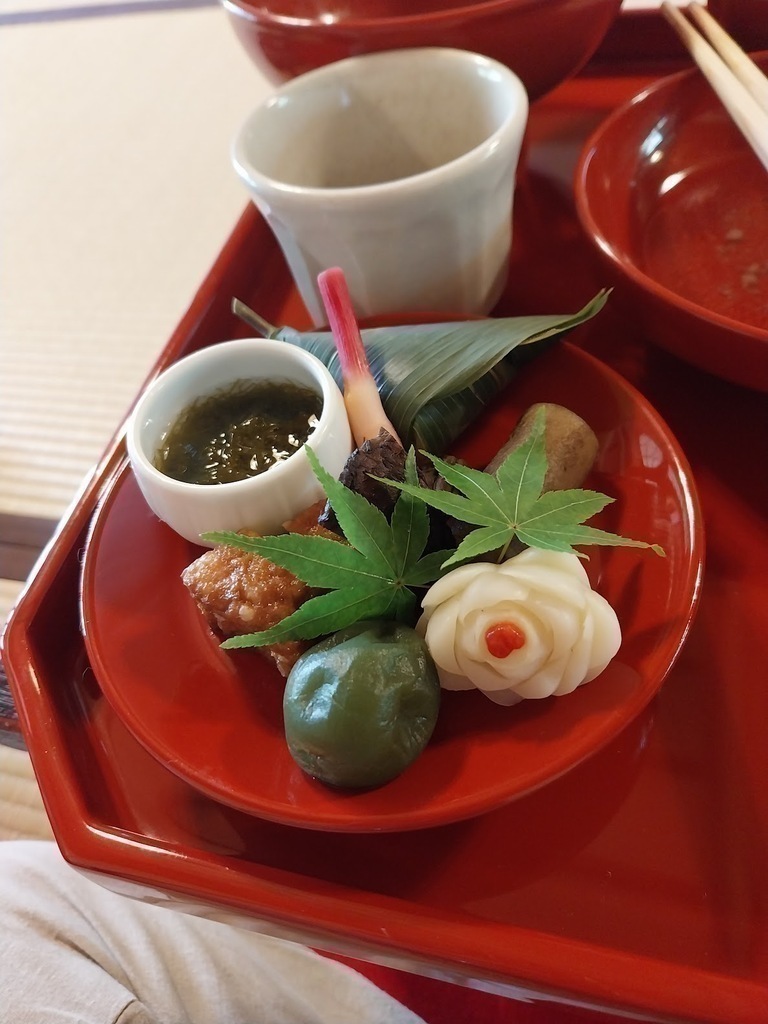
Sadly, we discovered that they change the menu almost daily and that there isn't really a record of what we were served on the day we visited. We were just so overwhelmed by the experience that we didn't even think to try to take notes or pictures.
This wasn't just lunch, it was an experience. Buddhist vegetarian cuisine (shojin ryori) taken to an art form. Each course was a carefully considered piece of culinary meditation.
After lunch, while we were drinking our finest ritual matcha and eating another red-bean paste dessert, we inwardly giggled as one of the monks belched loudly. Spiritual people are human. They emit gas. 💨
Leaving Tenryu-ji
I am continually struck by how a Shinto shrine appears alongside every Buddhist temple, and even at a place with as long a historical and cultural claim to space as Tenryu-ji, it is no exception. Just outside of the temple itself, but still within the grounds is a Shinto shrine. It is an acknowledgement of co-existence and the strong cultural trade between these spiritual traditions.
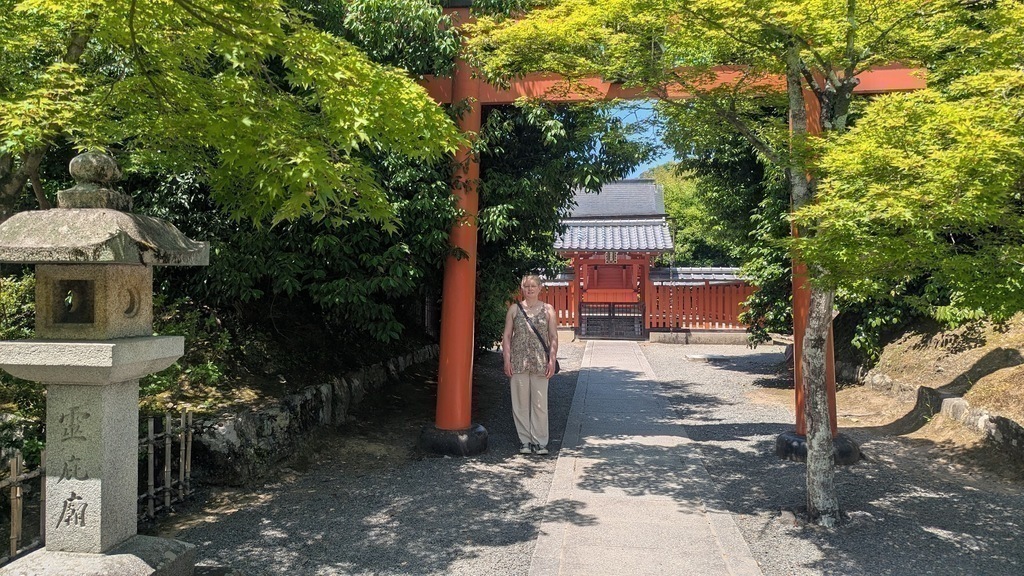
The coexistence of Shinto shrines with Buddhist temples is because of something called shinbutsu-shūgō, which was the process by which Japanese Buddhism and Shinto practices assimilated bits of each other. In Japan, although the two religions are distinct, they are inextricably bound together with bits of mythology overlapping. So much so, that the kami are often treated as emanations of the buddha within Buddhist practice, while the buddha is treated as a foreign kami in Shinto practice. The entire history of this process is really interesting, not least because of the shinbutsu bunri. During the Meiji Restoration, the emperor tried to create a clearer distinction between Shinto and Buddhism, in an effort to dissolve some of the power and wealth that had accrued in the Buddhist temples - particularly with regard to trade. This effort to separate the religions was enshrined in law and resulted in some violent outbursts where many Buddhist temples and artifacts were destroyed and priests and monks were forced to either become lay-people again or convert to Shinto priests. The result is that it is rare to see a Buddhist temple within a Shinto shrine, but there is nearly always a Shinto shrine near a Buddhist temple. The full separation never succeeded, and the weird mix of the two religious practices persists and is evident everywhere. - Ro's history lecture is over.
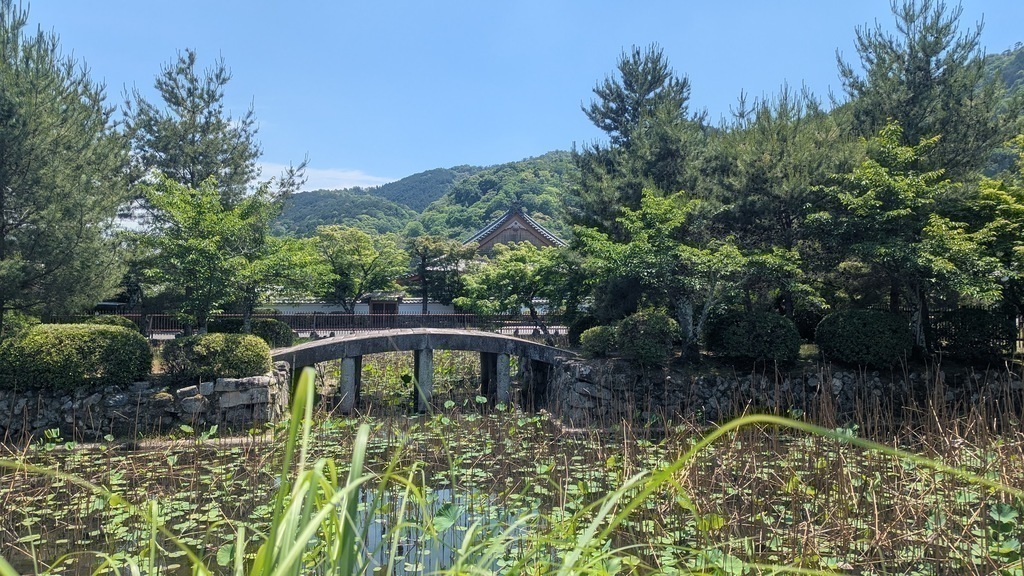
Finally, leaving the grounds, you can see the old gate and a bridge over a pond - I wasn't entirely clear whether it was this bridge or one of the other stone bridges in the temple grounds that is the oldest standing bridge in Japan - but it makes for a great photo.
Togetsukyo Bridge
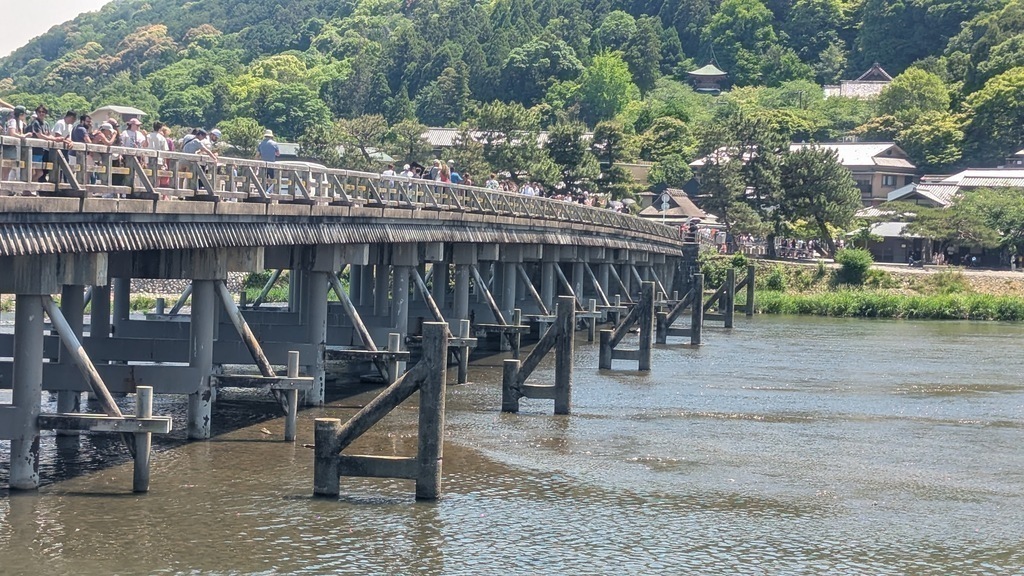
It was just past the middle of the day. We felt like we had been in another world and were already full both gastronomically and mentally. But we had to work off some of that massive lunch, and we were keen to make the most of our trip here. So we decided to walk over Togetsukyo bridge and find the entrance to the monkey park, which was apparently at the top of a rather steep climb up the mountainside.
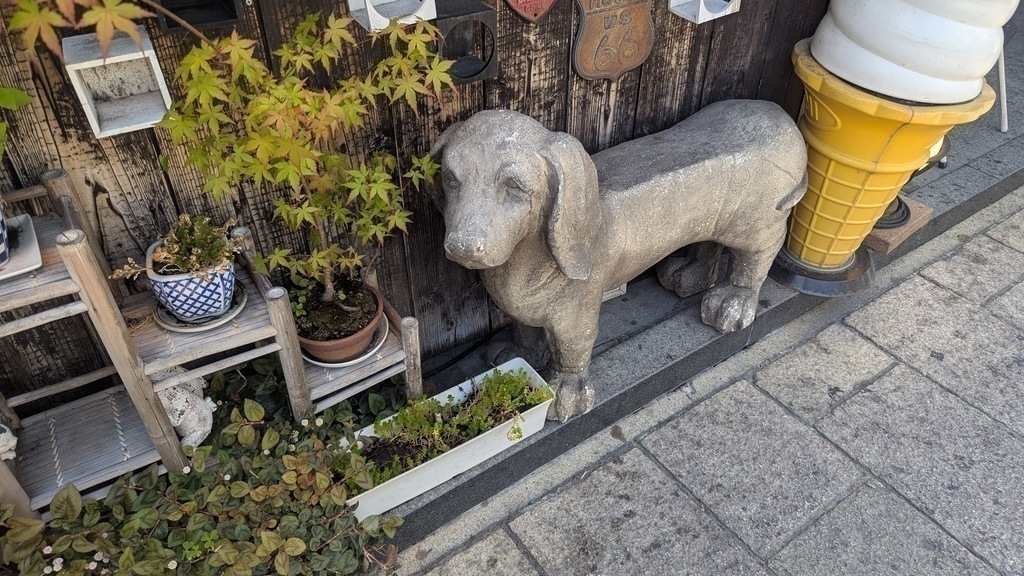
Perhaps it is just a form of pareidolia, but on our trip, wherever we went, we saw reminders of Alice. After visiting such a sacred place, we walked past a little doorway and saw this little statue - the Alice kami travels with us.
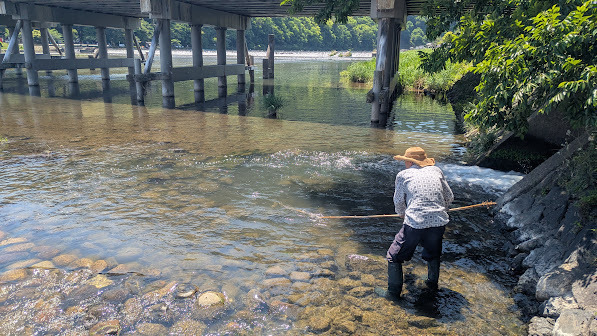
The Togetsukyo Bridge crosses the wide Katsura River, which runs all the way through Kyoto and down to Osaka where it flows into the sea at Osaka Bay. This far up river, the water is clean and we were impressed with the fact that unlike the UK where a river like this might sport a few car tires, a shopping trolley, and a lot of plastic, the river was super clean. Not only is this because litter is definitely not a big thing in most of Japan, at least in our experience, but also because people actually clean up. Along the side of the river, we found an old man wading around in the water with a long piece of bamboo. He was fishing out bits of plastic and putting them onto the bank to take away. I hopped down the bank to help him with a piece that was tangled in the bamboo.
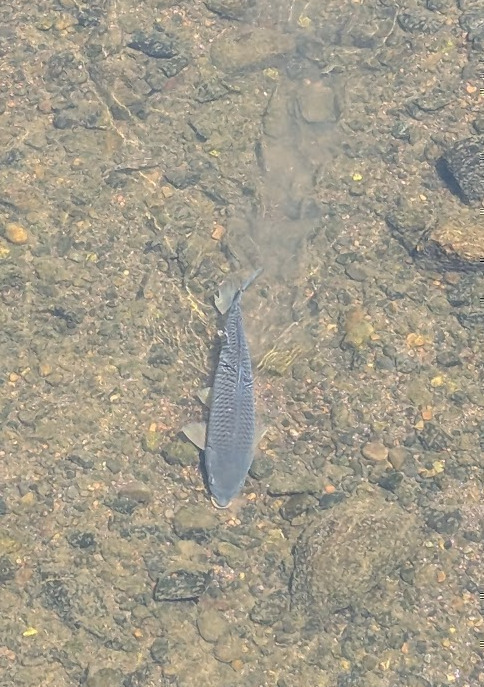
From up on the bridge, we could see down into the water. There were massive carp feeding just above the weir.
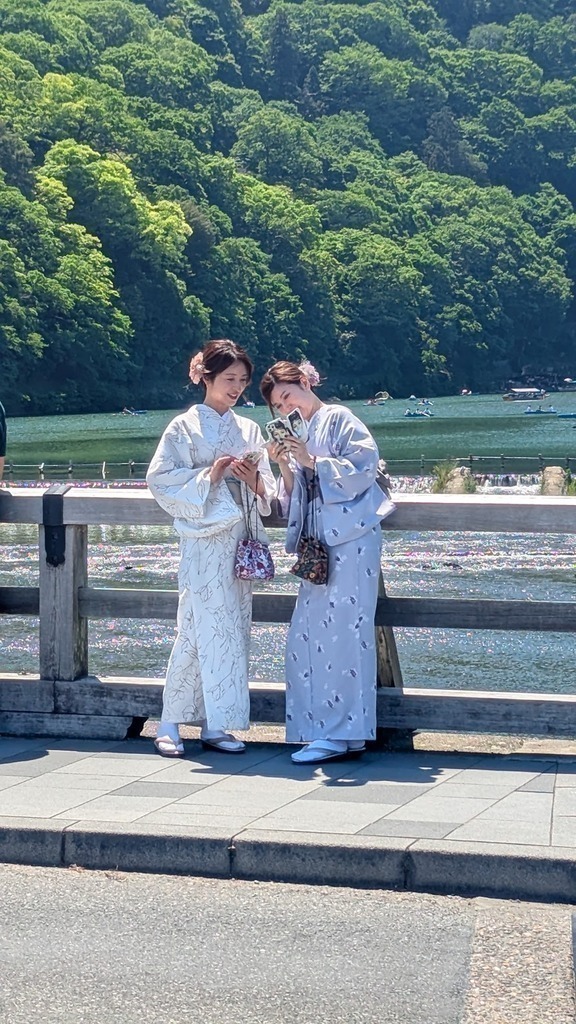
And more kimono-wearing people enjoying taking their selfies in such a stunning setting.
Monkey Park
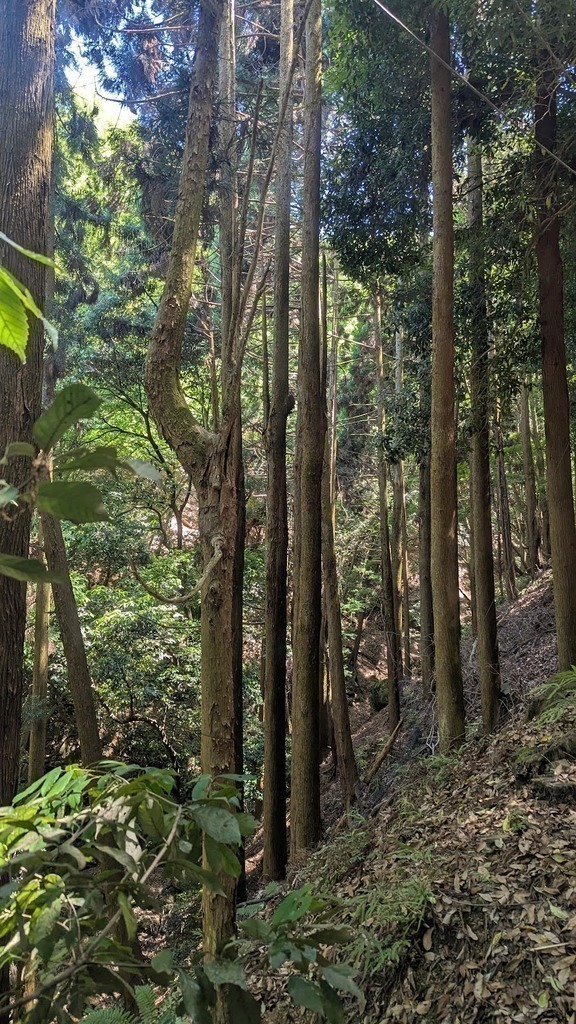
On the other side of the bridge, we found the entrance to Arashiyama Monkey Park Iwatayama. By this stage in the day, it was roasting hot and we were trying to decide whether the effort to climb up the mountainside to see some monkeys would be worth it. But we could see that the path went up through a heavily wooded forest and we could use the vending machines to grab some ice-cold water before the trek. As could be expected, there was a Shinto shrine at the entrance.
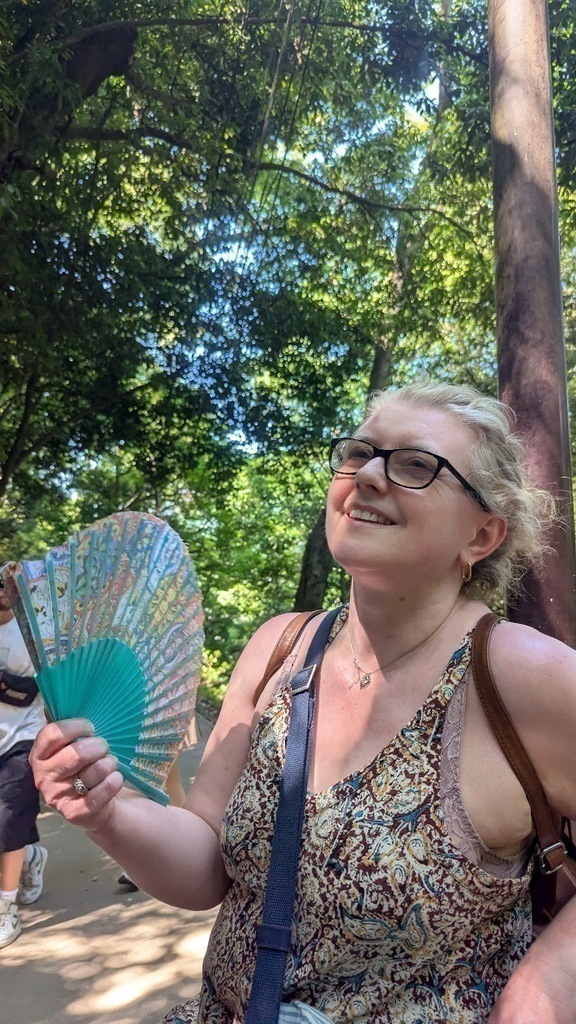
The walk was steep and took about 30 minutes to get to the top. We definitely took breaks and while I admired the woodland, Maria fanned herself frantically.
At the top of the hill, we got to meet the monkeys! And our upward slog was rewarded with an amazing view of Kyoto and its surrounding landscape.
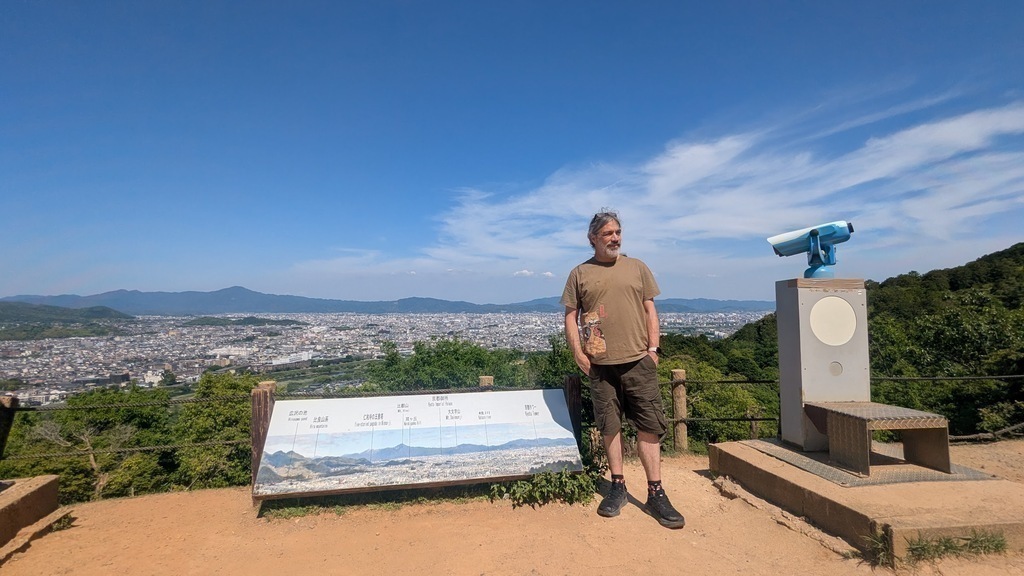
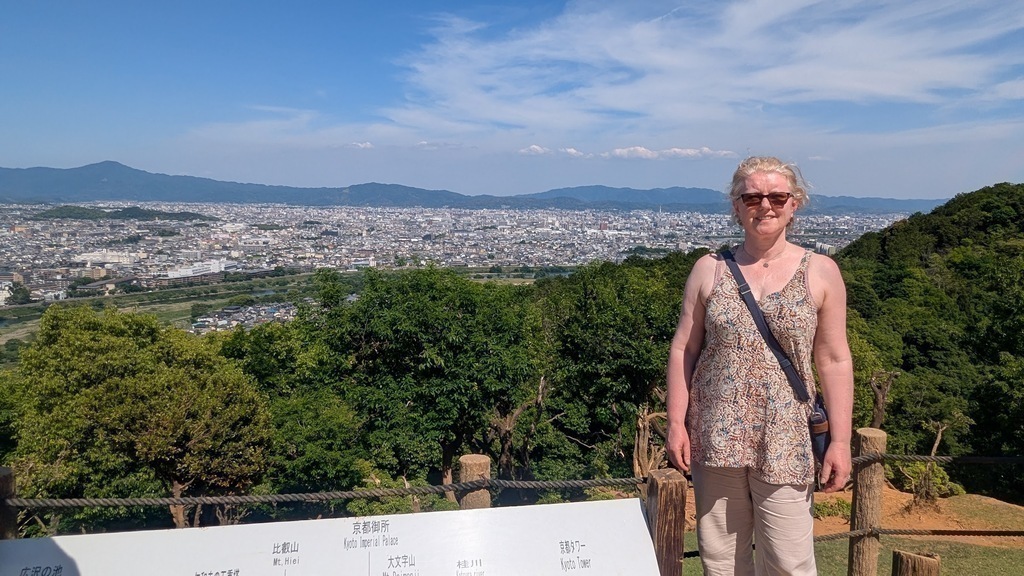
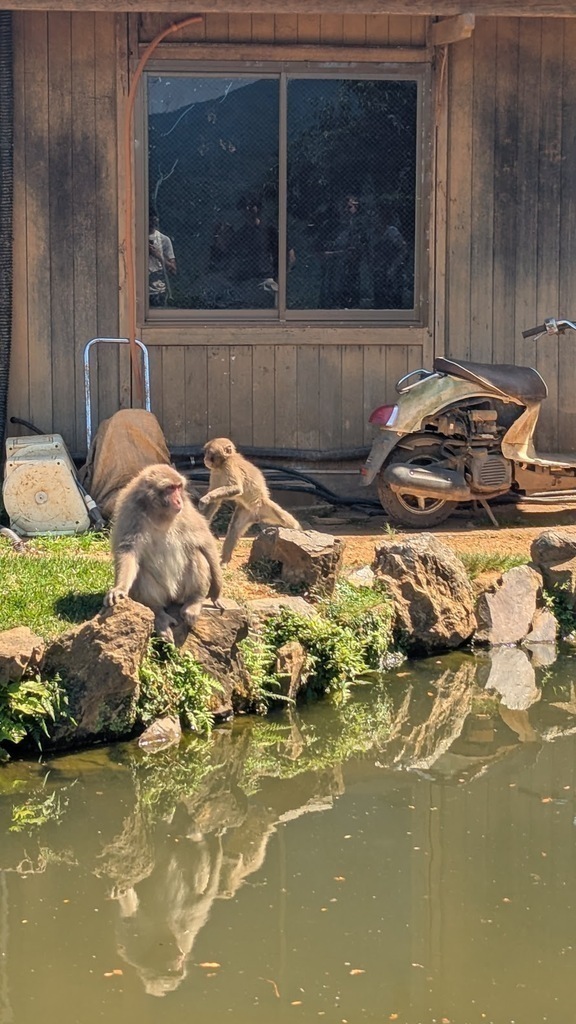
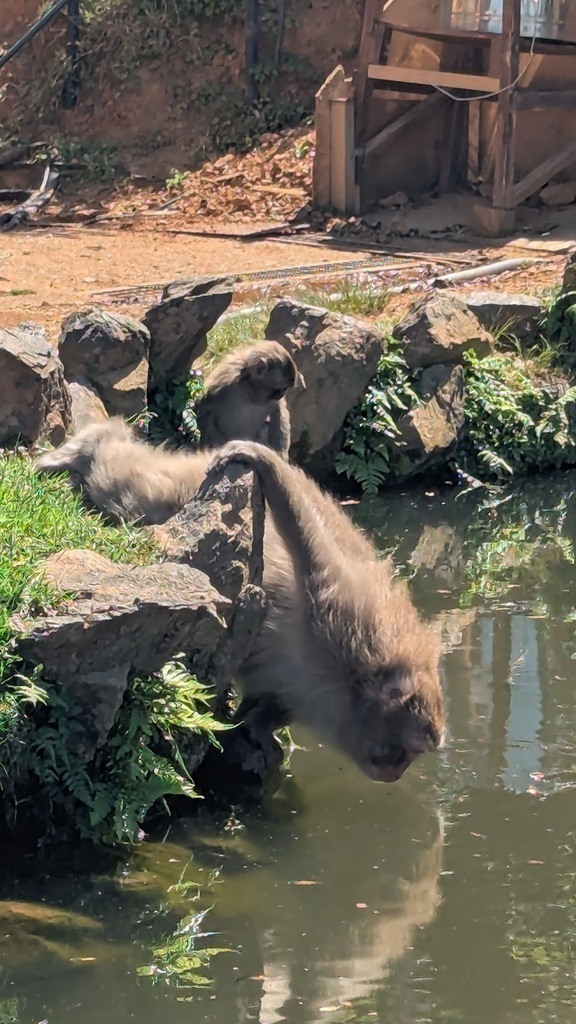
The monkeys are wild macaques, but there are so many people visiting and the rangers are always present. The centre at the top provides a feeding station, and there is a pond. So although the monkeys are free roaming, they seem relatively tame and unfazed by people.
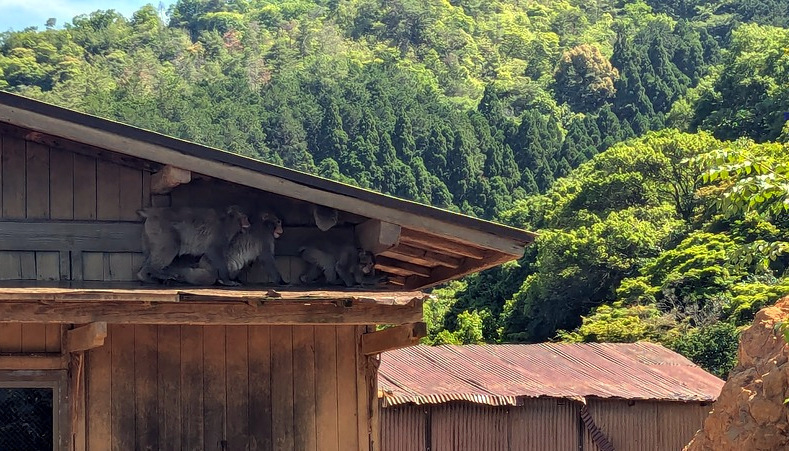
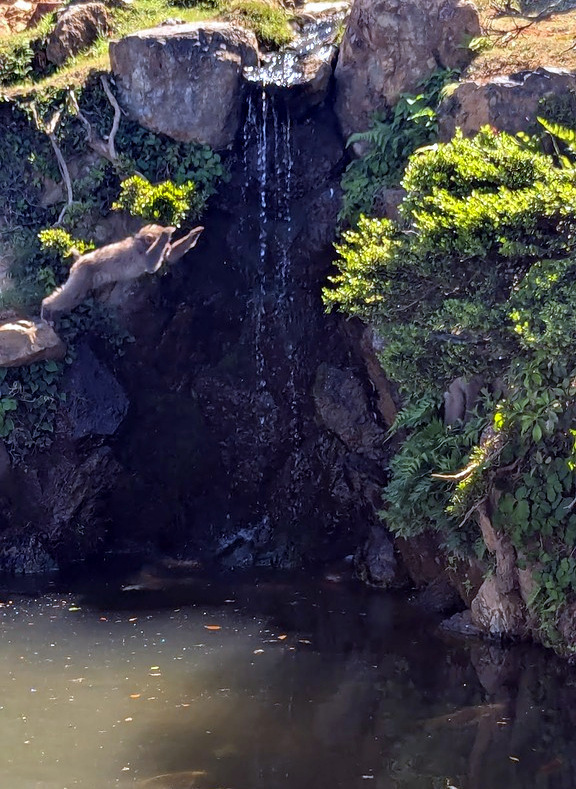
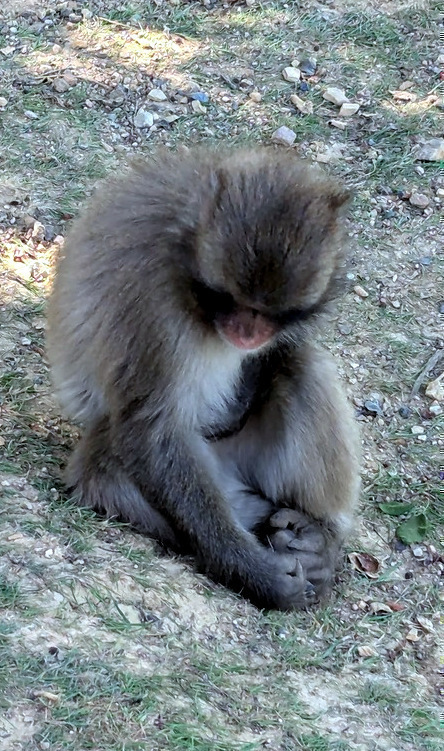
Walk back and river time
We walked back down the mountain, enjoying the different views and more woodland along the way. After we got back home and took a stroll through Burbage Common woods, I laughed and told Maria that if this was in Japan we would probably be taking pictures of the trees. 😂
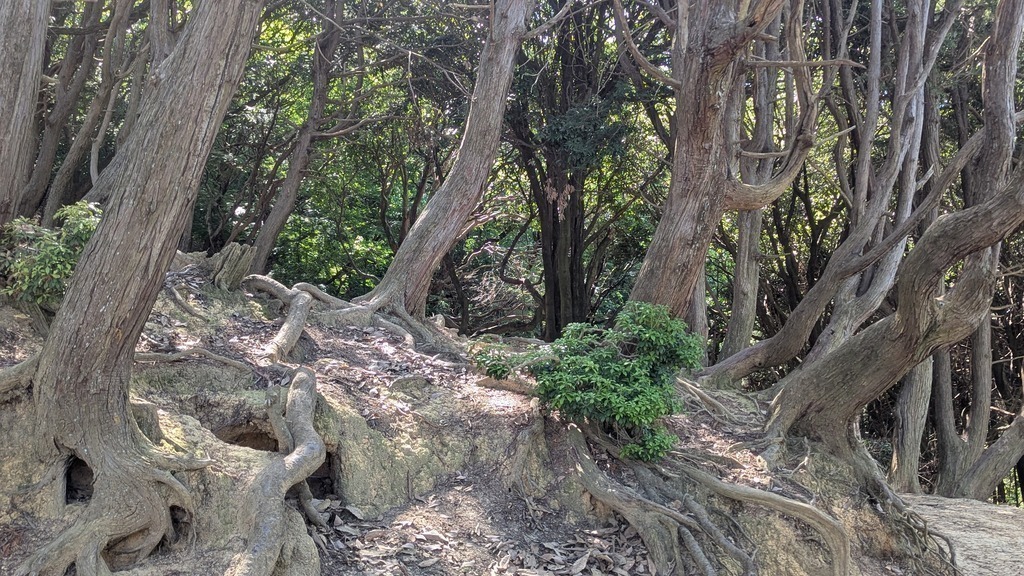
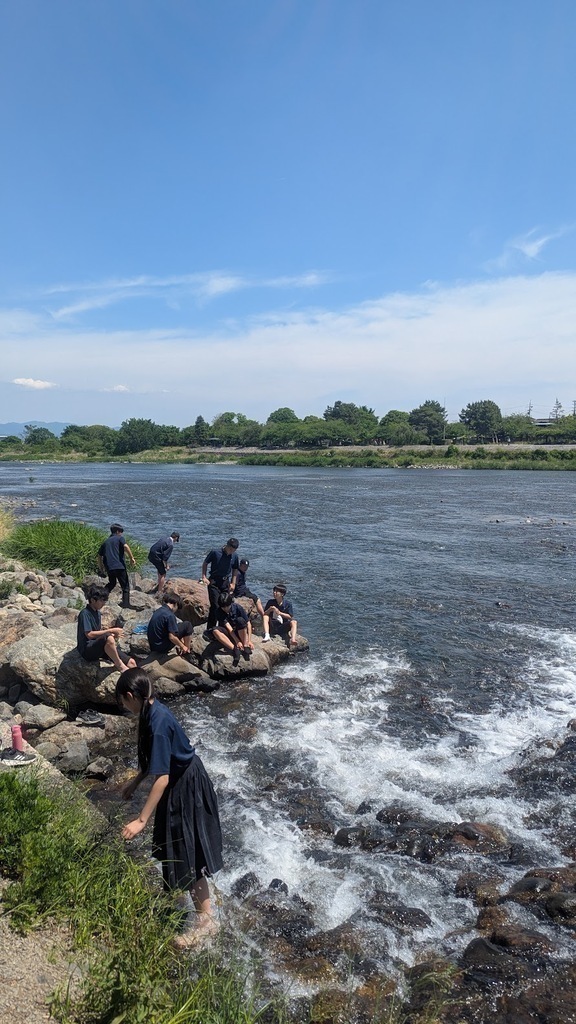
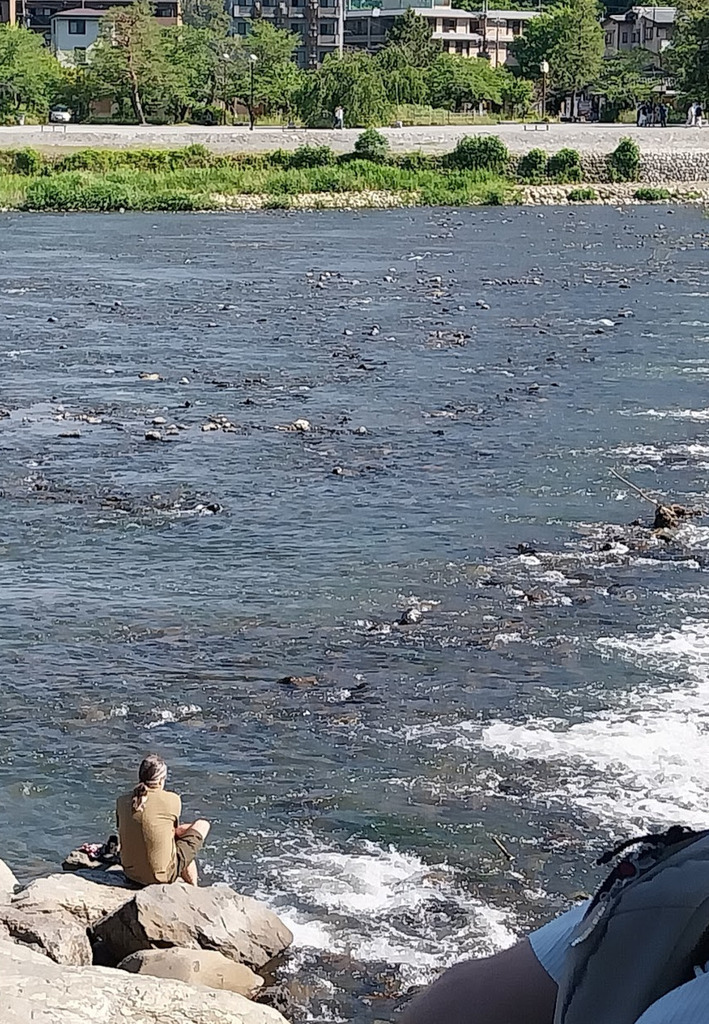
Back down at the river, I was intent on cooling off my feet and spending some time on the river bank.
And then, back to the station to catch the train back to Kyoto. The trip back was definitely less packed than when we had headed out in the morning. We found seats and listened with amusement to a retired English couple chatting to another much younger English traveller and sharing all of their experiences up until that point in their vacation. We were particularly taken by the fact that they had left their golden retriever with a carer who was kind of house sitting and sharing pictures and videos every day. We related to this massively. Apparently they were using an app called Rover, which helps to connect dog-owners with dog-carers. We mostly kept quiet, but at the end of the journey we recommended that they visit the Kyoto Station Rooftop Garden and check out the night display on the station stairs.
Cafe Gusto & Evening at the Hotel
We were going to walk back to the hotel, but both of us were a bit parched, so we decided to check out the restaurant and bar section below the Avanti Building just across from the station and kind of on our route back to the hotel anyway. We found a little station restaurant called Cafe Gusto. The decor felt a bit like a Pizza Hut or some other fast food kind of place but we weren't picky at this point. We went in and found a table, and noticed that there was a tablet on the table to do your orders. We navigated the menu and put in our order and then waited. After a moderately lengthy wait, our server appeared with our drinks!
Of course this was all a bit gimmicky. In reality, human waiting staff were clearing tables and cleaning up, and when we went to pay for our food, we dealt with a person at the front of the restaurant, although there did seem to be some kind of payment option on the tablet, but we couldn't work it all out. So people are still required, despite the robot apocalypse.
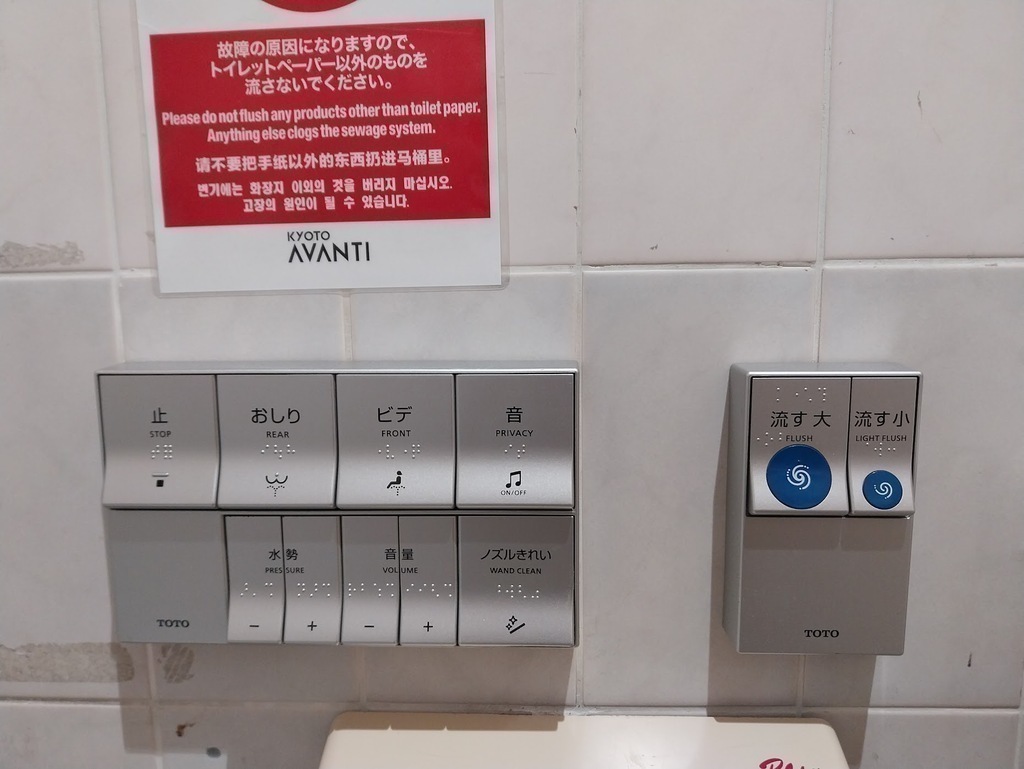
Maria went to the toilet and took this snap of the controls - I tell you, this stuff can't be rated highly enough!
We decided to keep costs down and just grab a bunch of bento-style snacks from the Daily Yamazaki convenience store on the way back to the hotel. These convenience stores really do have a healthy selection of food and can help you to eat well on a budget if you're spending a fair bit of time in Japan.
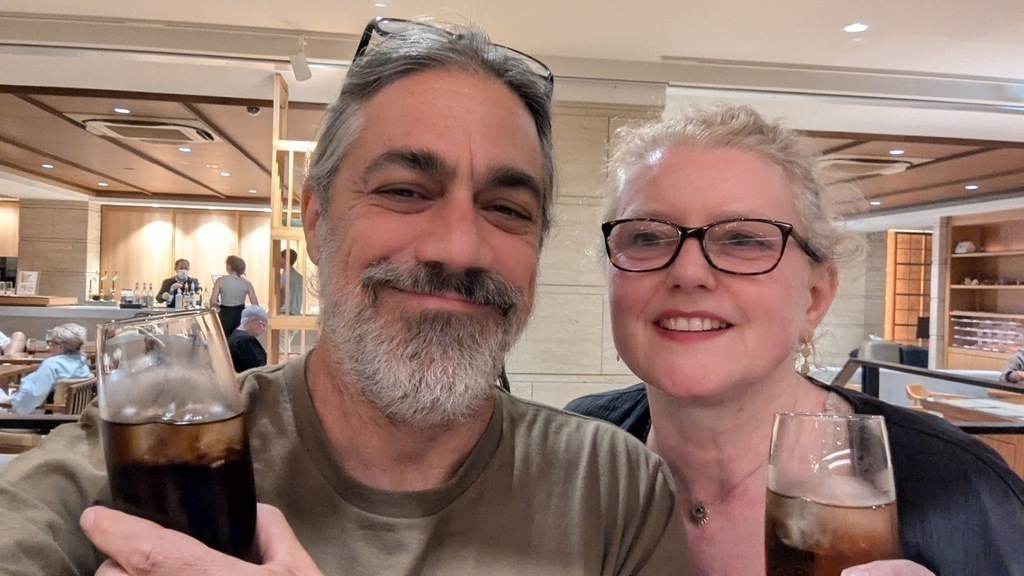
Back at the Sakura Terrace Hotel, we took the opportunity to claim our free drink in the foyer. And discovered a very consummate musician was playing the keyboard in the lounge area. We ended up listening to him for quite some time and had another round of drinks. Maria chatted to him during his break and discovered that his name was Yoshi Kodate, and that he was a jazz pianist. She asked if he knew a Billy Joel piece and he didn't but listened to it on his mobile phone and opened his next set with it and improvised around it. We were impressed. I snuck off up onto the mezzanine above the musician for a bit and availed of the massage chairs. They don't match the real thing, but they definitely helped to ease some aching muscles.